
Freight Forwarder in Shanghai: Nexline Group Expands Its Office
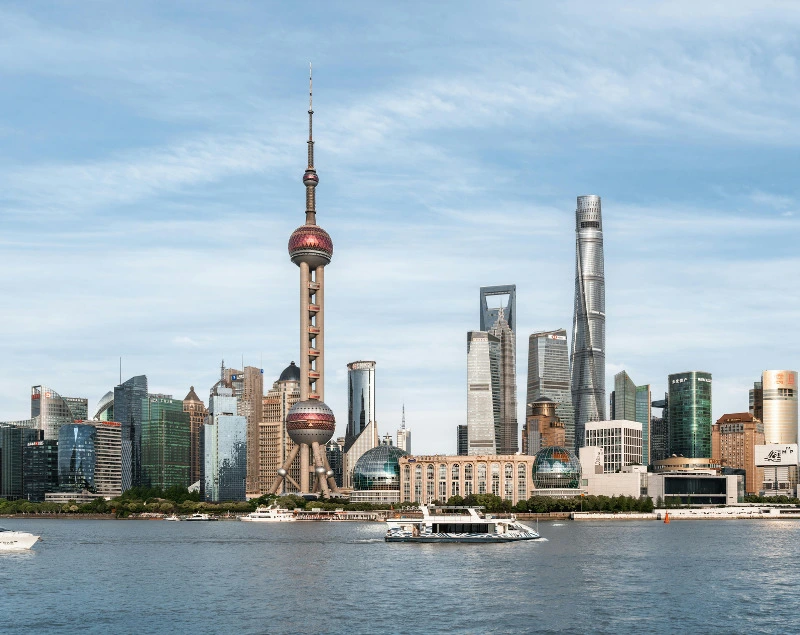
Two years after opening its first office in Shanghai, Nexline Group is taking another step forward in China. As our teams and operations continue to grow, our Shanghai office is moving into a larger space. But we are not going far. The new office is located in the same district, the same tower and at the same address where our Shanghai journey began two years ago. For Nexline Group, this move is both a practical response to our growth and an important milestone in the development of our international network. Growing our presence as a freight forwarder in Shanghai Shanghai was Nexline Group’s first office in China. Two years later, the team has grown, our operations have expanded and we now need more space to support this development. Our original office was located on the 22nd floor of the building. Today, we are moving to the 27th floor, into premises that are 60% larger. It is a change of space, but not of location. Remaining in the same building allows our team to continue working from an environment that has been part of Nexline’s story in China from the beginning. For a freight forwarder in Shanghai, having a local presence is an important part of staying connected to the market, our partners and the day-to-day reality of operations. Staying in the heart of Jing’an Our Shanghai office is located in Jing’an, close to Nanjing Road. From the beginning, this location has represented more than simply a place to work. It provides our team with an accessible base in one of Shanghai’s most dynamic areas and keeps us closely connected to the city. As the business has grown, staying in the same location felt like a natural choice. We are keeping the address where our Shanghai story started while creating more room for the next stage. More space for a growing team The move reflects something very simple: our Shanghai team is growing. Larger offices will provide more space for our colleagues as Nexline Group continues to develop its activities in China. It is also a visible sign of how far the office has come in just two years. What started on the 22nd floor now continues five floors higher, with a significantly larger space and new opportunities ahead. The address remains the same. The ambition continues to grow. A new milestone for Nexline Group in China The expansion of our Shanghai office is part of the wider development of Nexline Group’s presence in China and internationally. For us, growth is not simply about opening new locations. It is also about helping our existing teams develop, giving them the right environment to work and creating the space needed for what comes next. Shanghai was our first office in China, which makes this move particularly meaningful. Two years after opening our first premises, we are proud to see the office enter a new chapter. The next chapter starts on the 27th floor Same district. Same tower. Same address. But a larger office, a growing team and new ambitions. Moving from the 22nd to the 27th floor marks another step in Nexline Group’s journey in Shanghai. We are proud of everything our team has achieved over the past two years and excited to see what comes next. Here’s to the next chapter in Shanghai. Nexline GroupThe human touch behind your supply chain. DISCOVER OUR TRANSPORT SERVICES
China Golden Week 2026: How to Prepare Your Shipments

From 1 to 7 October 2026, China will celebrate Golden Week for the National Day holiday. During this period, many companies, factories and industrial operations slow down significantly or temporarily shut down. However, for supply chain professionals, the impact can be felt well before 1 October. Volume concentration, pressure on available capacity, changes to ocean schedules and the risk of shipment rollovers can all affect operations. Planning ahead for China Golden Week 2026 can therefore help limit disruption across your supply chain. So, what are the main points to watch and how should you prepare your shipments? China Golden Week 2026: Why Plan Ahead Before 1 October? Golden Week is not limited to one week of reduced activity. In the weeks leading up to the holiday, many companies try to ship their goods before factories and businesses close. As a result, volumes can become concentrated within a relatively short period. This increase in demand can lead to several consequences: For importers and companies sourcing from China, the key is therefore to avoid relying on the last available departures before the holiday. Blank Sailings: A Key Point to Watch During Golden Week One of the main issues to monitor is blank sailings. A blank sailing is a scheduled vessel departure that is subsequently cancelled by the shipping line. Carriers may cancel sailings in order to adjust capacity in line with changing market demand. However, the impact on shippers can be significant. Fewer sailings mean less available capacity. Cargo that was originally scheduled to leave on a cancelled sailing may need to be rolled over to a later departure. At the same time, the remaining sailings may receive a higher number of booking requests. Around Golden Week, this can place even greater pressure on available capacity. What Impact Could Golden Week Have on Shipments from China? The consequences vary depending on the trade lane, port, carrier and mode of transport. However, several challenges may arise around China Golden Week 2026. Capacity May Be Harder to Secure When many shippers are trying to move cargo before the holiday, available space can fill up quickly. Booking early gives you more options and greater flexibility. Shipments May Be Rolled Over A blank sailing or a fully booked departure may result in cargo being moved to a later sailing. This delay can then affect the rest of the supply chain. Greater Pressure on Transit Times Disruption does not necessarily end on 7 October. After Golden Week, operations may resume gradually and backlogs may need to be cleared before schedules return to normal. How to Prepare Your Supply Chain Before Golden Week The first recommendation is simple: do not wait until the final days of September to organise your shipments. The earlier your requirements are identified, the easier it is to adapt your logistics plan to the capacity available. 1. Identify Priority Shipments Start by distinguishing between cargo that must leave China before Golden Week and shipments that can tolerate an additional delay. This helps you focus on the most time-sensitive flows. 2. Secure Capacity Early As volumes increase, the most suitable departures can fill up quickly. Booking in advance reduces the risk of having to accept a less favourable option at the last minute. 3. Monitor Carrier Schedules Schedules may change as Golden Week approaches. In particular, it is important to monitor blank sailing announcements, service changes and any adjustments to available capacity. 4. Prepare Alternative Solutions An urgent shipment should not necessarily depend on a single transport scenario. Depending on your timing, budget and cargo requirements, different alternatives can be considered. The objective is not to change transport mode systematically, but to have a backup option available if the originally planned departure is no longer possible. Ocean, Air or Sea-Air: Adapt the Solution to the Level of Urgency Not all shipments have the same requirements. Ocean freight remains suitable for many international flows. However, when timing becomes critical, other options may be worth considering. Air freight can meet the most urgent requirements, while multimodal solutions such as Sea-Air can offer a balance between transit time and cost. The most suitable option depends on several factors: It is therefore better to assess each shipment individually rather than wait until disruption forces you to find an urgent alternative. The Earlier You Prepare, the More Options You Keep China Golden Week 2026 is a predictable event. However, its impact on the supply chain can become difficult to manage when shipments are organised too late. Planning ahead makes it easier to secure capacity, monitor changes to transport schedules and keep alternative options available in case of blank sailings or fully booked departures. The earlier your shipments are prepared, the easier it is to find a suitable solution if conditions change. Do you have cargo to ship from China before or after Golden Week? Nexline experts can review your flows and help you prepare your upcoming shipments based on your deadlines, volumes and available capacity. DISCOVER OUR TRANSPORT SERVICES FAQ – China Golden Week 2026 When is Golden Week in China in 2026? The Golden Week holiday linked to China’s National Day will take place from 1 to 7 October 2026. Can Golden Week affect shipments before 1 October? Yes. Volumes can increase in the weeks before the holiday as many companies aim to ship their goods before factories and businesses slow down or close. What is a blank sailing? A blank sailing is a vessel departure that was originally scheduled but is later cancelled by the shipping line. This reduces the number of available sailings and may result in some cargo being rolled over to a later departure. When should shipments be prepared for Golden Week? It is best to plan as early as possible. The earlier shipment requirements are identified and capacity is secured, the easier it is to maintain alternative options if schedules change.
Lille Braderie 2026: a Weekend That Makes the Heart of the City Beat

There are some weekends that truly make the heart of Lille beat. On 5 and 6 September 2026, the Lille Braderie will once again bring the entire city to life. For two days, the streets will fill with bargain hunters, antique dealers, curious visitors and people simply looking to enjoy the unique atmosphere of the event. Thousands of stalls, great finds, unexpected objects, encounters and, of course, the traditional moules-frites: the Braderie has become much more than just a market. It is an event that is deeply rooted in Lille’s identity. The Lille Braderie, an event like no other Every year, the city changes pace completely. The streets become a huge place of discovery, where no one really knows what they might find a few metres further on. An old piece of furniture, a forgotten book, a decorative object, vintage clothing or simply an unusual item that catches the eye. That is also part of the charm of the Lille Braderie: you can arrive looking for something specific and leave with something you never expected to find. But beyond the bargains, it is above all the atmosphere that makes the difference. Throughout the weekend, residents, shopkeepers, exhibitors and visitors cross paths in a city that is constantly on the move. An event that resonates with us at Nexline Group At Nexline Group, we particularly appreciate what the Braderie says about Lille: a dynamic, open city built around exchanges. Our day-to-day activity is, of course, very different. Throughout the year, our teams organise and coordinate the movement of goods in France and internationally. But our work also relies heavily on communication and proximity. Behind every shipment, there are clients, partners and teams who need to communicate and move forward together. That human dimension is something we also recognise in the spirit of the Braderie: thousands of people meeting, exchanging and bringing the city to life for an entire weekend. Objects that continue their story The Braderie also has another special feature: it gives a new life to an impressive number of objects. What is no longer useful to one person can become someone else’s best find of the weekend. Without trying to turn the Braderie into a logistics event, this circulation of objects reminds us of a simple idea: making better use of what already exists is often a good thing. In our own work, we also aim to organise flows consistently, optimise the solutions we offer and make the best possible use of available resources. The realities are very different, but there is a shared attention to the way things move. A city in motion for two days For Nexline Group, the Braderie is also a chance to put ships, containers, trucks and schedules aside for a moment and enjoy an event that is part of Lille’s local life. Because a company is also part of the place where it operates, alongside the people who bring that place to life every day. And during this weekend, the whole city is moving. So for this new edition, take the time to enjoy it. Browse the stalls, negotiate, wander through the streets, enjoy a good plate of moules-frites and keep your eyes open. You may leave with the find of the year. Or simply with the memory of a great weekend in Lille. We wish everyone a wonderful Lille Braderie. Nexline Group
Lille Braderie 2026: a Weekend That Makes the Heart of the City Beat
There are some weekends that truly make the heart of Lille beat. On 5 and 6 September 2026, the Lille Braderie will once again bring the entire city to life. For two days, the streets will fill with bargain hunters, antique dealers, curious visitors and people simply looking to enjoy the unique atmosphere of the event. Thousands of stalls, great finds, unexpected objects, encounters and, of course, the traditional moules-frites: the Braderie has become much more than just a market. It is an event that is deeply rooted in Lille’s identity. The Lille Braderie, an event like no other Every year, the city changes pace completely. The streets become a huge place of discovery, where no one really knows what they might find a few metres further on. An old piece of furniture, a forgotten book, a decorative object, vintage clothing or simply an unusual item that catches the eye. That is also part of the charm of the Lille Braderie: you can arrive looking for something specific and leave with something you never expected to find. But beyond the bargains, it is above all the atmosphere that makes the difference. Throughout the weekend, residents, shopkeepers, exhibitors and visitors cross paths in a city that is constantly on the move. An event that resonates with us at Nexline Group At Nexline Group, we particularly appreciate what the Braderie says about Lille: a dynamic, open city built around exchanges. Our day-to-day activity is, of course, very different. Throughout the year, our teams organise and coordinate the movement of goods in France and internationally. But our work also relies heavily on communication and proximity. Behind every shipment, there are clients, partners and teams who need to communicate and move forward together. That human dimension is something we also recognise in the spirit of the Braderie: thousands of people meeting, exchanging and bringing the city to life for an entire weekend. Objects that continue their story The Braderie also has another special feature: it gives a new life to an impressive number of objects. What is no longer useful to one person can become someone else’s best find of the weekend. Without trying to turn the Braderie into a logistics event, this circulation of objects reminds us of a simple idea: making better use of what already exists is often a good thing. In our own work, we also aim to organise flows consistently, optimise the solutions we offer and make the best possible use of available resources. The realities are very different, but there is a shared attention to the way things move. A city in motion for two days For Nexline Group, the Braderie is also a chance to put ships, containers, trucks and schedules aside for a moment and enjoy an event that is part of Lille’s local life. Because a company is also part of the place where it operates, alongside the people who bring that place to life every day. And during this weekend, the whole city is moving. So for this new edition, take the time to enjoy it. Browse the stalls, negotiate, wander through the streets, enjoy a good plate of moules-frites and keep your eyes open. You may leave with the find of the year. Or simply with the memory of a great weekend in Lille. We wish everyone a wonderful Lille Braderie. Nexline Group The human touch to your supply chain
Air freight in Lille: gradual improvement, but operations remain under pressure
The situation is gradually improving for air freight operations at Lille Airport. However, operations have not yet returned to normal. According to operational information monitored by the Nexline teams, several freight units are still awaiting unloading or processing between Lille and Paris-CDG. At this stage: These figures show a positive trend compared with recent days. However, handling capacity remains under pressure. As a result, some shipments may still experience delays before they are made available for final delivery. For companies, the issue is very concrete: goods may have arrived within the air freight network, but may not yet be immediately available for delivery. The right question is therefore not only: Has my freight arrived? The real question is: Has my freight been processed, released and made available for delivery?? Why can air freight in Lille remain blocked after arrival? Air freight is often chosen for its speed. It is used when deadlines are short, when goods are urgent or when the supply chain cannot afford a long transit time. However, the arrival of an aircraft or an air freight flow does not necessarily mean that the operation is complete. After arrival, several steps still need to be carried out: When handling capacity is saturated, this post-arrival stage often becomes the bottleneck. In this context, the goods are within the network, but they are not yet available.ge often becomes the bottleneck. This is why air freight Lille operations must be monitored beyond the arrival stage. Why is Lille Airport under pressure? Lille Airport has infrastructure and services dedicated to cargo operations, including import/export handling, processing of cargo and mixed flights, freight security, consolidation and order preparation. The airport also highlights its position at the crossroads of major European cargo hubs, including Paris, London, Brussels, Amsterdam, Frankfurt and Luxembourg. In this type of environment, performance does not depend only on the flight or the air freight booking. It also depends on the ability of ground teams to absorb volumes, process ULDs, organise priorities and release goods within the expected timeframes. When this capacity is insufficient, even gradual improvement can leave operations under pressure for several days. Therefore, the current situation at Lille Airport should be understood as an operational pressure point, not only as a transport delay. What do PMC and ULD mean in air freight? In air freight, goods are not always handled parcel by parcel. They can be grouped into loading units called ULDs. A ULD, or Unit Load Device, is a loading unit used to group air freight in order to facilitate transport, loading and unloading. A PMC is a type of air cargo pallet used in cargo operations. In practical terms, when several PMCs are awaiting unloading or processing, it means that complete freight units have not yet been fully handled. For an importer or shipper, this can have a direct impact on the final availability of the goods. This distinction is important because a shipment can be present in the air freight network without being ready for pickup or delivery. What is the current air freight Lille situation? The situation is showing early signs of improvement. However, operations remain under pressure. At this stage, the Nexline teams are monitoring two key points: Situation point Volume concerned Possible impact PMC / ULD awaiting unloading at WFS Lille 29 Delay in availability at Lille PMC awaiting processing at CDG 40 Possible delay on upstream or connecting flows These volumes remain significant. They show that handling teams are continuing to clear the backlog, but that available capacity is not yet sufficient to immediately absorb all pending flows. The key point is simple: improvement does not necessarily mean an immediate return to normal. For companies with sensitive shipments, the air freight Lille situation still requires close monitoring. What are the consequences for your air freight shipments? The consequences may vary depending on the type of goods, their level of urgency and their processing status. The main possible impacts include: For a company, these delays can create a domino effect. For example, freight processed a few hours later may miss a delivery slot. As a result, the truck may have to wait, the warehouse may need to reschedule reception, and the final customer may receive updated timing that differs from the initial plan. In this context, the risk is not only an air freight issue. It becomes an operational issue. Which air freight flows are the most sensitive? Not all shipments are exposed to the same level of risk. The most sensitive flows are those that depend on a short deadline or fast availability. Type of flow Why it is sensitive Action to take Urgent goods Every hour of delay can affect production or the final customer Reinforced monitoring and file prioritisation Critical parts A delay can block an intervention, repair or production line Check real availability before organising delivery High-value goods Immobilisation time must be limited Confirm processing status and release slot Flows with warehouse appointments A missed slot can delay reception Reschedule the appointment with a realistic margin Goods connecting via CDG The delay may come from upstream, before Lille Monitor CDG and Lille status in parallel Customer deliveries already announced The ETA may change if availability slips Inform the customer before the delay is felt The aim is not to create unnecessary alarm. Instead, the priority is to identify the flows that cannot tolerate uncertainty. In the current air freight Lille context, urgent goods, critical parts and time-sensitive deliveries should receive reinforced monitoring. Why should air freight ETAs be monitored carefully? During a period of operational pressure, the ETA should not be treated as a fixed promise. Instead, it must be adjusted according to the real status of the goods. Several levels of information need to be distinguished: This distinction is essential. For example, freight may have arrived, but still not be usable for delivery. As a result, a theoretical arrival date may not reflect the real delivery timeline. Therefore, Nexline teams monitor files closely, in order to
International transport for SMEs and mid-sized companies: how to structure your flows without making management more complex
International transport for SMEs and mid-sized companies can quickly become complex. Businesses need to coordinate suppliers, documents, customs procedures, deadlines and different modes of transport. However, a company does not need to introduce more tools or procedures to organize its flows more effectively. Above all, it needs clear rules, reliable information and a single point of contact capable of coordinating operations. SMEs and mid-sized companies: which businesses are concerned? An SME is a small or medium-sized enterprise with fewer than 250 employees. A mid-sized company generally employs between 250 and 4,999 people. This article is mainly intended for SMEs and mid-sized companies that: Why does international transport become complex for these companies? International transport becomes complex when flows develop without a shared organization. At first, each shipment may be managed on a case-by-case basis. A supplier provides information, the purchasing department requests a quote and the administrative team prepares the documents. Over time, however, several difficulties begin to appear: The complexity does not come only from the number of shipments. It mainly comes from the fact that each shipment is organized differently, without a common framework or an overall view of operations. How should SMEs and mid-sized companies structure their international flows? SMEs and mid-sized companies should begin by identifying their main international flows. There is no need to introduce a complex system immediately. A shared spreadsheet may be enough to centralize the essential information: This mapping exercise should help the company answer four essential questions: The company can then focus its efforts on flows that represent the greatest volume, value or level of risk. What information should be provided to a freight forwarder? A complete request makes it possible to obtain a faster and more reliable quotation. The following information is generally required: Missing information can affect the price or make the proposed solution unsuitable. For example, an inaccurate address, incorrect weight or an unreported constraint may result in additional charges. Creating a standard transport request template can therefore reduce unnecessary exchanges, errors and response times. Which mode of transport should an SME or mid-sized company choose? The mode of transport depends on the volume, deadline, budget and type of goods. Sea freight Sea freight is suitable for large volumes and non-urgent goods. Companies can choose between: Sea freight consolidation allows several companies to share the same container. Each shipper only pays for the space used. This solution is particularly suitable for SMEs and mid-sized companies that want to ship smaller volumes, limit inventory or test a new market. Air freight Air freight is suitable for urgent, sensitive or high-value goods. Its cost is higher, but it can prevent a stock shortage, production stoppage or delay for a customer. Road freight Road freight is suitable for transport within Europe. It can be organized as a full truckload, consolidated road freight or express transport. Road freight consolidation is useful for shipments of a few pallets that do not require an entire truck. Multimodal transport Multimodal transport combines several modes of transport, such as sea and road freight. It helps companies find the right balance between cost, transit time and reliability. Is freight consolidation suitable for SMEs and mid-sized companies? Yes. Freight consolidation is suitable for these types of companies whose goods do not fill an entire container or truck. It allows them to: Consolidation can be used for sea, air or road freight. However, it may be less suitable for goods that are highly urgent, fragile, dangerous or subject to specific transport requirements. Why are Incoterms important for SMEs and mid-sized companies? Incoterms define how responsibilities are divided between the seller and the buyer. They specify: A misunderstood Incoterm can result in unexpected charges. For example, a supplier may offer a price that includes the main transport but excludes destination charges, customs clearance or final delivery. The company must therefore check: SMEs and mid-sized companies should not accept an Incoterm simply because it is proposed by the supplier or has been used for several years. It must match the level of control required and the expertise available within the company. Which documents should be checked before departure? Documents must be complete and consistent before the goods leave their point of origin. Depending on the country, product and mode of transport, it may be necessary to check: The description, quantity, weight, value and origin must be consistent across all documents. An error may result in: The best practice is to carry out these checks before departure, rather than once the goods have already arrived at their destination. How does Nexline support SMEs and mid-sized companies? Nexline supports SMEs and mid-sized companies in organizing and monitoring their international flows. Depending on the company’s needs, this support may include: The aim is not to introduce unnecessary procedures. It is to simplify management, improve visibility and secure international operations. Internal teams remain in control of their decisions while benefiting from a single point of contact capable of coordinating the different stages of transport. FAQ: international transport for SMEs and mid-sized companies How should SMEs and mid-sized companies organize international transport? They should identify their main flows, define responsibilities, standardize requests and centralize the monitoring of costs, deadlines and documents. Which mode of transport should SMEs and mid-sized companies choose? The choice depends on the volume, deadline and type of goods. Sea freight is suitable for large volumes, air freight for urgent shipments and road freight for transport within Europe. Is freight consolidation useful for SMEs and mid-sized companies? Yes. Consolidation allows several companies to share a container, truck or air shipment. Each company only pays for the space used, which reduces the cost of smaller shipments. What is the difference between consolidated and full-load transport? With consolidated transport, several shippers share the same transport capacity. With full-load transport, one company reserves the entire container or truck. How can international transport costs be reduced? Companies should anticipate departures, limit urgent shipments, compare total costs, avoid unexpected charges and choose consolidation when the volume does
World Cup semi-final 2026: teamwork at the heart of performance

This year, France’s national day on 14 July coincides with the World Cup semi-final between France and Spain. Two major events are therefore taking place on the same day. For Nexline Group’s French team, it is a special opportunity to celebrate France, teamwork and collective commitment. This evening, millions of supporters will be watching Les Bleus. Will France secure its place in the 2026 World Cup final? A highly anticipated World Cup semi-final A World Cup semi-final is always a special occasion. At this stage of the competition, every action can change the course of the match. Both teams must remain focused, organised and united until the final whistle. Individual talent matters. However, talent alone is not enough to reach the final. Performance depends on careful preparation, a clear strategy and strong coordination between every player. In sport, performance starts with preparation The greatest performances never happen by chance. Before a semi-final, the players and coaching staff study their opponents, prepare for different scenarios and anticipate the challenges they may face on the pitch. Every player understands their role. At the same time, they must remain aware of their teammates’ movements and adapt quickly as the match develops. Trust is also essential. A successful team must be able to rely on every member of the group, during the best moments as well as the most difficult ones. Victory is built as a team Winning a World Cup semi-final does not depend on a single action or a single player. Victory is built throughout the match through preparation, concentration and the ability of the entire team to move towards the same goal. Each player must fulfil their role, trust their teammates and be ready to react at the right moment. A well-created opportunity, a defensive effort or a quick decision can change the outcome of the game. This pursuit of victory also reflects the way we work at Nexline Group. In international logistics, a successful result depends on the involvement of several teams, full control of every stage and the ability to find solutions quickly. On the pitch, as in the supply chain, achieving the final objective requires precision, commitment and genuine teamwork. Teamwork at Nexline Group At Nexline Group, our teams work together every day to support clients with their international transport operations. Every shipment requires accuracy, attention to detail and clear communication. Our employees also collaborate with an international network of partners to develop solutions tailored to each client’s needs. This coordination allows us to manage unexpected situations, monitor shipments and maintain a strong relationship of trust with our clients. This human approach lies at the heart of our philosophy: The human touch to your supply chain A 14 July shaped by teamwork Whatever the outcome of this World Cup semi-final, we know that the French team will give everything to secure its place in the final. On this special day, everyone at Nexline Group wishes our employees, clients and partners in France a very happy national day. Let us celebrate the values that bring us together: preparation, trust, commitment and teamwork. Happy 14 July and allez Les Bleus!
Anti-dumping law: what importers of Chinese tyres need to check
What is anti-dumping law? Anti-dumping law allows the European Union to apply additional duties to certain imported products. The objective is to correct a situation where goods are exported at prices considered abnormally low. When these prices cause injury to European industry, the EU can impose anti-dumping duties. In other words, this is not a general tax on all Chinese products. It is a targeted measure. It applies to specific products, specific origins and, in some cases, specific producers. To better understand this regulation, we will use a concrete and current example: the anti-dumping measures targeting certain new tyres originating from China. Why are Chinese tyres concerned? The European Union opened an investigation in May 2025 into Chinese tyres for passenger cars and light commercial vehicles. The investigation followed a complaint from the European tyre industry, which considered that these imports were being sold at unfairly low prices and were causing injury to European producers. Reuters reported that the European market for passenger car and light commercial vehicle tyres was worth more than €18 billion in 2024. Another anti-subsidy investigation was also launched in November 2025 into certain Chinese tyres. According to Reuters, the complaint mentioned a 51% increase in Chinese imports since 2021, with prices 30% to 65% lower than those of European producers. The objective of the measure is therefore to restore fairer competitive conditions. Which tyres are concerned? Anti-dumping law targets new rubber tyres originating from China. The products concerned include tyres for: The customs codes mentioned are: The key point is the real origin of the tyre. A tyre purchased from an intermediary outside China may still be concerned if it was manufactured in China. By contrast, used tyres, retreaded tyres or products outside the scope of the measure must be analysed separately. What are the anti-dumping rates? The duties vary depending on the Chinese producer. Producer category Anti-dumping duty Hankook producers concerned in China 4.3% Cooperating Chinese producers 24.4% Non-cooperating or not clearly identified producers 45.3% The rate can therefore vary significantly depending on the manufacturer. For an importer, this is not a detail. On a customs value of €100,000, this represents: The difference can completely change the margin of an operation. Why is the Chinese producer so important? This is the most sensitive point. The anti-dumping rate does not depend only on the seller. It depends on the actual producer of the tyre. If the importer buys through a trading company, distributor or intermediary, they must still be able to clearly identify the production plant. Otherwise, the maximum rate may apply. To reduce this risk, the documents must clearly indicate: A vague commercial name is not always enough. Customs authorities must be able to understand who actually manufactured the tyres. Which documents should be prepared before shipment? Anti-dumping law should not be managed only when the goods arrive. It must be anticipated before the purchase and before shipment. To secure the file, the importer should check several documents: The most important point is consistency. The invoice, packing list, origin and producer information must all tell the same story. If the invoice only mentions a seller, without identifying the actual manufacturer, the file may become fragile. What is the impact on import costs? Anti-dumping duties are added to other costs. They do not replace standard customs duties. The full landed cost must therefore be simulated before confirming the order. Mini-diagnosis: are your imports exposed? Your company should ask the right questions before placing an order. Answer yes or no: If several answers are uncertain, the file should be reviewed before shipment. Common mistakes to avoid What should importers do now? Companies concerned by these measures should act before the next shipment. The right method is to start by identifying all Chinese tyre flows. Then, check the actual producers. Next, simulate the financial impact based on the applicable rate. Finally, update purchasing documents, invoices and sales conditions. For some importers, it may also be necessary to review: In some cases, an alternative source outside China may be relevant. But it must be assessed carefully: price, availability, quality, compliance, lead time and production capacity all matter. SECURE YOUR IMPORTS Nexline’s analysis For a company, the risk is not limited to paying an additional duty. The real risk is discovering too late that the actual cost of the operation is no longer the cost expected at the beginning. That is why the file must be secured before shipment. The producer must be identified.The rate must be simulated.The documents must be consistent.The impact on the margin must be anticipated. At Nexline, the objective is to help importers make the right decisions before the goods are exported. This includes analysing flows, checking documentation and simulating the customs impact. The goal is simple: to prevent a poorly anticipated anti-dumping duty from becoming a cost, delay or profitability issue. In brief
Who is responsible in an international shipment?
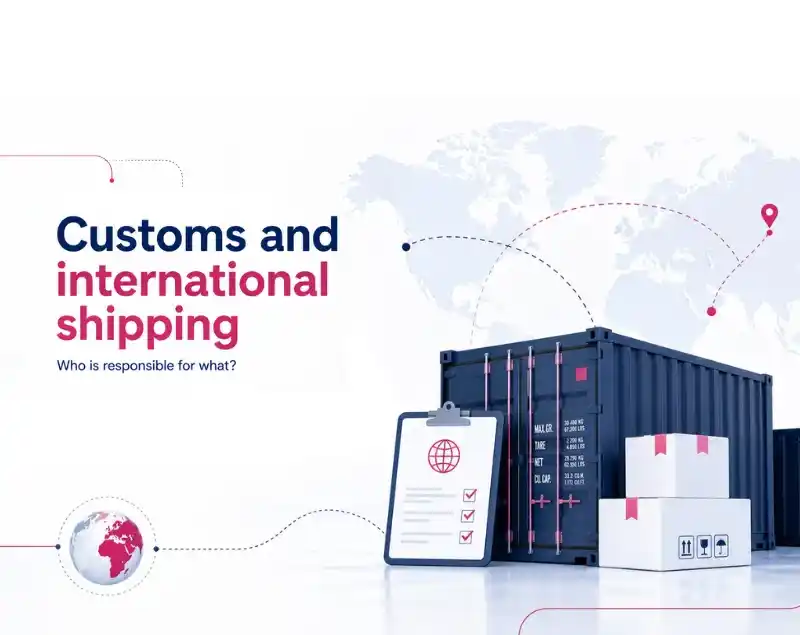
Several parties are involved in an international shipment. There is usually a seller, a buyer, a carrier, a freight forwarder, a customs representative and, in some cases, an insurer or a warehouse. But when a document is missing, when a declaration is incorrect or when goods are held by customs, one question quickly arises: Who is responsible? The answer depends on several factors: the commercial contract, the chosen Incoterm, the role of each party, the documents provided and the type of customs representation used. For a company, this is a key issue. An international shipment is not secured only by choosing the right transport solution. It is also secured by clearly defining responsibilities. Why does this matter? Customs is not just an administrative formality. It is a step that can directly affect the timing, cost and compliance of an international shipment. Before goods can enter or leave a territory, they must be declared according to the applicable rules. In the European Union, a customs declaration is an official document that provides details of the goods being imported or exported. In France, customs authorities also specify that customs formalities can be carried out by a customs representative, either under direct or indirect representation. The problem is that many companies do not always know who is responsible for what. As a result, documents arrive too late, the customs code is not properly validated, the Incoterm is misunderstood or the role of the freight forwarder is overestimated. In these situations, the shipment can slow down. The key parties in an international shipment To understand responsibilities, you first need to identify the roles. In most operations, five parties are at the centre of the process. 1. The exporter The exporter is the company that sells or ships the goods from the country of departure. They normally know the product, its origin, composition, value and commercial documents. In an international shipment, the exporter generally has to provide the information required for the goods to leave the country. This may include: Depending on the chosen Incoterm, the exporter may also be responsible for export customs clearance. 2. The importer The importer is the company that brings the goods into the country of destination. Its role is often underestimated. However, the importer is generally responsible for ensuring that the import operation is compliant in its own country. It must check that the goods can legally enter the country, that the documents are consistent and that duties and taxes are correctly handled. The importer must specifically check: If this information is incorrect or incomplete, the declaration may be corrected, delayed or subject to customs control. 3. The carrier The carrier is responsible for the physical movement of the goods. This may be a shipping line, an airline, a road haulier, a rail operator or a multimodal transport provider. Its role is to transport the goods according to the agreed conditions. The carrier may also provide certain transport-related data: However, the carrier is not automatically responsible for the commercial or customs content of the goods. It does not always know the exact composition of the product, its customs classification or the specific regulatory obligations that may apply. 4. The freight forwarder The freight forwarder organises the international shipment. It coordinates the different parts of the chain: transport, documents, partners, formalities, tracking and, in some cases, insurance or storage. Its role is operational. It can help the company choose a route, compare transport modes, anticipate lead times and prepare documents. But the freight forwarder does not replace the company in all its responsibilities. It works with the information provided by the client, the supplier and the other parties involved. If the initial data is incorrect or incomplete, the freight forwarder can alert the company, but it cannot invent the correct product information. This is an essential point. 5. The customs representative The customs representative carries out customs formalities. In France, a customs representative can act in two ways: This distinction is important, because it can affect the level of responsibility of both the representative and the company being represented. How do Incoterms influence customs responsibilities? Incoterms define how costs, risks and obligations are divided between the seller and the buyer in an international shipment. They specify who organises the transport, who handles certain formalities, who bears the risks and who pays the costs related to the operation. Choosing the right Incoterm is therefore essential to avoid misunderstandings. Responsibilities are not the same under EXW, FOB, CIF, DAP or DDP. The Incoterm must be confirmed before shipment, based on the goods, the countries involved, the transport mode, the experience of the parties and the customs constraints. What are the most common Incoterms in an international shipment? Each Incoterm distributes responsibilities differently between the seller and the buyer. Here are the most common cases to know. EXW: the buyer takes on almost the entire organisation Under EXW, the seller simply makes the goods available at its premises. The buyer must then organise collection, inland transport in the country of departure, export formalities, international transport, import customs clearance, duties and taxes, and final delivery. For a French buyer, EXW may look attractive because the purchase price is often lower. But it is also one of the most demanding Incoterms. Its main advantage is control. The buyer can choose its providers, negotiate transport and manage the operation from end to end. But the limits are significant. The buyer must handle formalities in the country of departure, coordinate collection from the supplier, manage export documents and take on more operational risk. In practice, EXW can be risky if the buyer does not have a reliable partner locally. Example: a French company buys goods under EXW Shenzhen. The supplier prepares the products at its factory. But the French buyer must organise everything else: collection, export documents, international freight, import into France and final delivery. FOB: the seller manages the goods until loading on board the vessel Under FOB, the seller is responsible for the goods
Electronic Invoicing 2026: why companies need to prepare now

Electronic invoicing is entering a decisive phase in France. From 1 September 2026, all companies must be able to receive electronic invoices. On the same date, large companies and mid-sized companies will also have to issue invoices electronically. SMEs, very small businesses and micro-businesses will be concerned by the issuing obligation from 1 September 2027. This reform does not only concern accounting departments. It also impacts tools, internal processes, partners and the administrative organisation of companies. Behind this obligation, the objective is clear: to streamline exchanges, strengthen traceability and simplify financial processes. But for the transition to be efficient, companies need to anticipate it now. What is electronic invoicing? Electronic invoicing does not simply mean sending a PDF invoice by email. An electronic invoice must follow a standardised electronic format. It must also include mandatory information in structured fields and be transmitted through an approved platform. In other words, the invoice becomes a structured document, sent within a secure and controlled framework. This change makes it easier to track exchanges between companies. It also facilitates the transmission of certain data to the tax authorities. Who is concerned by electronic invoicing in 2026? The reform concerns companies established in France and subject to VAT. It applies to purchases and sales of goods or services between companies established in France. The implementation schedule is progressive: Even companies that issue only a small number of invoices must prepare. At minimum, they will need to be able to receive electronic invoices. Why is electronic invoicing becoming mandatory? Electronic invoicing aims to modernise exchanges between companies. It helps reduce manual processing, limit errors and improve the traceability of transactions. For companies, this reform can also become an opportunity. It can help them review processes that are sometimes too heavy or too dependent on email exchanges. The main objectives are to: Electronic invoicing is therefore not only a regulatory obligation. It is also a change in the way administrative and financial flows are managed. What should companies prepare before 2026? The transition to electronic invoicing requires real preparation. Companies must first identify their current tools: invoicing software, accounting software, ERP, approval processes, archiving methods and exchanges with partners. Then, they need to check whether their tools will be compatible with the reform. It is also important to review internal workflows. Electronic invoicing can change the way an invoice is received, checked, approved and paid. Before 2026, companies should ask themselves several questions: These questions should be addressed before the obligation comes into force. What is the role of approved platforms? Electronic invoices will have to be transmitted through an approved platform. These platforms will play a central role. They will make it possible to send, receive and transmit the required data within the framework of the reform. The choice of platform should not be made at the last minute. A company must ensure that the chosen solution is adapted to its organisation, invoice volume and existing tools. Compatibility between internal software and the selected platform will be essential to avoid blockages. Why should companies anticipate now? The date of 1 September 2026 may seem far away. But compliance takes time. It is not only about activating a new tool. Companies also need to adapt processes, train teams, update data and test exchanges. A company that waits too long may end up suffering the reform instead of integrating it gradually. The risks can be concrete: Anticipating the reform makes the transition safer and smoother. Will electronic invoicing simplify financial processes? Yes, but only if it is properly prepared. Electronic invoicing can simplify administrative management. It can also improve invoice tracking and reduce certain manual tasks. However, these benefits will not be automatic. A company must first structure its data, clarify its processes and choose suitable tools. The reform can therefore become a driver of efficiency. But it requires proper organisation in advance. How is Nexline Group preparing for this transition? At Nexline Group, this transition is being anticipated to ensure smooth and secure compliance for teams, customers and partners. The objective is to prepare tools, processes and administrative exchanges before the reform comes into force. This preparation helps limit the risk of blockages, improve invoice traceability and ensure better continuity in exchanges with partners. Electronic invoicing is not only an obligation to comply with. It is also an evolution that must be integrated into the company’s overall organisation. Key takeaways Electronic invoicing is becoming an essential step for French companies. From 1 September 2026, all companies must be able to receive electronic invoices. Large companies and mid-sized companies will also have to issue them from that date. SMEs, very small businesses and micro-businesses will follow in 2027. This reform aims to streamline exchanges, strengthen traceability and simplify financial processes. But to fully benefit from it, companies need to anticipate. Preparing tools, data, teams and partners will be essential to successfully manage this transition. DISCOVER OUR TRANSPORT SERVICES