
EU–Mercosur Agreement: why companies need to rethink their logistics in 2026
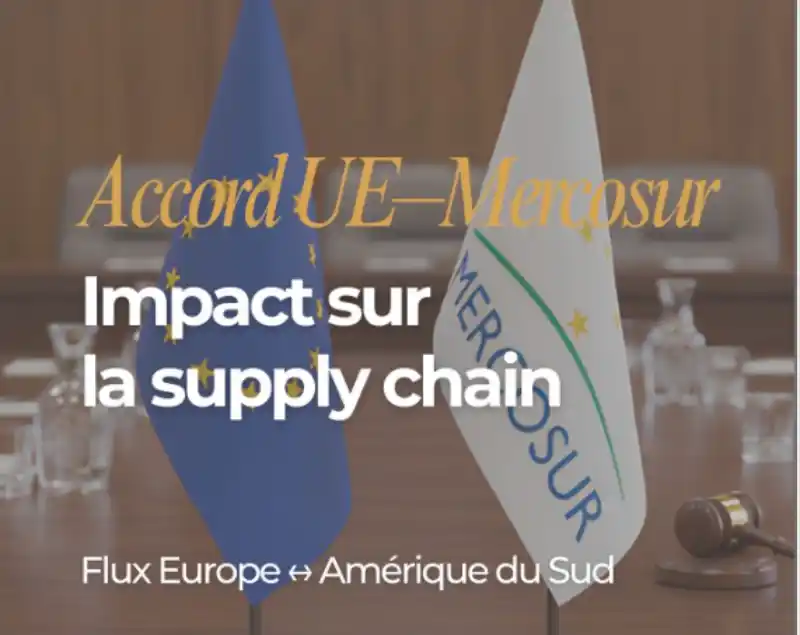
Since 1 May 2026, the interim trade agreement between the European Union and Mercosur has been provisionally applied. After more than 25 years of negotiations, this topic is no longer only political. It is now operational for companies that import, export or work with South America. The agreement concerns trade between the European Union and several Mercosur countries, including Brazil, Argentina, Uruguay and Paraguay. Its objective is clear: to facilitate trade through a gradual reduction of customs duties and a more predictable framework for companies. However, this change does not mean that formalities disappear. To benefit from tariff advantages, goods must meet specific conditions. Rules of origin, REX status, customs supporting documents and documentary compliance remain essential. This is why the EU–Mercosur Agreement directly changes the way international logistics must be approached. In 2026, logistics performance no longer depends only on transport. It also depends on a company’s ability to anticipate customs requirements, secure its documents and integrate rules of origin from the start. Why does the EU–Mercosur Agreement change the rules? The EU–Mercosur Agreement aims to facilitate trade between the European Union and Mercosur countries. It notably provides for a gradual reduction of customs duties on many products. This change can make certain flows more competitive. But the impact is not limited to transport prices or purchasing costs. In reality, the agreement changes the entire way logistics performance is assessed. A company must now analyse several elements before importing or exporting: In other words, competitiveness no longer depends only on transport. It also depends on customs expertise. Brazil, a key player in EU–Mercosur flows Within Mercosur, Brazil plays a major role. It concentrates a large share of trade with the European Union. Its role is therefore central to the operational impact of the EU–Mercosur Agreement. For European companies, this can create new opportunities. Some goods may become more accessible. Some suppliers may become more competitive. Some trade routes may also become more attractive. However, these opportunities must be studied carefully. A tariff advantage is not always enough to secure an international shipment. Companies must also check origin conditions, customs formalities and the documents to be provided. Customs duties: a real advantage, but under conditions The reduction of customs duties is one of the most visible aspects of the EU–Mercosur Agreement. On paper, it can help companies reduce costs. But in practice, this advantage depends on several conditions. To benefit from preferential tariff treatment, goods must comply with the rules of origin provided for in the agreement. This means that a company cannot simply import or export a product from a Mercosur country and automatically apply a reduced duty. It must prove that the goods genuinely originate from the relevant territory, according to the criteria set out. This is where customs becomes essential. An error in origin, an incomplete declaration or a missing document can call the tariff advantage into question. In some cases, this can lead to additional duties, delays or blocked goods. Rules of origin and REX status: two points to anticipate Rules of origin are at the heart of the EU–Mercosur Agreement. They determine whether goods can benefit from reduced or eliminated customs duties. For European exporters, REX status can also play an important role. It allows a registered company to self-certify the preferential origin of its products under certain trade agreements. But this status should not be treated as a simple formality. The company must be able to justify the declared origin. It must keep the necessary evidence. It must also ensure that its products meet the applicable criteria. Without this preparation, the tariff advantage can become a risk. A direct impact on the supply chain The EU–Mercosur Agreement can change companies’ logistics decisions. Previously, some flows could be less attractive because of customs duties or administrative complexity. With the agreement, these flows may become more competitive. This can influence several decisions: The supply chain must therefore be considered earlier. Companies can no longer wait until shipment to ask the right questions. They must integrate customs rules from the purchasing, sales or contractual negotiation phase. Logistics performance also depends on customs In an international shipment, transport remains important. But it is not enough. Goods can be transported quickly and still be blocked at customs. A transport cost can be competitive, but lose its value if customs duties are poorly anticipated. A supplier may offer a good price, but create a risk if origin documents are not reliable. This is why logistics performance must be analysed as a whole. It depends on transport, but also on compliance, documentation, rules of origin, declarations and the right choice of partners. In this context, the role of the freight forwarder and customs representative becomes even more strategic. Why should companies anticipate now? The EU–Mercosur Agreement does not only concern large companies. It can also affect SMEs that import, export or work with international suppliers. Companies that anticipate can gain a structural advantage. They can identify the products concerned, check rules of origin, review their commercial contracts and adapt their logistics organisation. Conversely, companies that wait may suffer from the changes. They may discover too late that a product does not meet origin conditions. They may lose a tariff advantage. They may also face delays or unexpected costs. How to prepare your logistics for the EU–Mercosur Agreement To secure their flows, companies should start by analysing their current operations. The first step is to identify the goods concerned. Then, they must check customs codes, applicable duties and rules of origin. It is also important to review the documents used in international trade: commercial invoices, certificates, proof of origin, transport documents and customs declarations. Finally, companies must ensure that their teams and partners understand the new requirements. Good preparation helps avoid mistakes. It also makes it possible to turn the EU–Mercosur Agreement into a real competitive advantage. Nexline Group Nexline supports companies in securing their international flows between Europe and South America by integrating transport, customs and the required documentation. With
Reconversion professionnelle en logistique : le parcours de Jérémy chez Nexline
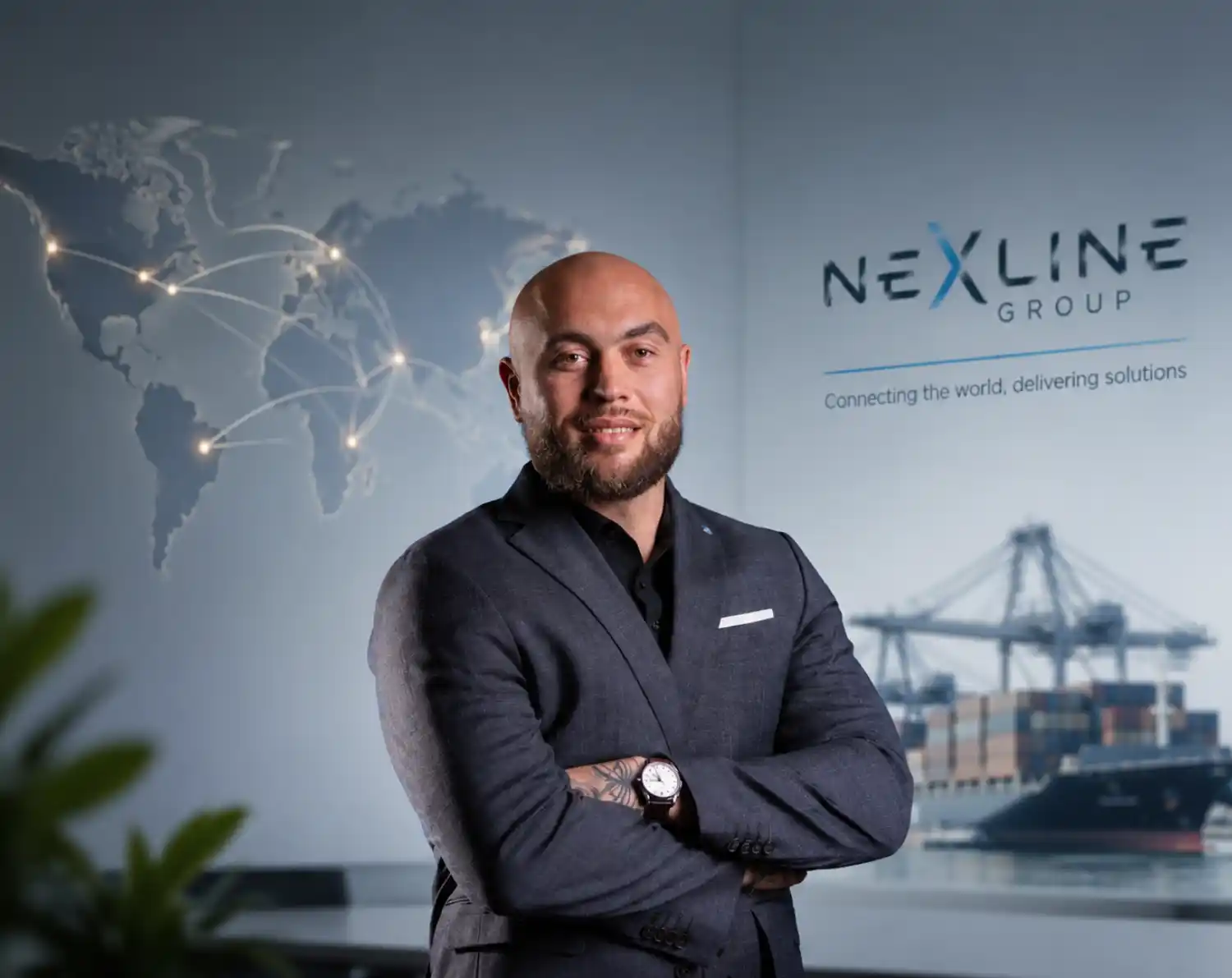
Changer de métier après plusieurs années dans le même secteur demande du recul. C’est aussi une façon d’apprendre, de progresser et de donner un nouveau sens à son parcours. Chez Nexline Group, Jérémy Ferrari a fait ce choix. Après 8 ans dans la messagerie européenne, il a rejoint l’équipe comme technico-commercial. Son objectif était clair : découvrir une approche plus globale de la supply chain. Une expérience solide dans le transport Avant son arrivée chez Nexline, Jérémy travaillait déjà dans le transport. Pendant 8 ans, il a évolué dans la messagerie européenne. Cette expérience lui a permis de comprendre les réalités du terrain : Ces bases restent utiles dans son poste actuel. Elles l’aident à mieux comprendre les enjeux logistiques de chaque client. Un nouveau rôle chez Nexline En rejoignant Nexline, Jérémy change aussi de métier. Il passe vers une fonction technico-commerciale. Son rôle consiste à écouter les besoins des clients, analyser les contraintes et proposer des solutions adaptées. Il travaille avec une vision plus large de la supply chain. Cela peut concerner le transport aérien, maritime, ferroviaire ou des solutions combinées. Cette évolution donne plus de sens à son parcours professionnel en logistique. Il garde son expérience du transport, tout en développant une approche plus globale. La proximité au cœur du quotidien Ce qui marque Jérémy chez Nexline, c’est la proximité. Les échanges sont directs. Les décisions se prennent vite. Les clients ne sont pas traités avec des réponses standardisées. Chaque demande mérite une analyse précise. Chaque solution doit correspondre à une réalité terrain. Cette façon de travailler crée une relation plus simple et plus humaine avec les clients. Une équipe riche de profils différents Jérémy met aussi en avant la diversité des équipes Nexline. Les collaborateurs ont des parcours variés. Certains viennent du transport. D’autres ont une expérience commerciale, internationale ou opérationnelle. Cette diversité apporte plusieurs avantages : Pour Jérémy, cette ambiance d’équipe compte beaucoup. Elle facilite l’apprentissage et donne envie d’avancer. Ce que montre ce témoignage Le témoignage de Jérémy rappelle une chose importante : évoluer dans la logistique ne signifie pas forcément repartir de zéro. Son expérience passée reste une force. Elle lui permet de mieux conseiller les clients et de comprendre leurs contraintes. Chez Nexline, son changement de voie devient une évolution naturelle. Il découvre un métier plus commercial, plus global et plus proche des enjeux clients. Son témoignage met en avant trois idées fortes : l’évolution, la proximité et le collectif. Vous avez un projet de transport international ? Échangez directement avec Jérémy pour étudier votre besoin en logistique internationale.
Supply chain: a key performance driver

What if your supply chain became a real performance driver instead of a constraint? From March 31 to April 2, Nexline Group attended the SITL (International Transport and Logistics Exhibition), a key European event for logistics and transport professionals. Each year, SITL brings together key industry players to discuss trends, innovations, and future challenges. One key takeaway stood out: expectations are evolving rapidly. Today, supply chain performance is no longer just about managing flows. A changing industry landscape Companies are no longer looking for transport solutions alone. They now expect: In this context, logistics is becoming a strategic driver of business performance. Standard models are no longer sufficient. Tailored logistics solutions To meet these challenges, customization is essential. At Nexline Group, we build solutions adapted to each client’s needs. This approach allows companies to: Problem solving is where the real difference is made. The human factor in logistics Beyond systems and tools, people remain essential. Discussions at SITL confirmed it. Performance depends on: Human expertise is still at the core of logistics success. A strategic lever for growth Supply chains are no longer just operational tools. They are becoming key growth drivers. Companies that invest in flexibility and responsiveness gain a real competitive advantage. This shift is reshaping the entire industry. Thank you to everyone we met during SITL. These conversations confirmed one thing: expectations are changing fast. Were you there? Let’s continue the discussion. DISCOVER OUR TRANSPORT SERVICES
How Nexline Supports FC Béthisy

At Nexline, our commitment goes beyond logistics and daily business operations. We believe companies also have a responsibility to support local communities, youth initiatives, and amateur sports. Supporting young generations through sports creates meaningful opportunities, strengthens communities, and promotes values that extend far beyond the field. These initiatives also create moments of unity, motivation, and teamwork that bring people together in a positive way. The Importance of Youth Sports Youth sports play an essential role in personal development. They help young players build confidence, discipline, respect, and perseverance from an early age. Football, in particular, teaches teamwork and collective effort. Young athletes learn how to work together, support one another, and overcome challenges as a group. These experiences often have a lasting impact both on and off the field. For this reason, many companies now include support for local sports initiatives as part of their corporate social responsibility strategy. Nexline’s Commitment to Local Sports Initiatives At Nexline, community engagement is part of our company culture. During the Pentecost weekend, FC Béthisy participated in an international football tournament in Munich with its U11, U13, and U17 teams. Thanks to Nexline’s support as a sponsor of the initiative, 36 young players between the ages of 10 and 16 had the opportunity to proudly represent their club during this international sports experience. The tournament was not only about competition. It was also an opportunity for the players to discover a new environment, share memorable moments, and grow together as a team. Community Engagement at the Heart of Nexline’s Vision Community involvement is an important part of Nexline’s vision. We believe businesses can create a positive impact beyond their core activities by supporting meaningful local initiatives and projects that benefit younger generations. Encouraging amateur sports and supporting youth development reflects the values we want to promote every day. We would like to thank FC Béthisy for its trust and commitment to supporting young athletes through sport. Youth sports help build confidence, teamwork, and perseverance while creating strong community connections. Through its partnership with FC Béthisy, Nexline proudly supports local initiatives that promote positive values, collective spirit, and opportunities for young players. Because beyond business activities, human engagement also plays an important role in building a stronger future. DISCOVER OUR TRANSPORT SERVICES
Air freight first quarter 2026: a market entering normalization
The latest analyses now provide a clear overview of air freight first quarter 2026. After a still dynamic start to the year, the sector is entering a phase of normalization. This shift is not affecting every region in the same way. Market dynamics remain highly uneven. Some areas are slowing sharply, while several strategic corridors continue to show solid growth. In this context, companies need to monitor capacity changes, energy costs and international flow patterns closely. Air freight first quarter 2026: global demand is declining According to IATA data, global air cargo demand is down -4.8% in FTK. This decline reflects a market adjustment after a period of stronger growth. Several factors explain this trend. Geopolitical tensions continue to weigh on certain routes. At the same time, the gradual slowdown in trade flows is directly affecting transported volumes. Air freight first quarter 2026 therefore shows a more selective market, where demand is no longer growing evenly across all regions. A sharp contraction in Middle East hubs One of the strongest signals comes from Middle East hubs. The region recorded a significant contraction, estimated at around -54%. This drop reflects operational disruptions and a temporary reorganization of transit patterns on several strategic routes. In some areas, flows have been slowed, shifted or rerouted. This situation confirms the importance of closely reading air transport routes. In an unstable market, transit hubs can experience rapid changes, with a direct impact on lead times and capacity availability. Europe-Asia and Intra-Asia corridors remain in growth Despite the global decline, some corridors remain positive. The Europe-Asia route is up +14.2%, while the Intra-Asia market is up +7.5%. These performances show that the air freight market still has areas of resilience. They are partly explained by capacity rerouting, as well as by the strength of industrial and e-commerce flows. Supply chain exchanges, high-value goods and fast delivery needs continue to support specific routes. Air freight first quarter 2026 is therefore marked by strong regional contrasts. Rising jet fuel costs keep pressure on prices At the same time, jet fuel prices increased sharply, with a rise of +106% according to IATA. This is a major factor for the sector. Even when demand slows down, higher energy costs continue to put pressure on rates and transport strategies. For shippers, this makes decision-making more complex. It becomes essential to anticipate costs, compare available options and adapt transport plans according to priorities: lead time, budget, reliability or flexibility. Anticipating market imbalances The overview of air freight first quarter 2026 shows a market in transition. Global demand is declining, some hubs are facing strong contractions, but several corridors remain dynamic. This situation requires a more agile approach. Transport decisions can no longer rely only on global trends. They must also take into account regional realities, available capacity and the rapid evolution of costs. At Nexline Group, we closely monitor these developments to help our clients anticipate market imbalances and adapt their transport strategies in real time. For your international transport needs, you can request a quote from our teams to identify the most suitable solution for your flows. DISCOVER OUR TRANSPORT SERVICES
Nexline Group teams in China celebrate annual dinners

Annual team dinners are important moments for Nexline Group. They bring people together, celebrate the work achieved throughout the year, and thank the teams who contribute every day to the company’s development. Recently, Loic Benattar, CEO of Nexline Group, shared two special moments with the Nexline Group teams in China. One annual dinner took place with the Shanghai team, and another one with the Guangzhou team. These events were an opportunity to highlight the commitment, reliability, and professionalism of the local teams. Important moments for Nexline Group teams in China The Nexline Group teams in China play a key role in the company’s daily operations. In both Shanghai and Guangzhou, they support the group’s development with consistency, dedication, and care. As the teams continue to grow, these moments become even more meaningful. They allow everyone to pause, celebrate the year’s achievements, and strengthen the connection between colleagues. Growth only makes sense when it comes with the same level of professionalism, commitment, and attention to detail. This is exactly what the teams in China bring every day. A dinner focused on gratitude Beyond the dinner itself, these annual gatherings were a moment to express sincere gratitude to the teams. Their work supports Nexline Group’s operations throughout the year and directly contributes to collective success. These moments also highlight the importance of team spirit. In an international environment, trust, coordination, and reliability are essential to keep moving forward together. The Nexline Group teams in China fully represent these values. A local touch with a highly anticipated lucky draw The evening also included a very local and appreciated touch: a lucky draw with prizes generously offered by Nexline Group’s partners. This moment brought a special energy to the room. With every prize announced, the tension grew. Excitement moved from table to table. No Macao, no Las Vegas, but definitely the same thrill in the air. The lucky draw was a way to thank the teams for their excellent work over the past year. It also added a festive and friendly atmosphere to these annual gatherings. Celebrating team spirit and collective success These annual dinners are more than internal events. They reflect Nexline Group’s culture: a culture built on proximity, commitment, and recognition. They are also a reminder that a company’s success depends first on the people who help it move forward every day. The Nexline Group teams in China actively contribute to this momentum with dedication and professionalism. Thank you to the Shanghai and Guangzhou teams for your commitment, your reliability, and your role in Nexline Group’s continued growth. This new year begins with the same ambition: to keep moving forward together, strengthen collaboration, and build new collective successes. DISCOVER OUR TRANSPORT SERVICES
Nexline Group France Director: Welcome to Karima Habacha

We are honoured to welcome Karima Z. Habacha as Nexline Group France Director. This appointment marks an important step in the development of Nexline Group. It reflects our ambition to strengthen our teams, support our international growth and continue delivering tailor-made logistics solutions with a high level of service. An expert in transport and logistics Karima brings 25 years of experience in transport and logistics. Her career has enabled her to develop a strong strategic vision of the sector, as well as an in-depth understanding of the operational and human challenges linked to the supply chain. A rare and exceptional profile, Karima is recognised as a visionary and inspiring leader. Her strategic expertise, rigour and ability to unite teams make her a major asset for Nexline Group. A vision focused on excellence In her new role as Nexline Group France Director, Karima will bring her vision and energy to support the company’s growth in France and internationally. She will also contribute to strengthening our teams and optimising our tailor-made logistics solutions, while ensuring a first-class level of service and quality. Karima is deeply committed to helping everyone reach excellence. Her approach is based on listening, proximity and the recognition of talent. A leader committed to her teams Her approach combines rigour, ambition and proximity. She knows how to listen, value talent and create an environment where everyone can give their best. We are convinced that her presence will inspire and mobilise Nexline Group teams to successfully meet the challenges ahead. Welcome Karima Welcome Karima Z. Habacha. Thank you for doing us the honour of joining this journey. The entire Nexline Group team looks forward to building a new chapter in our story with you. DISCOVER OUR TRANSPORT SERVICES
Crosstrade Logistics: Simplify international supply chains
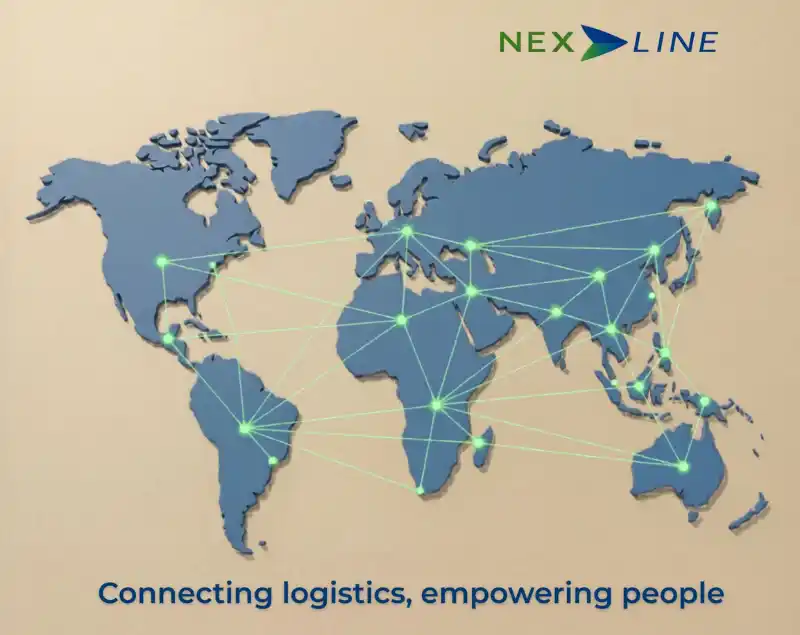
In international logistics, complexity does not always come from distance. It often comes from the lack of local presence and coordination on the ground. Simplifying international supply chains has become a key priority for companies aiming to improve efficiency and reduce operational friction. A different approach to global logistics At Nexline Group, we have developed an approach based on three core pillars: This combination allows us to manage complex flows with greater efficiency and control. Crosstrade: a flexible and efficient solution Crosstrade logistics refers to organizing shipments between two countries without the goods passing through the company’s home country. This model helps to: It is a highly effective solution for companies operating across multiple international markets. Global coverage with local expertise Successful crosstrade operations rely on strong local execution. Thanks to: Nexline Group can orchestrate logistics flows across most major global trade regions. Optimizing means simplifying In logistics, optimization is not always about adding more steps or tools. Often, it is about simplifying operations. Removing an unnecessary step or reducing intermediaries can significantly improve: speed, reliability, cost efficienc and supply chain visibility. Crosstrade logistics is becoming a strategic solution for companies seeking greater agility in international operations. At Nexline Group, the objective is clear: design smarter logistics flows tailored to each client’s needs. DISCOVER OUR TRANSPORT SERVICES
The logistics in may: Anticipating public holidays and international slowdowns
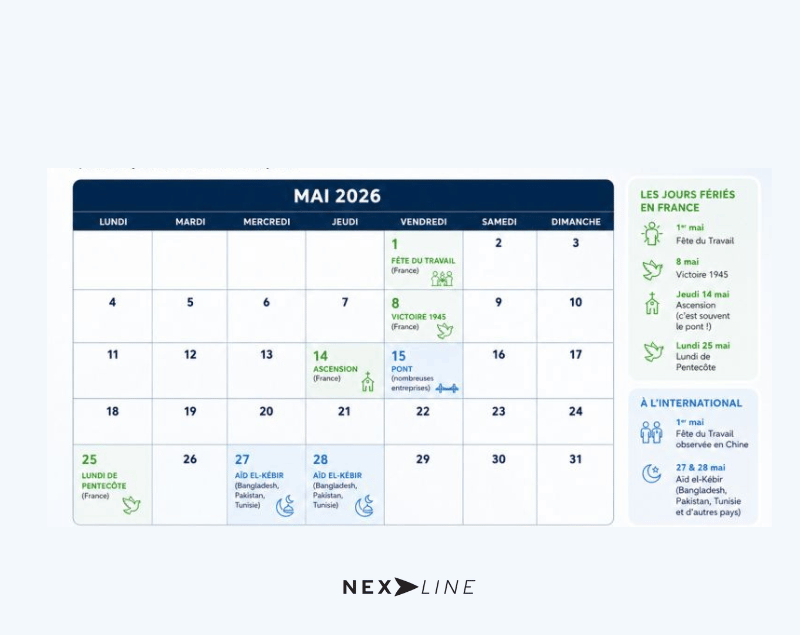
Marked by numerous public holidays, the month of May represents a real challenge for companies in France. Activity slows down, delivery times increase, and planning becomes more complex. In theory, only 17 working days are available out of 31. This figure does not even include “bridge days,” which further reduce productivity when public holidays fall on a Thursday. As a result, the entire logistics chain is impacted. Public holidays slowing down activity in France In France, May includes several key dates that disrupt business activity. Labour Day on May 1st, Victory Day on May 8th, Ascension Day, and Whit Monday create multiple slow periods throughout the month. These disruptions affect not only companies but also administrations, customs services, and logistics providers. Even when operations do not stop completely, they often run at a slower pace, which leads to delays at every stage. A global impact on logistics In a globalized environment, the effects of public holidays go beyond French borders. International logistics depends on multiple countries, each with its own calendar. For example, May 1st is also a public holiday in China, a major player in global trade. At the end of the month, Eid al-Adha slows down activity in several strategic countries such as Bangladesh, Pakistan, and Tunisia. When several regions operate at a reduced pace simultaneously, the effects accumulate. Production, shipping, and delivery times can be significantly impacted. The entire supply chain is affected This slowdown does not impact a single link but the entire logistics chain. Factories may produce more slowly, warehouses often operate with reduced staff, and transport providers must adapt their schedules. Customs and administrative processes can also take longer. Even though each actor continues to operate, coordination becomes more complex, increasing the risk of delays and bottlenecks. Anticipation is essential In this context, anticipation is key to maintaining smooth operations. Anticipating these critical periods allows companies to maintain performance, even when overall activity slows down. Key takeaways The logistics sector in May faces a sensitive period. Public holidays in France and international slowdowns can disrupt supply chains. To minimize delays, companies must anticipate shipments and plan operations carefully. DISCOVER OUR SERVICES
Global logistics disruptions: how to anticipate risks across your supply chain
Global logistics disruptions are once again affecting international trade and creating new challenges for supply chain management. Over recent months, market conditions have become increasingly uncertain due to geopolitical tensions, maritime congestion, and rising energy costs. Strategic routes such as the Strait of Hormuz and the Suez Canal remain critical to global freight flows. Any disruption in these areas can quickly impact transit times, freight rates, and transport capacity worldwide. In this environment, companies need to adapt quickly to protect operations and remain competitive. Why global logistics disruptions are increasing? International trade depends heavily on a limited number of strategic maritime corridors. When instability affects one of these areas, the impact can spread rapidly across global supply chains. Several factors explain the current rise in pressure: Together, these factors create a more volatile logistics environment. Rising transport costs and market pressure Global logistics disruptions have a direct impact on sea freight and air freight costs. When shipping lines must reroute vessels or face delays, operators absorb additional costs such as: This situation often leads to higher freight rates and stronger price volatility. For businesses, budgeting logistics operations becomes significantly more complex. Less predictable delivery times Beyond pricing, delivery schedules have also become harder to forecast. Route changes, vessel delays, and port congestion can slow down product flows and reduce supply chain reliability. The consequences may include: For many companies, improving visibility and responsiveness has become essential. How to secure your supply chain during uncertainty Traditional logistics models are no longer enough in a rapidly changing market. Businesses now need more agile strategies, including: At Nexline Group, we help clients secure their flows and adapt logistics structures to an evolving global environment. People remain at the center of logistics performance Technology, tracking tools, and market data are essential. However, real performance often depends on human expertise and the ability to make fast, informed decisions. That is why Nexline Group places people at the center of every logistics solution. In uncertain times, people remain at the heart of your supply chain. Global logistics disruptions are likely to continue shaping international trade in the months ahead. To reduce risk, businesses need stronger visibility, faster decision-making, and more flexible supply chain strategies. Anticipating today means protecting tomorrow’s performance. DISCOVER OUR TRANSPORT SERVICES