Global trade depends on a simple reality: a significant part of international shipping passes through a few critical maritime chokepoints.
These strategic maritime routes concentrate a major share of global cargo flows and directly influence supply chain performance. When disruptions occur, the impact can rapidly affect shipping costs, delivery times, and the stability of international trade.
What Are Strategic Maritime Routes?
Strategic maritime routes, also known as maritime chokepoints, are narrow waterways or canals through which a large portion of world trade transits every day.
These routes are essential for connecting production hubs, industrial regions, and consumer markets worldwide. They allow shipping companies to reduce transit times and optimize transportation costs. However, because so much traffic depends on these corridors, any disruption can quickly create delays and operational challenges.
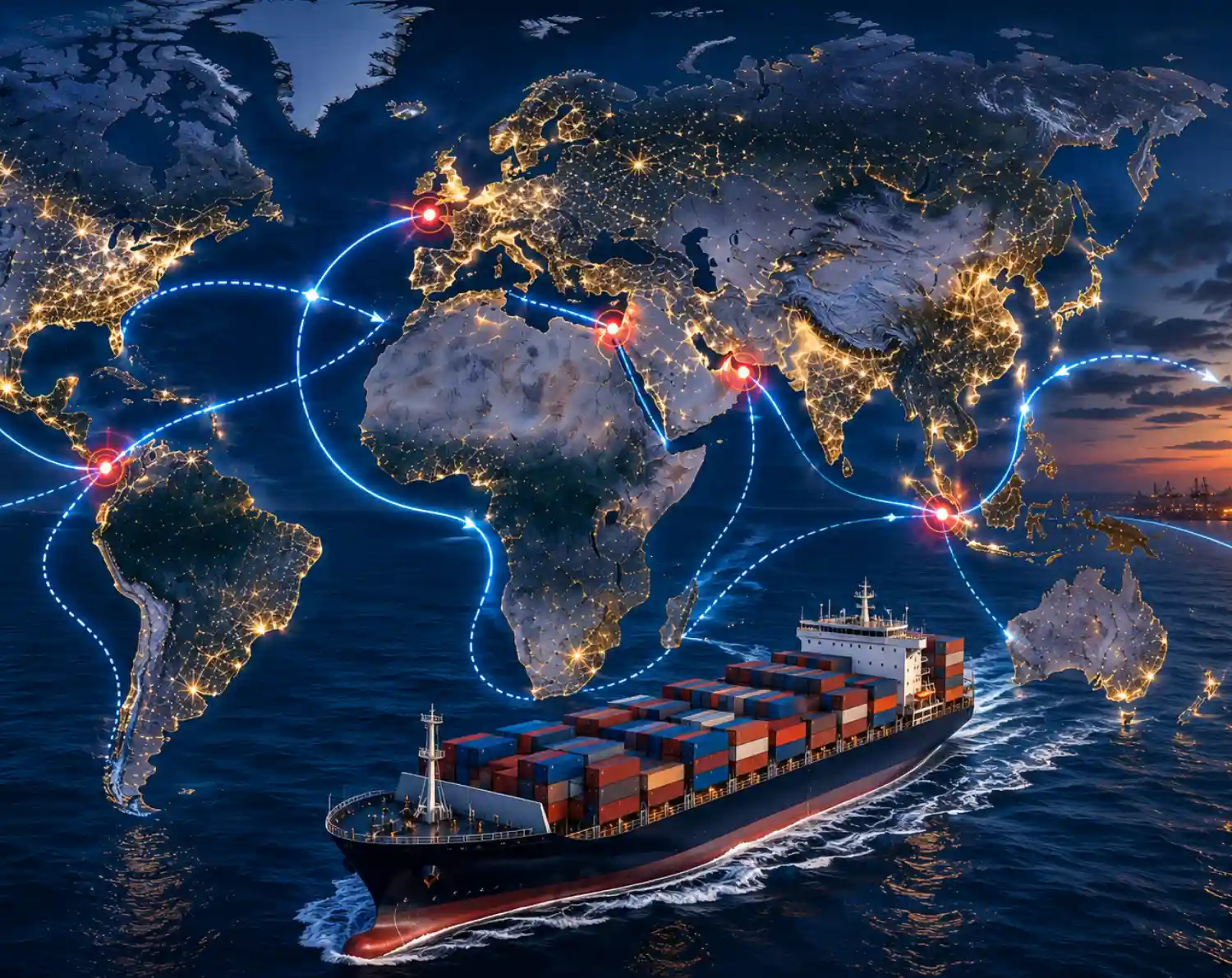
The Most Important Maritime Chokepoints
Several maritime passages play a crucial role in international logistics and global trade:
The Strait of Hormuz is particularly strategic because a significant share of global oil transportation passes through this corridor every day.
Why Maritime Chokepoints Impact Supply Chains ?
When a strategic maritime route operates normally, global logistics flows remain efficient and predictable. But congestion, geopolitical tensions, weather conditions, or operational incidents can force carriers to reroute vessels and reorganize shipments.
These disruptions often lead to:
- Longer transit times
- Higher freight costs
- Increased fuel consumption
- Capacity shortages
- Supply chain instability
For businesses operating internationally, these risks make logistics planning more complex and require greater visibility across transport operations.
Anticipation Is Now Essential in Logistics
Modern logistics is no longer only about transporting goods from one destination to another. Companies now need to anticipate risks, monitor shipping conditions in real time, and secure their international flows.
This approach helps reduce operational disruptions, improve delivery reliability, and maintain better control over logistics costs.
The Importance of an International Logistics Partner
Managing international freight across strategic maritime routes requires coordination, visibility, and flexibility.
With a strong network of agents and logistics partners, companies can better monitor port operations, adapt shipping solutions, and react quickly when disruptions affect global trade corridors.
At Nexline Group, international logistics solutions are designed to support businesses with customized freight management, operational coordination, and optimized supply chain performance.
Strategic maritime routes remain at the heart of global commerce. Their influence extends far beyond shipping lanes, directly affecting supply chains, transportation costs, and international business operations.
Companies that anticipate logistics risks and work with experienced international partners are better positioned to secure their global flows and maintain operational resilience.
DISCOVER OUR TRANSPORT SERVICES