Ocean freight relies on precise coordination between several stakeholders. Shipping lines, terminals, road hauliers, warehouses and consignees all need to intervene at the right time.
When just one link in the chain slows down, the entire logistics operation can be disrupted.
At Le Havre, current pressure on container terminals is making some operations more difficult. Pickup slots are harder to secure. In addition, the summer period is reducing available capacity across several parts of the logistics chain.
For companies that depend on ocean freight, this situation highlights an essential point: the vessel’s arrival at the port does not mark the end of the journey.
Why is ocean freight being disrupted at Le Havre?
The Port of Le Havre is one of the main gateways for goods entering France.
Every day, large numbers of containers arrive at its terminals. They then need to be unloaded, processed and moved out of the port efficiently.
However, when volumes increase, this balance becomes more difficult to maintain.
Containers remain at the terminals for longer. At the same time, new cargo continues to arrive.
The availability of pickup slots therefore becomes a critical issue.
To collect a container, the road haulier must be able to access the terminal. When there are not enough available slots, container pickups are delayed.
These delays can then affect the entire supply chain.
A customs-cleared container is not always immediately available
In ocean freight, completing customs formalities does not necessarily mean that the goods can be delivered immediately.
Even once the delivery release has been issued, several steps are still required.
The terminal must be able to process the pickup. The haulier must be available. A suitable slot must also be secured.
Finally, the warehouse or consignee must be ready to receive the goods.
As a result, a container may be administratively cleared without being operationally ready to leave the port.
During periods of congestion, this distinction becomes particularly important.
What are the impacts of port congestion at Le Havre?
Port congestion at Le Havre does not only affect terminal operations.
It can quickly have consequences for a company’s wider logistics organisation.
Longer delivery times
The first impact is on delivery times.
When a container cannot be collected as planned, its final delivery has to be rescheduled.
Depending on the situation, the delay may last a few hours or several days.
For some companies, this can disrupt production, procurement or distribution activities.
Schedules need to be reorganised
Warehouses operate according to specific receiving slots.
A delayed delivery therefore requires teams to find a new available time.
The haulier must also adjust its schedule. Vehicles and drivers may need to be reassigned.
A delay at the terminal can therefore trigger several operational changes further down the supply chain.
Potential additional costs
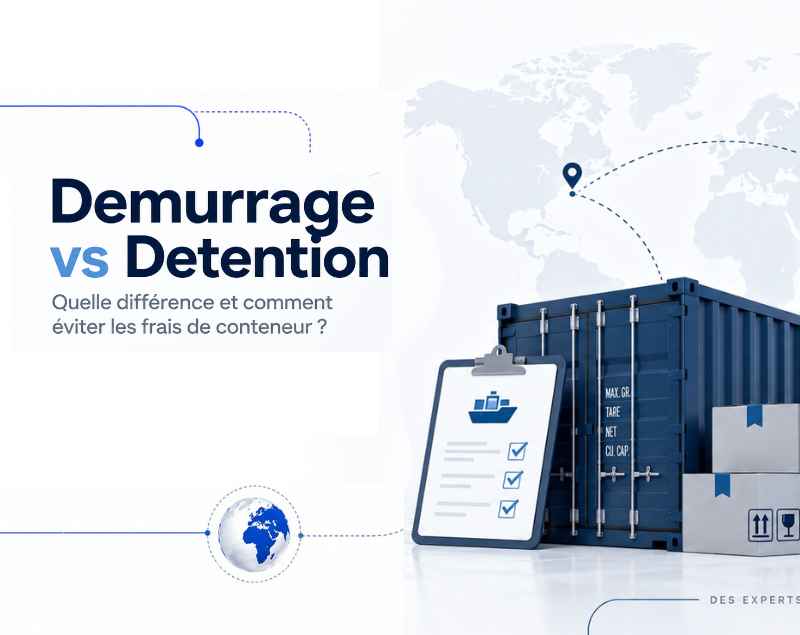
Longer container dwell times can also generate additional costs.
Depending on the shipping conditions, storage or container-related charges may apply.
Additional transport or rescheduling costs can also arise.
For this reason, responding quickly is essential.
Why does the summer period increase pressure?
The summer period adds another constraint.
Cargo volumes continue to move. However, operational capacity may be reduced.
Holiday periods affect terminals, but also hauliers, warehouses and logistics teams.
As a result, there is less room for manoeuvre.
A delay that might be relatively easy to absorb during a normal period can therefore become more difficult to manage.
In ocean freight, anticipation becomes even more important during the summer months.
How can the impact on ocean freight be reduced?
Port congestion cannot always be avoided.
However, its consequences can be limited.
Monitor availability regularly
The first step is to monitor available pickup slots closely.
When a suitable slot becomes available, teams need to be able to react quickly.
Regular monitoring can therefore help reduce the amount of time a container remains at the terminal.
Anticipate the next steps
Securing a pickup slot is not enough.
It is also necessary to confirm that the haulier can operate and that the warehouse can receive the goods.
Every change therefore needs to be considered as part of the wider logistics process.
This coordination prevents the problem from simply being transferred from one link in the chain to another.
Keep clients informed
Communication is also essential.
When a delay is identified, the client should be informed as early as possible.
This allows them to adjust their own organisation and anticipate any impact on their operations.
A delay that is properly managed is always easier to handle than one discovered at the last minute.
What is the freight forwarder’s role in this situation?
A freight forwarder’s role is not limited to booking ocean transport.
They also coordinate the different stages of the shipment.
During periods of congestion, this role becomes even more important.
The freight forwarder monitors the situation, looks for available pickup slots and coordinates with hauliers.
They must also manage new delivery dates and keep the client informed.
The objective is simple: to limit the impact of disruption on the supply chain.
How Nexline Group supports its clients
At Nexline Group, our teams monitor terminal operations and availability on a daily basis.
When a delay occurs, we look for the earliest available solutions.
We then adapt the transport plan accordingly.
This may involve arranging a new delivery date, coordinating with the warehouse or adjusting the haulier’s schedule.
We also maintain regular communication with our clients.
Our priority remains the same: to limit the impact on their operations and preserve the smooth flow of their supply chain.
DISCOVER OUR TRANSPORT SERVICES