
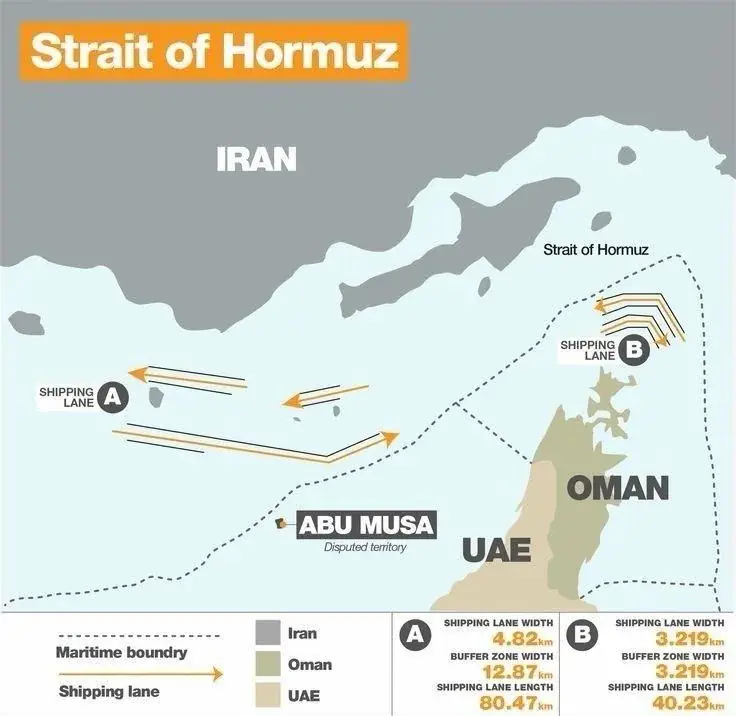
The Strait of Hormuz closure has been officially announced, triggering immediate shockwaves across global maritime transport and energy flows.
The majority of shipping lines have confirmed that vessels currently positioned on either side of the strait have moved toward secured waiting areas.
Among them:
- MSC Mediterranean Shipping Company
- A.P. Moller – Maersk
- CMA CGM
- Hapag-Lloyd AG
At the same time, the possibility of a large-scale rerouting through the Suez Canal is once again compromised due to renewed security threats in the Red Sea.
Immediate impacts observed
The consequences of the Strait of Hormuz closure are already visible:
- Vessels anchored across the Gulf
- More than 150 tankers immobilized
- Temporary disruption of oil flows
- Anticipated increase in war risk premiums and surcharges
- High probability of upward pressure on oil prices
Countries heavily dependent on Iranian crude, particularly China, may face significant exposure.
Beyond maritime: A broader logistics disruption
The impact extends beyond maritime transport.
Attacks affecting major air cargo hubs in Abu Dhabi and Dubai indicate potential disruption to regional air freight operations.
This is no longer a localized geopolitical tension.
It represents a global energy and logistics chokepoint.
Systemic impact on container shipping
For container shipping, the impact is systemic:
- Schedule dislocation
- Capacity repositioning toward regional hubs
- Increased feedering activity
- Pressure on spot rates
- Reduced schedule reliability
The Strait of Hormuz closure therefore introduces structural uncertainty across global shipping networks.
Anticipation as a strategic asset
At Nexline, we continuously monitor these developments to anticipate possible scenarios and secure our partners’ import-export flows.
In a world where geopolitics reshapes maritime routes, anticipation becomes a strategic asset.
DISCOVER OUR TRANSPORT SERVICES