A company can grow rapidly. But to sustain that growth, it also needs a solid organisational structure. In international freight transport, where numerous stakeholders are involved, logistics operations play a crucial role.
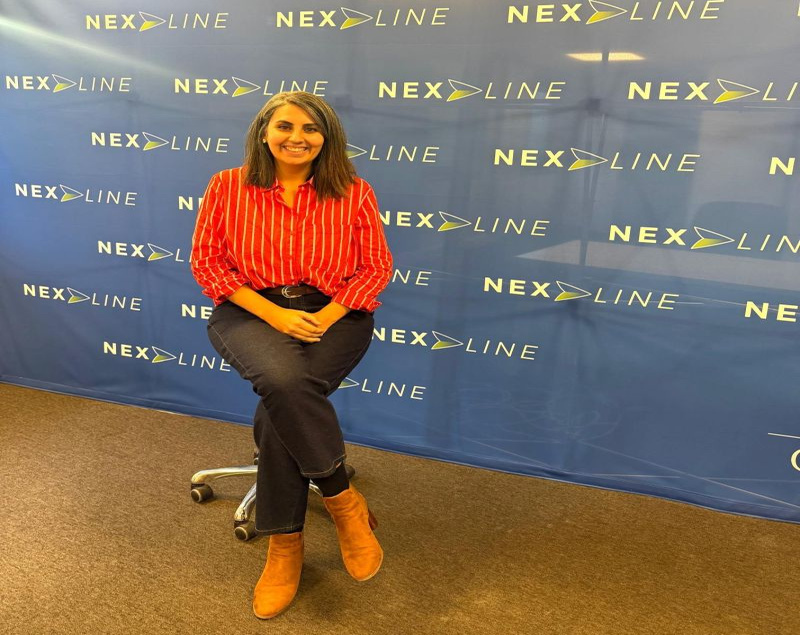
Since July 2025, Rislène Ochan El Khattabi, Head of Operations France at Nexline Group, has been helping us meet this challenge.
With 13 years of experience in transport and logistics, she works to structure and harmonise our operational processes across France. Her objective is to support Nexline’s development while maintaining the quality of service our customers expect.
Behind this mission lies a clear conviction: effective logistics management depends just as much on well-defined processes as on the experience and commitment of the people involved.
From Freight Forwarding Agent to Head of Operations France
Rislène has built her career through hands-on experience.
Over 13 years in transport and logistics, she progressed from freight forwarding agent to managing the operations of a branch.
Throughout her career, she has gained experience in different areas of the industry. She has worked closely with operational teams and customers, dealing with the unexpected situations that regularly arise in international shipping.
Because in our industry, even a carefully planned shipment can encounter difficulties.
Transport delays, schedule changes or documentation issues may require immediate action.
Handling these situations requires a thorough understanding of operational procedures. However, it also means knowing how things work in practice and making informed decisions.
This combination of technical knowledge and practical experience is what Rislène brings to Nexline.
Since taking up her position in July 2025, she has been working at national level to help structure our logistics operations across France.
Her experience and industry knowledge are valuable assets in supporting the continued development of our organisation.
Logistics Operations: Standardising Processes to Support Business Growth
As a company expands, its teams grow and the number of operations increases.
This development requires an organisation capable of keeping pace without compromising efficiency or service quality.
At Nexline, Rislène focuses on this challenge: strengthening operational processes and improving coordination between teams.
Her approach is built around several key principles.
First, observing daily operations and identifying the practices that already deliver good results.
Next, identifying areas for improvement, documenting procedures and sharing best practices.
Finally, standardising processes so that employees can rely on consistent working methods.
This approach contributes to more coherent logistics management across the organisation.
It helps clarify responsibilities, improve information sharing and reduce differences in working practices between teams.
For a growing company, this standardisation is particularly important.
Growth should not lead to an accumulation of different procedures that make collaboration more difficult.
Instead, structured logistics processes should enable employees to work together more efficiently.
At Nexline, this work complements our approach to transport flow management, which relies on coordinating the different stakeholders involved in the supply chain.
Logistics Automation: Making More Room for Human Expertise
Improving operational processes also means reconsidering the tools used in everyday work.
In international freight transport, certain tasks are repetitive. Managing them manually can take up time that could otherwise be spent on activities requiring greater analysis or coordination.
Automation therefore offers opportunities for improvement, provided it is applied appropriately.
For Rislène, however, the objective is not to automate every operation.
As she explains:
“In our industry, the goal is not to automate everything. When technology takes repetitive, standardised tasks off our hands, it creates more room for what requires experience, judgement and human interaction.”
This philosophy reflects the approach she wants to develop at Nexline.
Technology should make employees’ work easier without replacing their ability to analyse situations and make decisions.
After all, not every logistics decision can be standardised.
When a shipment encounters difficulties, teams need to understand the constraints, communicate with the different stakeholders and identify suitable solutions.
Professional experience remains essential in these circumstances.
The challenge is therefore to find the right balance between automation, shared procedures and team autonomy.
This approach is also part of our vision of supply chain optimization: combining technology, professional expertise and coordination to organise logistics operations effectively.
Transparency and Service Quality: Rislène’s Priorities at Nexline
Improving logistics operations is not limited to internal processes.
It also involves how a company communicates with its customers and supports them throughout their shipments.
In international freight transport, unexpected situations are part of everyday operations.
A transport delay may occur. Sometimes, a shipment requires adjustments, or unexpected difficulties arise at a particular stage of the journey.
For Rislène, how these situations are handled makes all the difference.
Her priority is straightforward: when a problem arises, it is better to inform the customer immediately, explain the circumstances and propose alternatives.
As a result, this transparency helps customers understand the situation and anticipate any potential impact on their business.
In turn, it also contributes to building trust.
Service quality is not measured solely when everything goes according to plan. It also becomes apparent in how teams respond when difficulties arise.
For this reason, this principle is central to Rislène’s operational philosophy.
Building Customer Loyalty Through Reliable Logistics Management
Sales teams develop relationships with new customers. Operational teams, meanwhile, play an essential role in giving those customers reasons to stay.
Together, clear communication, reliable organisation and a proactive approach help build lasting business relationships.
At Nexline, we share this conviction.
Our role is to organise international freight transport by coordinating the different stakeholders involved in the supply chain
But behind every operation, there are also people making decisions, sharing information and supporting customers.
That is why we place as much importance on human expertise as we do on structured logistics processes.
Rislène’s work reflects this ambition: enabling Nexline to continue growing through solid working methods and teams equipped to handle operational challenges.
We are pleased to count on her experience and commitment as we continue developing our organisation.
Would you like to improve the organisation of your transport flows and benefit from logistics support tailored to your business?
Contact the Nexline team to discuss your requirements and explore solutions adapted to your supply chain.
EXPLORE OUR FREIGHT SERVICES