
Nexline Lyon: A Strategic Hub for International Logistics
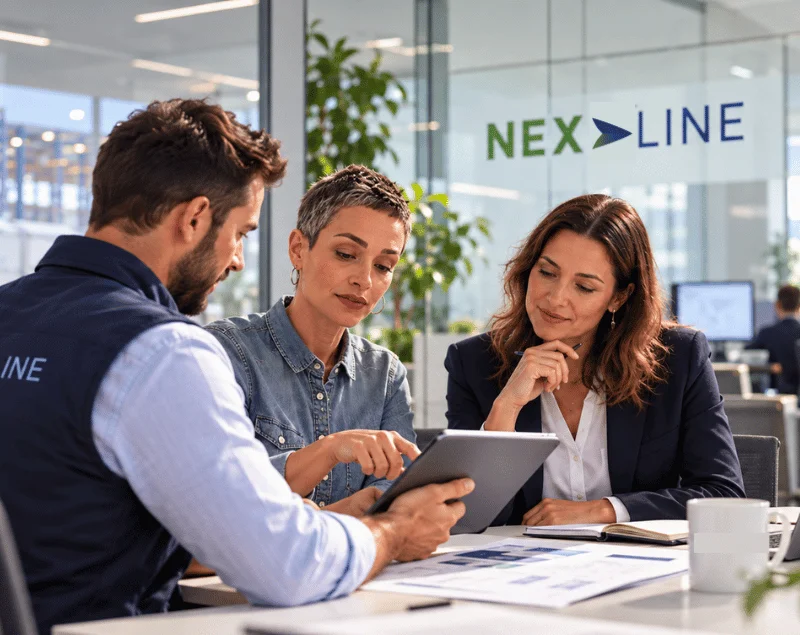
Nexline Lyon strengthens our presence in France and brings us closer to businesses managing international logistics operations. In 2026, Nexline Group has four locations in France: Paris-Charles de Gaulle, Villeneuve-d’Ascq, Le Havre and Lyon. In Lyon, our team combines experience, energy and international logistics expertise. This location plays an important role in our network, particularly through our collaboration with Crosslog Rhône-Alpes Lyon. Nexline Lyon: A Dedicated and Experienced Team The strength of Nexline Lyon lies in the people who support our customers every day. Our team brings together experienced professionals and enthusiastic young talents. Together, they share the same ambition: designing logistics solutions that meet the specific needs of each business. The team includes: Our sales team also contributes to Nexline’s development and maintains close relationships with our customers: This combination of skills and personalities reflects Nexline Group’s values: proximity, expertise and a strong commitment to human relationships. Crosslog Rhône-Alpes Lyon: Supporting Our Logistics Operations In Lyon, the Crosslog Rhône-Alpes warehouse plays an essential role in our logistics organisation. It supports both B2B and B2C operations, as well as the management of Nexbox shipments from Asia. This collaboration helps coordinate warehousing activities with our customers’ transportation and distribution requirements. By combining local operational expertise with our international network, Nexline provides flexible solutions adapted to different supply chain needs. Discover our warehousing and inventory management solutions. Why Lyon Is a Strategic Hub for International Logistics Our decision to establish a presence in Lyon was no coincidence. Located at the crossroads of major road, rail and inland waterway networks, Lyon offers a strategic position for the movement of goods across France and Europe. A Key Location Along the Rhône-Saône Corridor Lyon occupies a central position along the Rhône-Saône corridor, connecting major industrial areas to the Port of Marseille-Fos. This transport corridor offers important opportunities for businesses managing import and export operations. The role of this connection is also highlighted by Voies Navigables de France (VNF), which outlines initiatives supporting container transport between Fos and Lyon. For international businesses, Lyon’s location provides access to several transport networks and major European markets. Strong Connections to Our International Network Lyon is also an important gateway for Nexline’s overseas operations. Through our own offices in China, Vietnam, Tunisia and Bangladesh, we help businesses coordinate international shipments between Asia, Europe and other global markets. Our international presence allows us to connect the different players involved in the supply chain, from the point of origin to the final destination. This combination of local knowledge and international coordination helps us respond to the needs of importers and exporters. Multimodal Transport and Customs Expertise The technical expertise of our teams is another key strength of Nexline Lyon. Our capabilities include customs clearance, sea freight, air freight, rail freight and end-to-end shipment tracking. By combining these services with our international network, we help customers manage their import and export flows with greater flexibility and visibility. Explore our multimodal transport solutions to discover how we coordinate different transport modes. Nexline Lyon: Local Expertise, Global Connections With offices at Paris-Charles de Gaulle, Villeneuve-d’Ascq, Le Havre and Lyon, Nexline continues to strengthen its presence across France. This network allows us to remain close to our customers while connecting them to international logistics markets. In Lyon, our ambition is simple: combine local expertise, experienced teams and flexible solutions to support businesses with their logistics challenges. Because at Nexline, we believe efficient logistics starts with understanding what happens on the ground, working with the right people and building strong partnerships. Local presence, international expertise and logistics designed around your needs. Looking for a logistics partner to support your international shipments or supply chain operations? DISCOVER OUR TRANSPORT SERVICES
Nexline Bangladesh Supports an Athlete at Powerman Malaysia 2026
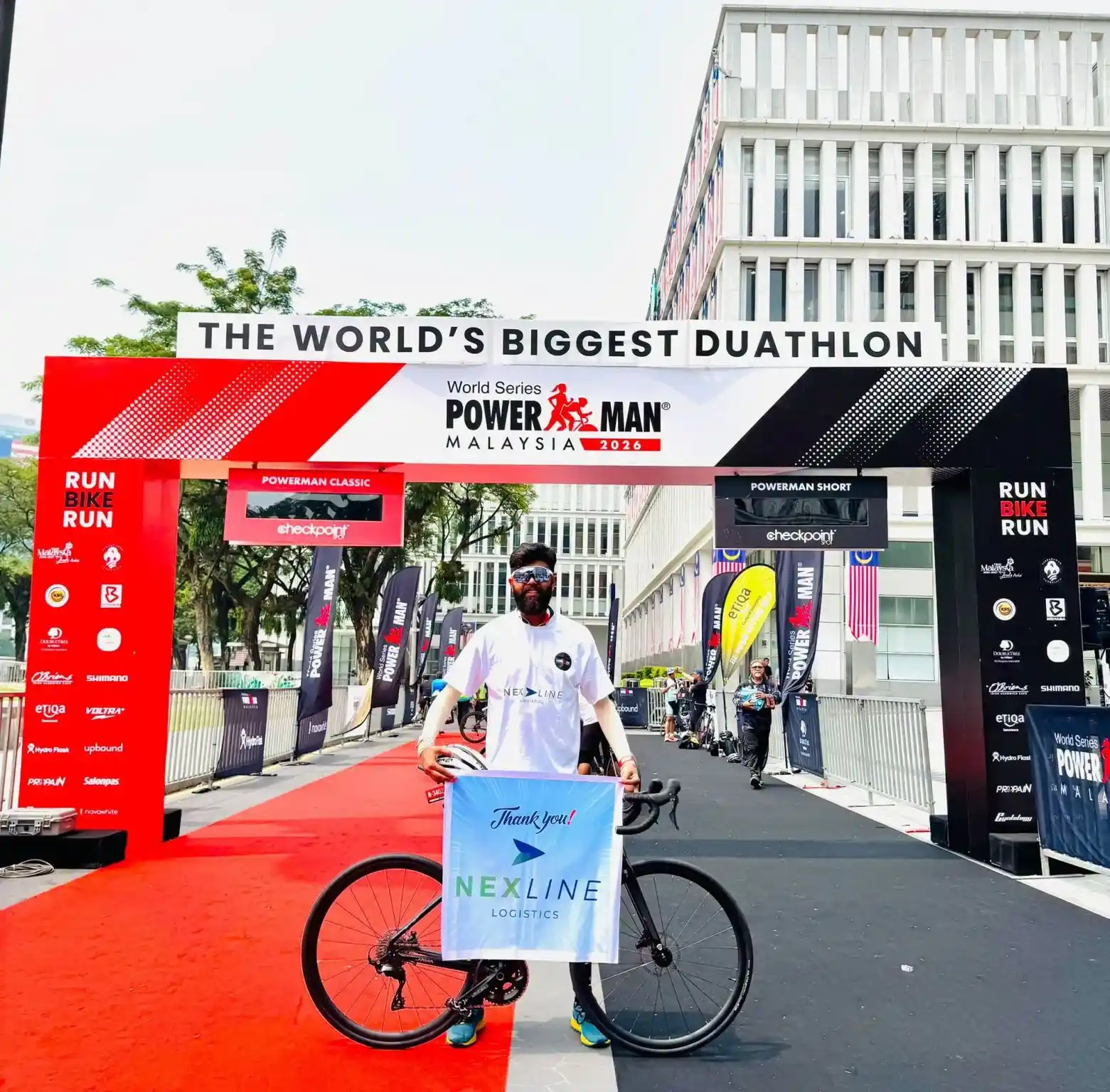
Nexline Bangladesh proudly supported a Bangladeshi athlete competing in Powerman Malaysia 2026. Led by Mohammad Osman Ghani, our Bangladesh Manager, this sponsorship reflects the values we strongly believe in: commitment, perseverance, ambition and mutual support. For Nexline Group, supporting this athlete was about much more than putting our name on a jersey. It was about standing behind someone determined to push beyond their limits and achieve a personal goal. Powerman Malaysia 2026: A Challenge of Determination and Perseverance Competing in Powerman Malaysia 2026 was a demanding challenge for the Bangladeshi athlete. After an experience that pushed him beyond his limits, he successfully crossed the finish line. His achievement reflects the determination and resilience needed to overcome a major sporting challenge. Throughout this journey, Nexline Bangladesh was proud to support him. Beyond the sporting achievement, this experience highlights a belief we share: personal commitment matters, but the support of others can make all the difference. Shared Values Between Sport and Logistics At Nexline Group, we believe sport and logistics share essential values. Commitment, perseverance and ambition are important when facing challenges. However, success also depends on trust, preparation and teamwork. These principles guide our teams every day. As we highlighted in our article on the shared values between business and sport, strong results are built through collective effort. By supporting an athlete at Powerman Malaysia 2026, Nexline Bangladesh brought these values to life beyond our daily logistics operations. Nexline Bangladesh: Supporting Local Communities Being an international company also means staying connected to the countries and communities where our teams operate. At Nexline, we value local initiatives that allow our colleagues to make a difference beyond their professional responsibilities. This sponsorship is a meaningful example of that commitment. We would like to thank Mohammad Osman Ghani, our Bangladesh Manager, for making this initiative possible. His involvement reflects Nexline Group’s people-first approach: an international company built around committed teams, strong relationships and local engagement. Crossing the Finish Line Together Congratulations to the athlete for successfully completing Powerman Malaysia 2026 and proudly representing Bangladesh. We are delighted to have played a small part in this journey. His achievement reminds us that determination helps us move forward, while encouragement and mutual support make the journey even more meaningful. Some distances are easier to cover when someone believes in you. DISCOVER OUR TRANSPORT SERVICES
Logistics Recruitment: How Nexline Hired Kalthoum Ferri in Record Time

At Nexline Group, logistics recruitment is about more than finding the right skills. It is about meeting talented people and building relationships based on trust. The story of Kalthoum Ferri, Southern Operations Manager at Nexline France, is a perfect example. A spontaneous application sent at 5 a.m. A job offer received at 2 p.m. the same day. Within just a few hours, Kalthoum was ready to join the Nexline journey. Here is the story behind our fastest recruitment process and the experienced professional who now plays a key role in developing Nexline Lyon. Kalthoum Ferri: Extensive Experience in International Logistics Determined, entrepreneurial and resourceful, Kalthoum Ferri has built a successful career in international transport and logistics. For five years, she managed demanding export operations, particularly in the pharmaceutical sector and the temperature-controlled transport of dangerous goods. She then continued her career as an Ocean Freight Manager, strengthening her expertise in maritime freight and international logistics operations. Over the years, Kalthoum has also developed strong leadership skills. Her ability to share knowledge, support colleagues and build successful teams has become one of her greatest strengths. A career combining operational expertise, leadership and initiative. These qualities quickly caught the attention of Nexline’s management team. Logistics Recruitment: From Application to Job Offer in Just a The story of Kalthoum’s arrival at Nexline began early one Tuesday morning. As she explains: “I sent an unsolicited application on a Tuesday at 5 a.m. I had identified Nexline as a fast-growing company operating in several countries around the world, including Tunisia. That detail caught my attention, so I decided to take a chance. It seems my profile was exactly what the company needed at that moment. By 2 p.m. that same day, I had already received a job offer. They trusted me from day one. That gave me the motivation to push myself further and contribute to launching operations at the Lyon office.” This story highlights Nexline’s responsiveness and willingness to recognize talent. In international transport, technical expertise is essential. However, it is not the only factor that matters. The ability to take initiative, bring people together and embrace new challenges is equally important. At Nexline, our approach to logistics recruitment combines professional expertise, personality and mutual trust. Nexline Lyon: Building a Team Around Expertise Drawing on her experience and professional network, Kalthoum quickly helped establish Nexline’s operations in Lyon. She identified the office premises and recruited the first members of her team: Together, they bring complementary skills and experience to support companies with their international transport operations. This team development is part of Nexline’s growth in France and its expertise in air freight. Trust and Teamwork: The Human Side of Logistics Recruitment For Kalthoum, the trust she received from the very beginning played a key role in her integration and the development of the Lyon office. She is particularly grateful for the support of Loïc Benattar, Karima Z. Habacha and Rislene Ochan El Khattabi. “I would like to thank Loïc Benattar, Karima Z. Habacha and Rislene Ochan El Khattabi, an exceptional team who placed their trust in me in record time. Their vision for the company, their ability to recognize talent and give people the resources they need to succeed create a truly unique working environment. The culture of mutual support at Nexline also makes a difference. Every morning, I arrive at the office with a smile and the motivation to contribute to this exciting journey.” Her experience reflects one of our core beliefs: recruiting talented people also means giving them the opportunity to succeed. At Nexline, we value trust, knowledge sharing and collaboration across teams. This human approach is an essential part of Nexline’s DNA and the values shared by our employees. Logistics Expertise Supporting International Trade in Lyon Today, Kalthoum and her team continue to develop Nexline’s activities in the Lyon region. Their mission remains the same: helping businesses manage their logistics operations through solutions tailored to their specific needs. With expertise in ocean and air freight, the team coordinates international shipments and oversees logistics operations. They also rely on Nexline’s international network of partners to meet each project’s requirements. This expertise translates into concrete achievements. Discover an international ocean freight operation managed by Kalthoum Ferri and her team. At Nexline, we believe that logistics performance starts with the people who make it possible. Kalthoum’s story perfectly illustrates this philosophy. A rapid recruitment process, immediate trust and a team built around shared ambitions. We wish Kalthoum and her entire team continued success in this exciting journey. Looking for a Logistics Partner in Lyon? Do you have an international transport project in the Lyon region? Contact our Nexline team to discuss your logistics needs and discover solutions designed around your business. The human touch to your supply chain. DISCOVER OUR TRANSPORT SERVICES
Nexline and US Lesquin: A Local Sports Partnership Focused on Youth

At Nexline Group, we believe in projects that make a difference. Projects that bring us closer to our local communities and the people who make them thrive. Our local sports partnership with US Lesquin reflects this commitment. Beyond supporting a football club, this collaboration represents something particularly meaningful to us: building bridges between young people and the business world. Because behind every young player, there is a unique personality, ambitions, talents and a future full of possibilities. A Local Sports Partnership That Goes Beyond Football Supporting US Lesquin means sharing much more than a passion for football. It is also an opportunity to bring together two worlds that have a lot to learn from each other: sports and business. Discovering new careers. Meeting professionals. Sharing experiences. Building confidence. Opening doors. Through this partnership, we aim to encourage meaningful connections and knowledge sharing. Our goal is simple: to help young people broaden their horizons and discover new professional opportunities. Sports and Business: Values That Bring Us Together On a football pitch, just like in business, everyone has a role to play. Trust, solidarity and teamwork help people move forward together and overcome everyday challenges. These values are also part of Nexline’s DNA. We previously explored these similarities in our article, Business and Sports: The Same Team Spirit Driving Performance, which highlighted our participation in a US Lesquin partners’ event. Today, we want to shine a light on another important aspect of our commitment: its human dimension. A Commitment Rooted in Our Local Community At Nexline, we believe businesses have an important role to play in supporting their local communities. Our presence in Villeneuve-d’Ascq, in the Hauts-de-France region, strengthens our commitment to building meaningful relationships within our community. Our partnership with US Lesquin is part of a broader approach to supporting local initiatives and younger generations. This commitment also reflects our previous involvement with FC Béthisy, featured in our article about Nexline’s CSR Commitment to Sports and Youth. Different initiatives, but one shared belief: sports can bring people together and create new opportunities. Nexline x US Lesquin: Human Touch at the Heart of Our Commitment At Nexline, Human Touch goes beyond the way we support our customers. It is also reflected in the relationships we build with the people and communities around us. Taking the time to connect. Sharing professional experiences. Encouraging young people to believe in their potential. Sometimes, the simplest gestures can have the greatest meaning. Our ongoing partnership with US Lesquin reflects our desire to contribute, in our own way, to a positive and collective initiative. Because beyond football, what truly matters is creating connections, sharing experiences and opening doors to new opportunities. And this journey continues. DISCOVER OUR TRANSPORT SERVICES
Pink October at Nexline: A Collective Commitment That Matters
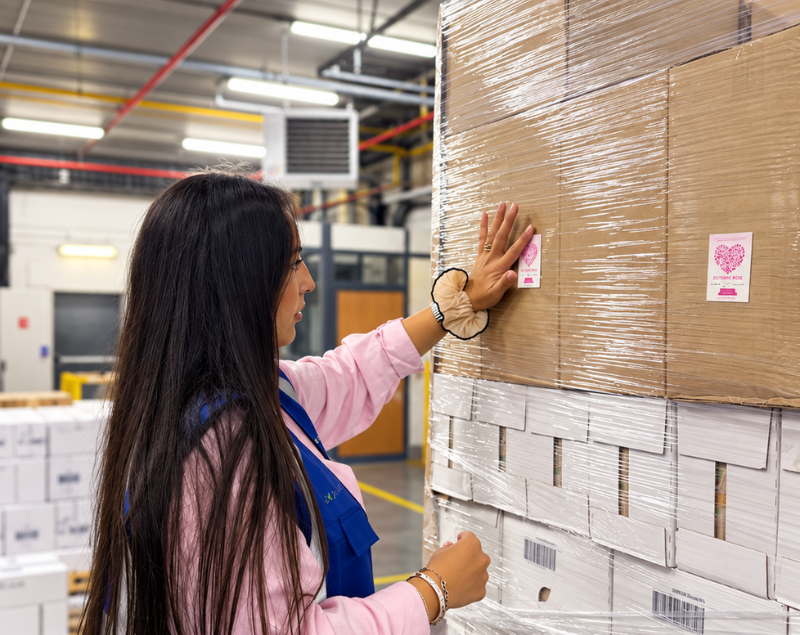
This Pink October, the Nexline team is coming together to raise awareness about breast cancer and highlight the importance of early detection. This year, we have chosen to bring a touch of pink into our daily activities while supporting an association dedicated to helping women affected by cancer. A Commitment That Goes Beyond Our Offices This year, we decided to make Pink October part of our everyday activities. Pink is now appearing on our pallets, invoices and throughout our offices. It has also become part of our conversations with customers and partners. These actions may seem small. However, they help us reach more people and remind everyone why breast cancer awareness and early detection matter. Every opportunity to raise awareness counts. Supporting RoseUp Association: Turning Awareness Into Action Beyond raising awareness, we wanted our commitment to have a meaningful impact. That is why Nexline has chosen to support RoseUp Association through a donation. This association supports women affected by cancer and helps them navigate the different stages of their journey. Through this contribution, we hope to play a small part in supporting those who need it most. Pink October: Together, Let’s Spread the Message Pink October reminds us that we should not wait until cancer affects us personally to start talking about it. At work, at home or among friends, everyone can help raise awareness and encourage open conversations. At Nexline, we believe that collective actions matter, even when they are modest. In the end, making a difference is not always about doing something big. It is about doing something, together. This October, we are wearing pink. But more importantly, we are sharing a message: let’s remember the importance of breast cancer screening and keep the conversation going beyond October. Nexline Group The human touch to your supply chain DISCOVER OUR TRANSPORT SERVICES
Freight Forwarder in Shanghai: Nexline Group Expands Its Office

Two years after opening its first office in Shanghai, Nexline Group is taking another step forward in China. As our teams and operations continue to grow, our Shanghai office is moving into a larger space. But we are not going far. The new office is located in the same district, the same tower and at the same address where our Shanghai journey began two years ago. For Nexline Group, this move is both a practical response to our growth and an important milestone in the development of our international network. Growing our presence as a freight forwarder in Shanghai Shanghai was Nexline Group’s first office in China. Two years later, the team has grown, our operations have expanded and we now need more space to support this development. Our original office was located on the 22nd floor of the building. Today, we are moving to the 27th floor, into premises that are 60% larger. It is a change of space, but not of location. Remaining in the same building allows our team to continue working from an environment that has been part of Nexline’s story in China from the beginning. For a freight forwarder in Shanghai, having a local presence is an important part of staying connected to the market, our partners and the day-to-day reality of operations. Staying in the heart of Jing’an Our Shanghai office is located in Jing’an, close to Nanjing Road. From the beginning, this location has represented more than simply a place to work. It provides our team with an accessible base in one of Shanghai’s most dynamic areas and keeps us closely connected to the city. As the business has grown, staying in the same location felt like a natural choice. We are keeping the address where our Shanghai story started while creating more room for the next stage. More space for a growing team The move reflects something very simple: our Shanghai team is growing. Larger offices will provide more space for our colleagues as Nexline Group continues to develop its activities in China. It is also a visible sign of how far the office has come in just two years. What started on the 22nd floor now continues five floors higher, with a significantly larger space and new opportunities ahead. The address remains the same. The ambition continues to grow. A new milestone for Nexline Group in China The expansion of our Shanghai office is part of the wider development of Nexline Group’s presence in China and internationally. For us, growth is not simply about opening new locations. It is also about helping our existing teams develop, giving them the right environment to work and creating the space needed for what comes next. Shanghai was our first office in China, which makes this move particularly meaningful. Two years after opening our first premises, we are proud to see the office enter a new chapter. The next chapter starts on the 27th floor Same district. Same tower. Same address. But a larger office, a growing team and new ambitions. Moving from the 22nd to the 27th floor marks another step in Nexline Group’s journey in Shanghai. We are proud of everything our team has achieved over the past two years and excited to see what comes next. Here’s to the next chapter in Shanghai. Nexline GroupThe human touch behind your supply chain. DISCOVER OUR TRANSPORT SERVICES
Nexline strengthens its presence in Bangladesh with Osman Ghani

Nexline Group is continuing its international development with an important new step: Mohammad Osman Ghani is taking responsibility for Nexline’s operations in Bangladesh. With nearly twenty years of experience in logistics and freight forwarding, Osman brings in-depth knowledge of the local market, international operations and global supply chains. This appointment opens a new chapter for Nexline in Bangladesh, with the ambition of strengthening its local support for companies operating in this market. Nearly twenty years of experience in international logistics Mohammad Osman Ghani has built his career within several major players in the industry. His experience covers multiple areas of freight forwarding: This broad experience enables him to address the challenges of the Bangladeshi market from both an operational and commercial perspective. A long-standing professional relationship with Nexline Mohammad Osman Ghani and Loic Benattar, CEO of Nexline Group, have known and worked with each other since 2014. Over the years, they have had the opportunity to develop several businesses together and navigate a freight forwarding industry undergoing significant transformation. This shared experience has enabled them to build a strong understanding of the Bangladeshi market, its key players and its logistics challenges. Osman’s arrival at Nexline therefore builds on an already well-established working relationship, with a clear objective today: to develop Nexline’s operations in Bangladesh and provide closer support to customers on the ground. Bangladesh, a key link in global textile supply chains Bangladesh plays an important role in global supply chains, particularly in the textile and apparel industries, two sectors that are highly export-oriented. For companies producing or sourcing in the country, logistics performance is therefore closely linked to their ability to secure flows, control lead times and adapt quickly to market developments. At the same time, operations are becoming increasingly demanding. Shippers must deal with cost pressure, capacity constraints, changing sourcing strategies and an economic and political environment that can quickly affect shipping conditions. In this context, strong local expertise is essential. It helps companies better understand operational constraints, identify available solutions and adapt transport strategies to each customer’s priorities. This is precisely why Nexline is strengthening its presence in Bangladesh. Developing solutions tailored to customer needs In his new role, Osman will be responsible for managing and developing Nexline’s activities in the Bangladeshi market. His responsibilities will include business development, operations management and the implementation of solutions tailored to customer needs. These solutions include Sea-Air multimodal transportation, combining ocean and air freight. This option can provide a relevant alternative for companies looking for the right balance between transit times, costs and capacity constraints. The priority, however, remains unchanged: to understand each customer’s specific needs and build reliable solutions around their flows. Local expertise supporting an international network In international freight forwarding, local market knowledge plays a crucial role. Infrastructure, available capacity, business practices and logistics constraints can vary significantly from one market to another. Thanks to his experience in Bangladesh and his knowledge of global supply chains, Osman will be able to bridge the gap between local realities and the needs of Nexline’s international customers. Congratulations to Osman on his new role. We are very happy to continue this journey together. DISCOVER OUR TRANSPORT SERVICES
Logistics in China: Nexline Group Celebrates Two Years at Its Guangzhou Office

Two years ago, Nexline Group opened the doors of its Guangzhou office. The objective was simple: strengthen our presence in China and stay closer to markets, suppliers and the realities on the ground. Two years later, this office has become a key support point for our logistics in China activities and for assisting our clients internationally. Why Nexline Group established an office in Guangzhou Guangzhou plays an important role in China’s economy and international trade. Located at the heart of one of the country’s main industrial and logistics hubs, the city provides direct access to a wide range of suppliers, manufacturers and transport operators. For Nexline Group, having a local team allows us to stay closer to day-to-day operations. This proximity makes communication with local partners easier. It also helps us better understand market constraints and respond more quickly when required. In logistics in China, this first-hand knowledge of the market is a real advantage. Teams closer to suppliers and partners Our Guangzhou office is much more than just a workplace. It provides a direct point of contact with the different stakeholders involved in our clients’ operations. Our teams can communicate with suppliers, follow projects locally and maintain regular contact with our partners. This presence also gives us a better understanding of the challenges encountered on the ground. Direct communication can sometimes help resolve an issue more quickly or identify a suitable solution before it affects the wider supply chain. Located close to the Canton Fair Nexline Group’s presence in Guangzhou also places us close to the Canton Fair. Held twice a year, this event is one of the major international trade events in China. Companies and buyers from around the world attend to meet suppliers, discover new products and develop business relationships. For companies working with China, Guangzhou is therefore much more than a major city. It is also a meeting point for industry, trade and international logistics. This proximity helps us stay connected to market developments and to the needs of companies importing from China. Proximity: an essential part of logistics in China Technology has made international communication much easier. However, it cannot always replace a local presence. In transport and logistics, some situations require direct communication with the people involved. Being based in Guangzhou allows our teams to build closer relationships with suppliers and partners. It also helps us better anticipate operational realities. This approach fully reflects the Nexline Group philosophy: combining international expertise with human proximity. Greater responsiveness for our clients Our presence in China also allows us to support our clients more responsively. When a question arises regarding a shipment, supplier or local operation, our teams have contacts directly on the ground. This structure makes it easier for information to flow between China and the teams supporting our clients in Europe. It also helps ensure better continuity between the different stages of transport. In an international supply chain, the quality of information is essential. The faster information circulates, the easier it becomes to anticipate difficulties and adapt operations. Two years in Guangzhou Two years after opening our office, we are proud of how far we have come. This presence has helped us strengthen our position in Asia and deepen our understanding of the Chinese market. But above all, behind this development is a team. Our colleagues bring the Guangzhou office to life every day, develop relationships with our partners and support our operations on the ground. We would therefore like to take this anniversary as an opportunity to thank everyone who contributes to this journey. Happy second anniversary to our Guangzhou team. And this is only the beginning. Are you developing your business with China? Do you import from China or want to better organise your international flows? Nexline Group supports you with your transport and logistics projects between China and Europe. The human touch to your supply chain
Continuous Improvement in Supply Chain: 7 Japanese Principles to Apply
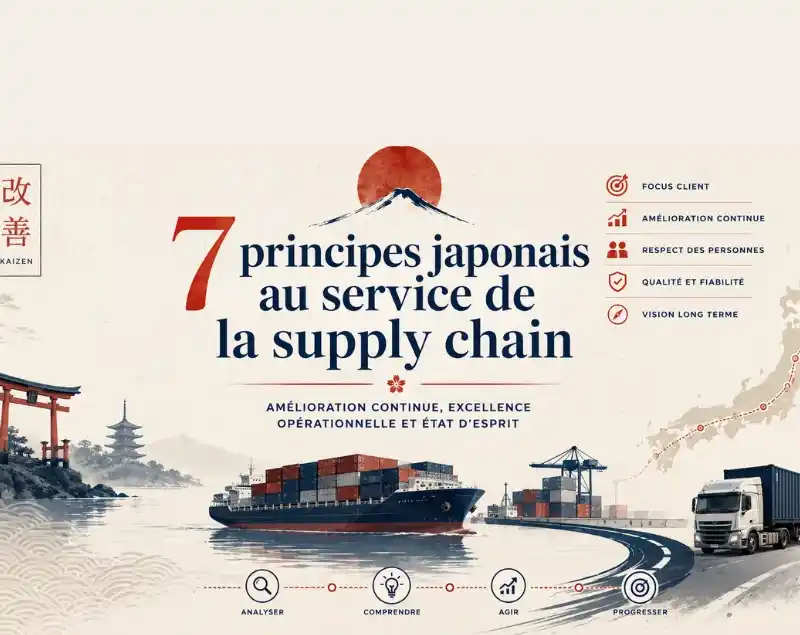
What if the best logistics performance did not start with a new tool, but with a mindset? Technology speeds up operations. Data improves decision-making. Automation reduces repetitive tasks. However, no tool can replace a genuine culture of continuous improvement in Supply Chain. For decades, Japanese companies have developed principles that go far beyond the industrial world. Today, some of these ideas are particularly relevant to logistics and transport. At Nexline Group, 7 Japanese principles inspire us in particular. Why is continuous improvement essential in Supply Chain? A Supply Chain operates in a complex environment. Volumes change. Lead times vary. Customer needs evolve. In addition, external events can disrupt operations at any time. In this context, trying to create a perfectly stable system is rarely realistic. The objective is instead to identify areas for improvement and make processes more efficient over time. This is exactly what continuous improvement in Supply Chain is about. The following 7 Japanese principles offer different ways to approach this mindset. The human touch to your supply chain 1. Wabi-Sabi: accept that a process will never be perfect Wabi-Sabi is based on the acceptance of imperfection. Applied to logistics, this principle encourages us not to wait for the perfect solution before taking action. A process can already work well and still have room for improvement. It can be simplified, accelerated or better coordinated. The key is to improve what already exists. This approach also prevents organisations from becoming stuck while searching endlessly for a perfect solution that may not exist. 2. Shoshin: keep a beginner’s mindset Shoshin literally means “beginner’s mind”. With experience, certain habits become automatic. Yet they are not always the most efficient. Keeping a fresh perspective means continuing to ask simple questions. Why do we work this way? Is this step still useful? Could we do it differently? In Supply Chain, questioning established habits can reveal new opportunities for improvement. It also encourages teams to listen to the people who work closest to day-to-day operations. 3. Shokunin: pursue excellence in every action Shokunin represents dedication to one’s craft and the constant pursuit of quality. In Supply Chain, strong performance often depends on many small tasks being carried out correctly. Order preparation, data analysis, transport documentation or delivery planning all deserve the same level of attention. Every detail can affect the next stage of the process. Maintaining this level of discipline therefore contributes directly to the reliability of the entire operation. 4. Kaizen: improve through small, continuous changes Kaizen is probably one of the best-known Japanese principles in the business world. Its idea is simple: major transformation can begin with small, regular improvements. One minute saved on an operation. A few kilometres reduced on a delivery route. One mistake avoided thanks to a better process. Taken individually, these improvements may seem minor. However, when repeated across several stages, they can transform an organisation over time. This is one of the foundations of continuous improvement in Supply Chain. 5. Kintsugi: turn difficulties into learning opportunities Kintsugi is the Japanese art of repairing broken pottery while highlighting its cracks. In logistics, this philosophy can be interpreted in another way. An incident should not only be corrected. It should also become an opportunity to learn. A delay, a supply shortage or an operational error can reveal a weakness in a process. The goal is then to understand what happened and adapt the organisation. In this way, today’s problem can help create a stronger Supply Chain tomorrow. 6. Ikigai: give meaning to logistics performance Ikigai is often associated with the idea of purpose or reason for being. This principle reminds us that performance is not only about numbers. A Supply Chain is not simply about moving goods from point A to point B. It enables companies to manufacture, sell and meet their commitments. It also creates value for customers, suppliers, partners and employees. Understanding this broader purpose gives more meaning to the improvements made every day. 7. Shikata ga Nai: accept what cannot be controlled Not every event can be anticipated or avoided. A storm can delay a vessel. A geopolitical situation can change a shipping route. A supply shortage can disrupt a schedule. Shikata ga Nai encourages us to accept this reality. That does not mean remaining passive. Instead, the objective is to focus energy on what can actually be controlled. In Supply Chain, the difference often lies in the speed and quality of the response. Continuous improvement starts with people Software, data and automation are now essential to logistics performance. However, these tools only reach their full potential when supported by the right culture. Continuous improvement in Supply Chain depends first and foremost on the ability of teams to observe, question, learn and adapt. It does not necessarily mean transforming everything. Often, the most sustainable progress starts with small decisions made every day. At Nexline Group, we share this vision: keep improving, learn from challenges and stay close to operational realities. Because beyond flows, systems and KPIs, a Supply Chain remains above all a human journey. The human touch to your supply chain. Which principle inspires you the most? Wabi-Sabi, Shoshin, Shokunin, Kaizen, Kintsugi, Ikigai or Shikata ga Nai? These 7 Japanese principles offer different ways to think about performance and continuous improvement. And sometimes, changing the way we work simply starts by changing the way we look at a problem.
The Business Manager Role: César Ridez Shares His Experience
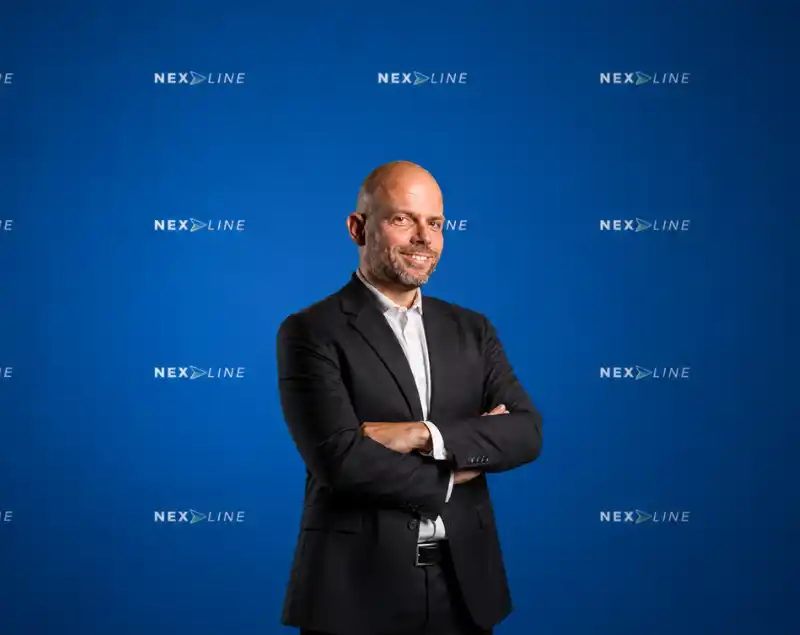
The business manager role is built around discovery, communication and new challenges. At Nexline Group, every project is an opportunity to explore a new sector, meet different professionals and respond to specific business needs. In this new video, César Ridez, Senior Business Manager at Nexline Group, shares his experience. He explains what makes his work rewarding and why human relationships remain central to his approach. What does the business manager role involve? The business manager role starts with understanding each client’s needs. Every company has its own organisation, objectives and constraints. Therefore, a business manager must listen carefully before suggesting the right support. The role also involves connecting a client’s challenges with suitable solutions. As a result, the business manager becomes a trusted point of contact throughout the project. For César Ridez, the variety of assignments and companies makes this role particularly interesting. Working across different sectors and projects One of the most rewarding aspects of the business manager role is the diversity of the sectors involved. Each project offers the opportunity to discover a different professional environment. Expectations, working methods and challenges vary from one company to another. The business manager must therefore adapt continuously. No two projects are exactly the same. This variety makes each day different and creates new opportunities to learn. For César Ridez, this diversity is one of the main reasons why his work remains stimulating. Supporting international projects Projects managed by Nexline Group often include an international dimension. This adds another level of interest to the business manager role. It requires an understanding of different markets, business environments and client expectations. International projects also demand precision, coordination and clear communication. For César Ridez, contributing to these projects is an important part of what makes his daily work exciting. People at the heart of the business manager role Beyond projects and international challenges, one value is especially important to César Ridez: people. The business manager role is not limited to identifying a need or proposing a solution. It also depends on the quality of the relationship created with each client. Listening is therefore essential. It helps the business manager understand the company’s priorities and provide a response that fits its situation. This close relationship also creates trust. Clients benefit from a contact who understands their challenges and can support them over time. The human touch to your supply chain Building strong client relationships At Nexline Group, every client relationship is based on regular communication. A business manager must remain available and attentive. This proximity makes it easier to monitor projects and adjust the support when necessary. For César Ridez, client relationships should not be limited to a single request. They should develop over time. The objective is to build a lasting partnership based on trust, understanding and communication. Providing long-term support The business manager role also involves supporting clients as their needs evolve. A company’s priorities can change. New projects may emerge, while existing challenges may require a different approach. The business manager must therefore remain close to the client and continue learning about their business environment. This long-term approach is part of Nexline Group’s DNA. It places people and strong relationships at the centre of every collaboration. Discover César Ridez’s experience In this new video, César Ridez shares his perspective on the business manager role and his daily work at Nexline Group. He discusses the variety of sectors he works with, the diversity of the projects and the international challenges he helps clients address. His experience also highlights a core Nexline Group value: people. Listening, building close relationships and supporting clients over time are essential parts of his role. Discover the video and learn more about César Ridez’s vision of the Senior Business Manager role at Nexline Group. DISCOVER OUR TRANSPORT SERVICES