
On 12 November 2026, a major Microsoft 365 outage disrupted businesses around the world. Outlook was among the affected services, leaving many professionals unable to access their usual email accounts.
At Nexline, our teams also had to adapt. However, losing access to an email service does not mean that every conversation has to stop.
Telephone, WhatsApp, WeChat, Microsoft Teams where available, and alternative email addresses helped our colleagues stay in touch with customers and partners.
The incident reflects something we know well in international logistics: unexpected disruptions are part of the business. When something stops working as planned, finding another way forward becomes a priority.
Business Continuity Plan: Why Prepare for Unexpected Disruptions?
A business continuity plan (BCP) defines how an organisation intends to maintain its critical activities during a significant disruption.
Such disruptions may include IT outages, telecommunications failures, the loss of access to business premises or the unavailability of a service provider.
The purpose of a business continuity plan is to identify which activities must continue and the resources they require. It also establishes alternative arrangements that could be activated when normal operations are interrupted.
The French National Cybersecurity Agency, ANSSI, provides guidance on preparing for cyber crises, including communication difficulties and the loss of usual operating systems.
In international logistics, the consequences of an IT disruption can quickly extend beyond the IT department.
A logistics manager may be waiting for a booking confirmation. Meanwhile, a supplier needs to confirm when goods will be ready for collection. The carrier may also require instructions before arranging a pickup.
When information stops circulating, operational decisions become more difficult.
Business continuity therefore also depends on the ability to maintain communication between the people responsible for each stage of a shipment.
However, temporary backup measures should not be confused with a formal business continuity plan. A documented BCP involves identifying risks, defining procedures and establishing responsibilities before an incident occurs.
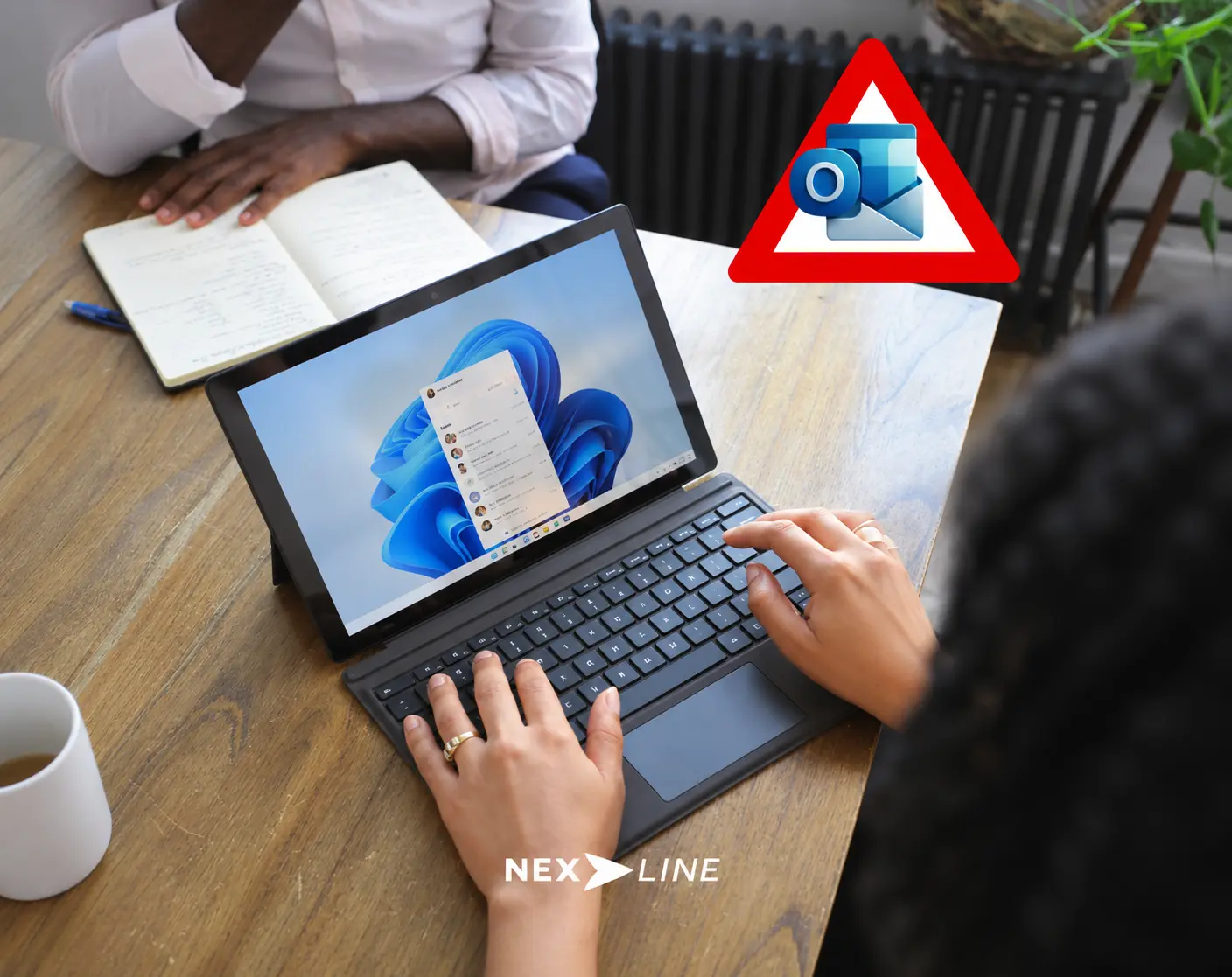
Outlook Outage: How Did Nexline Maintain Customer Communications?
The disruption on 12 and 13 November 2026 affected several Microsoft 365 services, including Outlook. Users experienced difficulties accessing their email accounts and carrying out everyday tasks.
The incident has since been resolved, but it illustrates the problems that can arise when businesses depend heavily on a single communication platform.
At Nexline, our teams informed customers and partners about the alternative contact methods available during the outage.
Several communication channels were available:
- Microsoft Teams: remained accessible to our teams at the time of our communication.
- WhatsApp and WeChat: allowed conversations with our usual contacts to continue.
- Telephone: provided a direct way to reach Nexline employees.
- Alternative Gmail addresses: were made available to our colleagues so email exchanges could continue.
Customers could contact their usual Nexline representatives to obtain the appropriate alternative email addresses.
Our online contact form also provided another way to reach our team.
These measures offered practical alternatives while our usual email services were disrupted.
They did not mean that all Microsoft applications remained accessible everywhere or that every operation continued under normal conditions.
Keeping Alternative Communications Secure
Using alternative communication channels also raises questions about information security.
Sensitive documents, payment details and instructions affecting shipments still need to be handled carefully, even during an IT outage.
For example, a request to change bank details should not be accepted simply because it arrives through a temporary email address.
Important instructions must still be verified, and the identity of the sender should be confirmed through an appropriate channel.
Having several communication tools available can help maintain contact. However, these alternatives must remain compatible with the organisation’s security requirements.
Business Continuity Planning: Why Does Communication Matter for Supply Chain Resilience?
Supply chain resilience refers to a supply chain’s ability to withstand disruption, adapt its operations and recover when circumstances change.
In international freight transport, disruptions can have many causes. Port congestion, vessel delays, limited transport capacity, missing documentation and communication failures can all affect the movement of goods.
Although the consequences differ, these situations often require decisions based on accurate and timely information.
Consider a sea freight shipment that is expected to arrive later than planned.
The consignee needs to be informed. The inland carrier may have to adjust its collection schedule. A delivery appointment might also need to be changed.
If the different parties cannot communicate, coordinating these changes becomes more difficult, even when the shipment itself is still moving.
This is why effective transport flow management also depends on the exchange of information between logistics partners.
An alternative communication channel can help transmit an urgent instruction when the usual systems are unavailable.
However, operational continuity involves more than having several messaging applications.
Teams must know whom to contact, which activities require immediate attention and how to inform everyone affected by a change.
What Should Business Continuity Planning Include for Communication Outages?
For companies managing international shipments, several precautions can help reduce the impact of a communication failure.
- Identify priority contacts. Keep alternative contact details available through a secure and accessible method.
- Establish backup communication channels. Determine which tools can be used when the usual systems are unavailable.
- Define verification procedures. Ensure that sensitive instructions and changes can be authenticated.
- Inform customers and partners. Communicate temporary contact arrangements as soon as necessary.
- Review backup procedures. Check regularly that alternative channels remain accessible and usable.
These precautions do not replace a complete business continuity plan. Nevertheless, they can help preserve the exchanges needed to manage shipments when normal communication tools fail.
Business continuity planning also requires companies to consider which activities must take priority during an interruption. The level of preparation will depend on their operations, dependencies and exposure to risk.
At Nexline, the Human Connection Never Goes Down
In international logistics, a planned route can become unavailable. When circumstances change, another option may need to be found, and the people involved must be kept informed.
The Microsoft 365 outage reminded us that the same principle applies to communication.
During the outage, our teams used the available channels to help customers and partners reach their usual contacts.
Such practical adjustments are part of our approach to international freight forwarding.
At Nexline, we organise shipments through an international network of logistics partners. Our role involves coordinating the different professionals responsible for each stage of the transport operation.
That coordination relies on industry experience and a clear understanding of each customer’s requirements. It also depends on the ability to communicate and adapt when circumstances change.
Digital tools help us exchange documents, share instructions and follow transport operations every day.
When these tools become unavailable, direct relationships remain valuable. Our teams can use other channels to stay in contact and continue coordinating the activities that can still be carried out.
Technology can experience downtime. Our commitment to our customers remains the same.
At Nexline, the human connection never goes down.
Would you like to contact our team or discuss your international freight requirements?
EXPLORE OUR FREIGHT SERVICES