
Transport Cost Optimisation: Key Levers to Reduce Your Expenses
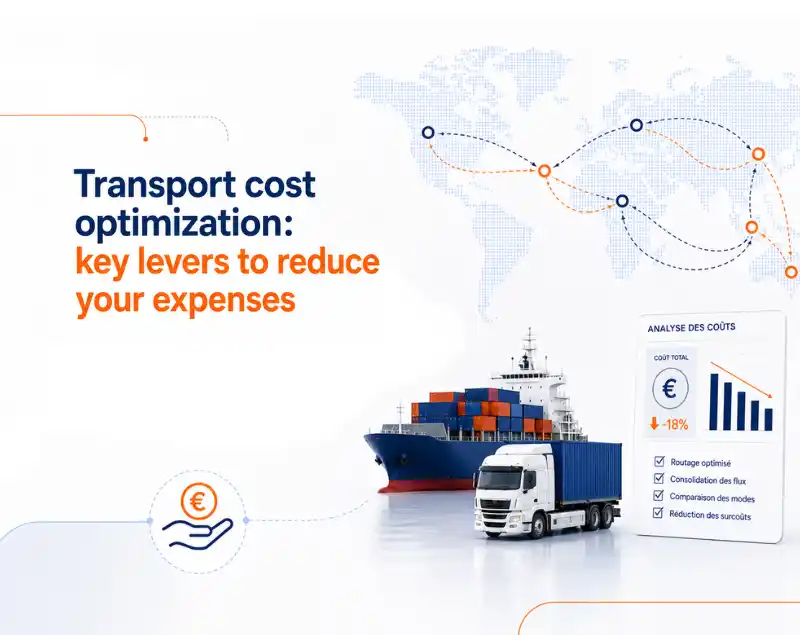
Reducing transport costs does not mean reducing service quality. For a company, the objective is to better control its expenditure while maintaining reliable lead times, monitored flows and compliant deliveries. Transport cost optimisation is based on a simple analysis: which flows cost too much, which charges can be avoided and which modes of transport are truly appropriate? The right approach is to act on the right levers: consolidation, route selection, anticipation of urgent shipments, comparison of transport modes and monitoring of additional charges. Choosing the cheapest transport option can prove counterproductive when delays, shortages, unexpected costs or a poorer customer experience increase its actual cost. The right question is therefore not: How can we pay less? The real question is: Which transport costs can be reduced without weakening my operations? Why do transport costs have such a strong impact on the profitability of French companies? Transport is a strategic item in the supply chain. It depends on many factors: distance, weight, volume, mode of transport, urgency, fuel, capacity availability, tolls, customs, insurance, storage, delays and the expected level of service. In Europe, transport remains a key sector for companies and supply chains. The European Commission notes that it represents approximately 5% of the European Union’s GDP and employs more than 10 million people. Volumes also remain significant. Eurostat indicates that, in 2024, road freight transport in the European Union reached approximately 1,869 billion tonne-kilometres, a slight increase compared with 2023. In other words, transport costs are not a minor issue. They directly affect margins, competitiveness and service quality. Why can reducing transport costs affect service quality? Reducing costs too quickly can have the opposite effect. A company may save money on the transport price but lose more elsewhere: delays, repeat deliveries, storage costs, penalties, dissatisfied customers or immobilised inventory. This is often the trap. A transport cost should never be analysed on its own. It must be compared with the total cost of the operation. For example: Transport cost optimisation must therefore seek a balance between cost, lead time, reliability and service level. Which hidden costs are increasing your transport budget? Additional costs are not always visible in the initial rate. They often appear after the shipment. 1. Urgent shipments Insufficient anticipation can, in some situations, lead to higher transport costs. Using express, air or priority transport is sometimes essential to respond to an emergency or a last-minute shipment. However, when it becomes recurrent, it may reveal room for improvement in planning. A first optimisation lever therefore consists of distinguishing genuinely urgent flows from those that could be anticipated more effectively. 2. Poorly consolidated volumes Shipping small volumes too frequently can cause costs to soar. Consolidation makes it possible to combine several orders, suppliers or deliveries into a single shipment. It can be carried out through groupage, LCL, multi-supplier FCL or a more structured organisation of departures. The objective is simple: fill better, plan better and control better. 3. The wrong mode of transport Not all flows should use the same mode. Sea freight is often relevant for large, non-urgent volumes. Air freight is useful for critical or high-value goods. Road transport provides flexibility. Rail or multimodal transport may be relevant on certain routes. Eurostat notes that, in 2024, approximately 67% of freight transported in the EU, measured in tonne-kilometres, was transported by sea. Road transport represented approximately 25% of the total. The right choice is therefore not always the fastest. It is the one that matches the level of urgency, volume, value and acceptable risk. 4. Hidden charges The advertised price is not enough. A company must also monitor: fuel surcharges;storage charges;waiting charges;repeat delivery charges;customs charges;demurrage and detention charges;insurance;penalties related to delays;internal coordination costs. Transport may initially appear competitive but cost more once all charges are included. 5. Lack of visibility When data is scattered, the company operates blindly. It does not always know how much each route, carrier, customer or product category costs. Without reliable indicators, it becomes difficult to negotiate, compare or improve. Transport cost optimisation therefore often begins with a simple step: clearly setting out all costs. DISCOVER OUR TRANSPORT SERVICES How can transport costs be reduced without affecting service quality? 1. Audit actual costs The first step is to understand what you are really paying. Invoices, routes, volumes, lead times, carriers, additional charges and incidents must be analysed. The objective is to identify differences between the expected rate and the actual cost. A transport audit must answer several questions: which routes cost the most?which charges occur frequently?which carriers are the most reliable?which flows are too urgent?which volumes could be consolidated?which delays cost the company the most? Without this analysis, decisions are often based on impressions. 2. Segment shipments Not all goods require the same level of service. Flows must be divided into three categories. Critical flows These are shipments that can stop production, delay an important customer order or cause an immediate shortage. Examples: essential spare parts;high-value products;perishable goods;priority customer orders;components required for a production line. For these flows, cost is not the only criterion. The priority is reliability, speed and visibility. More expensive transport may be justified if the cost of the delay is higher than the cost of transport. Sensitive flows These are goods that are important to the business but have a flexibility margin of a few days. Examples: regular replenishments;non-blocking components;goods expected for a sales period;scheduled orders;products with limited buffer stock. For these flows, the objective is to find the right balance between cost and lead time. Standard transport may be sufficient, but ETAs must be monitored, peaks in activity anticipated and urgent departures avoided. Flexible flows These are shipments that can withstand a longer lead time without an immediate impact on the business or the end customer. Examples: For these flows, the company can prioritise the most economical solutions: consolidation, groupage, sea freight, scheduled departures or multimodal transport. The benefit of this segmentation is simple: avoiding paying for a premium service for goods that do not need it, while
The Business Manager Role: César Ridez Shares His Experience
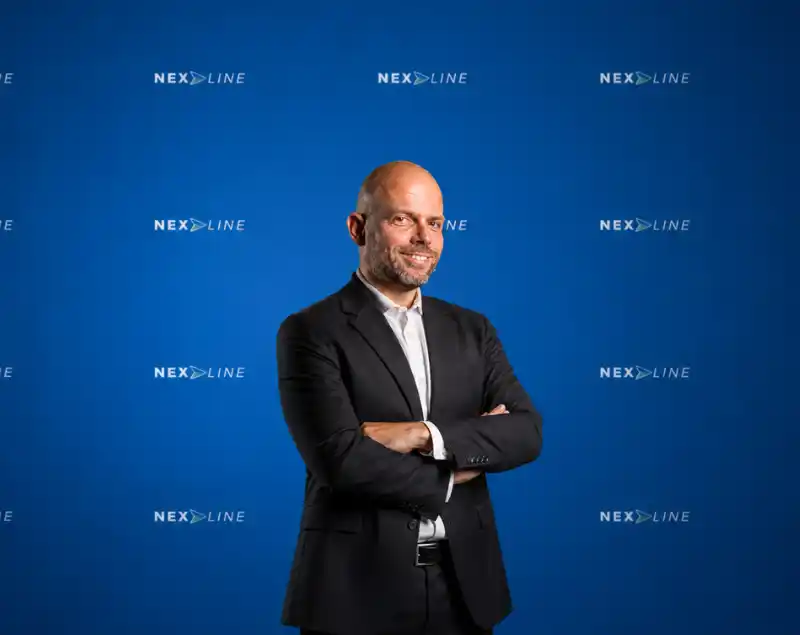
The business manager role is built around discovery, communication and new challenges. At Nexline Group, every project is an opportunity to explore a new sector, meet different professionals and respond to specific business needs. In this new video, César Ridez, Senior Business Manager at Nexline Group, shares his experience. He explains what makes his work rewarding and why human relationships remain central to his approach. What does the business manager role involve? The business manager role starts with understanding each client’s needs. Every company has its own organisation, objectives and constraints. Therefore, a business manager must listen carefully before suggesting the right support. The role also involves connecting a client’s challenges with suitable solutions. As a result, the business manager becomes a trusted point of contact throughout the project. For César Ridez, the variety of assignments and companies makes this role particularly interesting. Working across different sectors and projects One of the most rewarding aspects of the business manager role is the diversity of the sectors involved. Each project offers the opportunity to discover a different professional environment. Expectations, working methods and challenges vary from one company to another. The business manager must therefore adapt continuously. No two projects are exactly the same. This variety makes each day different and creates new opportunities to learn. For César Ridez, this diversity is one of the main reasons why his work remains stimulating. Supporting international projects Projects managed by Nexline Group often include an international dimension. This adds another level of interest to the business manager role. It requires an understanding of different markets, business environments and client expectations. International projects also demand precision, coordination and clear communication. For César Ridez, contributing to these projects is an important part of what makes his daily work exciting. People at the heart of the business manager role Beyond projects and international challenges, one value is especially important to César Ridez: people. The business manager role is not limited to identifying a need or proposing a solution. It also depends on the quality of the relationship created with each client. Listening is therefore essential. It helps the business manager understand the company’s priorities and provide a response that fits its situation. This close relationship also creates trust. Clients benefit from a contact who understands their challenges and can support them over time. The human touch to your supply chain Building strong client relationships At Nexline Group, every client relationship is based on regular communication. A business manager must remain available and attentive. This proximity makes it easier to monitor projects and adjust the support when necessary. For César Ridez, client relationships should not be limited to a single request. They should develop over time. The objective is to build a lasting partnership based on trust, understanding and communication. Providing long-term support The business manager role also involves supporting clients as their needs evolve. A company’s priorities can change. New projects may emerge, while existing challenges may require a different approach. The business manager must therefore remain close to the client and continue learning about their business environment. This long-term approach is part of Nexline Group’s DNA. It places people and strong relationships at the centre of every collaboration. Discover César Ridez’s experience In this new video, César Ridez shares his perspective on the business manager role and his daily work at Nexline Group. He discusses the variety of sectors he works with, the diversity of the projects and the international challenges he helps clients address. His experience also highlights a core Nexline Group value: people. Listening, building close relationships and supporting clients over time are essential parts of his role. Discover the video and learn more about César Ridez’s vision of the Senior Business Manager role at Nexline Group. DISCOVER OUR TRANSPORT SERVICES