
Business Partnerships: Nexline Visits Radio SCOOP in Lyon
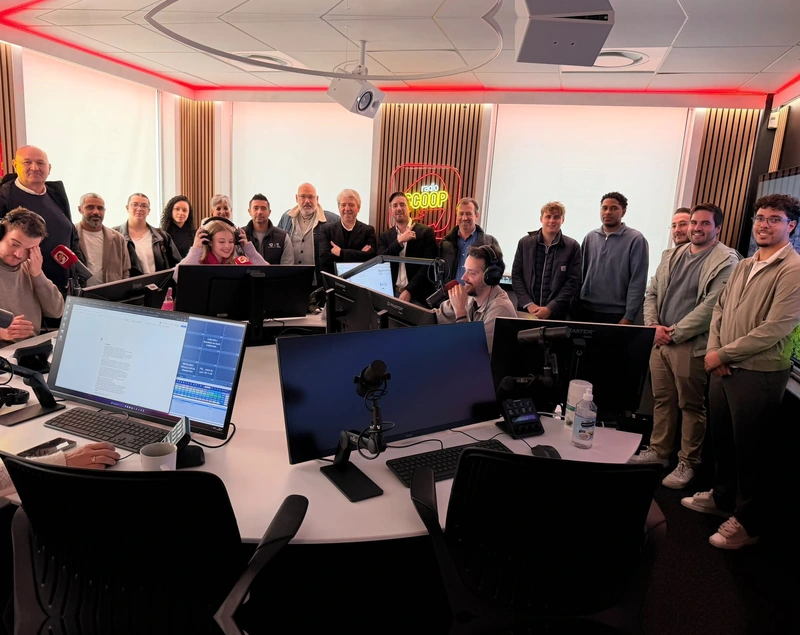
Sport brings people together, music creates connections and logistics connects businesses. Three different worlds, but one thing in common: the people who make lasting relationships possible. At Nexline Group, we believe that business partnerships go beyond agreements between organisations. They are also built through meetings, trust and the conversations between the people involved. With this in mind, our team recently attended another Club des 1000 event as part of our partnership with District 69 Football. This time, the destination was the Radio SCOOP studios in Lyon for a morning of discovery and conversations with fellow partners. The event reflected our commitment to participating in the economic and community life of the regions where we operate, particularly the Lyon area. Business Partnerships: Nexline Joins the Club des 1000 Developing a professional network involves more than simply making new business contacts. It also means meeting people from different industries, discovering their activities and taking time to exchange ideas in a different setting. The Club des 1000, which Nexline participates in through its partnership with District 69 Football, provides opportunities for partners to meet and connect. These events bring businesses together around a shared interest in sport and local community life. For Nexline, attending these meetings is an opportunity to build relationships with professionals from a wide range of backgrounds and industries. After all, companies do not only meet when there is an immediate commercial need. They can also exchange experiences, discover new initiatives and develop a better understanding of the organisations operating in their region. In this context, business partnerships can go beyond a contractual relationship. They create opportunities to build connections and maintain regular communication. This approach reflects how we work at Nexline. Our role is to organise freight transport by coordinating different partners throughout the supply chain. We therefore understand how important strong professional relationships can be to successful collaboration Radio SCOOP Lyon: A Networking Event Bringing Partners Together For this latest Club des 1000 meeting, participants gathered at the Radio SCOOP studios in the Lyon region. It was an opportunity to discover a professional environment very different from international freight transport. The programme included a behind-the-scenes tour of the radio studios, conversations between participants, quizzes and informal networking activities. The visit allowed our colleagues to discover another industry and spend time with other members of the partner network. After all, a radio station, much like a logistics company, relies on the coordination of different skills and responsibilities. The professions and operational requirements are different. However, teamwork, information sharing and responsiveness are important in both environments. For our colleagues, this morning offered an opportunity to step outside their usual professional activities. It also allowed them to meet other professionals and gain a better understanding of the local business community. These moments contribute to relationships that cannot be developed exclusively through screens, emails or telephone calls. They remind us that face-to-face conversations still have an important place in professional life. We would like to thank the Radio SCOOP team for their welcome and for introducing us to their world. Sports Sponsorship: Connecting Businesses Through Sport Sports sponsorship allows companies to support initiatives and organisations within the sporting community. Beyond brand visibility, it can also encourage professional relationships, discussions and shared initiatives. This relationship-building dimension is particularly relevant to our partnership with District 69 Football. Football plays an important role in local community life. It brings together players, volunteers, club officials, partners and supporters. It also creates opportunities for businesses from different industries to meet. The events organised through the Club des 1000 illustrate this dynamic. They provide opportunities for conversations that go beyond sport itself. For Nexline, this partnership reflects our commitment to developing professional and personal relationships in the regions where we operate. It is not simply about associating our name with a sporting initiative. We also want to take part in the events organised and contribute to the relationships between the different members of the network. This approach reflects our belief that lasting partnerships depend on trust and mutual understanding. In sport, just as in business, strong relationships take time, commitment and regular communication. Nexline in Lyon: Building Strong Local Partnerships Nexline supports businesses by organising freight transport in France and internationally. However, our development does not depend solely on our international logistics network. It also relies on our teams, partners and the professional relationships we build in the regions where we operate. The Lyon region is one of these locations. Our presence in Lyon allows us to stay close to local businesses while supporting their transport projects. We organise shipments and coordinate the different stakeholders involved in the supply chain according to each customer’s requirements. Yet behind this coordination, there are always people communicating and working together. Trust between partners, a better understanding of an industry or a professional meeting can all contribute to lasting business relationships. That is why we place particular importance on personal connections. Our people-focused approach encourages direct relationships and an attentive understanding of our contacts’ needs. The event at Radio SCOOP illustrates our commitment to participating in local community life. It also reminds us that our work brings us into contact with businesses from many different industries. Sport, media and logistics all have their own characteristics. However, each depends on the people who contribute to its success. At Nexline, we aim to continue developing these relationships with both our customers and our partners. We would like to thank District 69 Football and the Radio SCOOP team for their welcome, as well as everyone who attended this Club des 1000 event. New connections, different professional environments to discover and the same commitment: building lasting relationships, locally and internationally. The human touch to your supply chain. Are you a business based in the Lyon region looking for a partner to organise your freight shipments? Contact the Nexline team to discuss your requirements and discover logistics solutions adapted to your business. EXPLORE OUR FREIGHT SERVICES
Workplace Safety: Nexline Employees Take First Aid Training
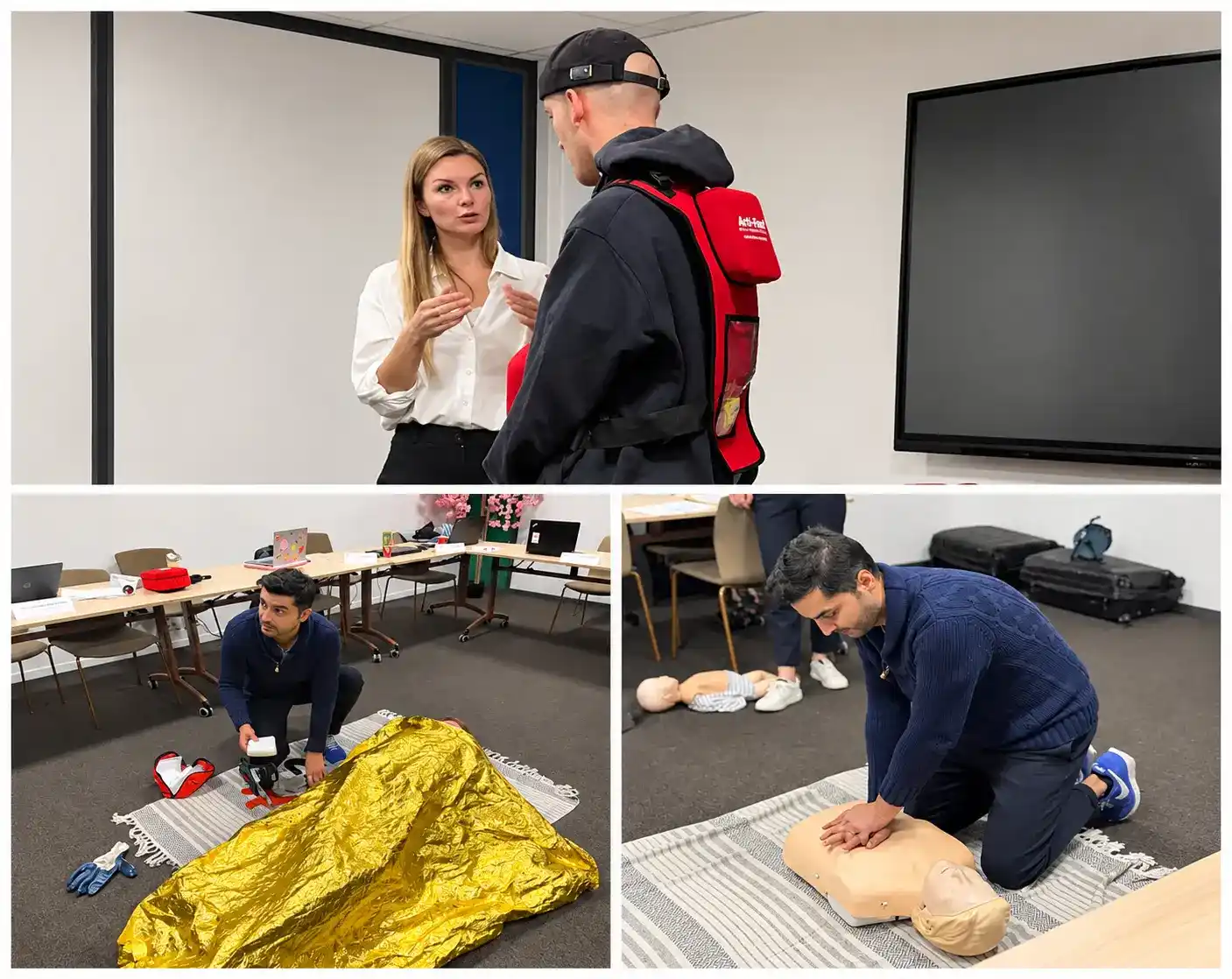
Knowing how to respond when someone has an accident or experiences a medical emergency requires preparation. In the workplace, the first few minutes can make a difference. That is why workplace safety and first aid training are important aspects of occupational risk prevention. At Nexline Group, we believe that caring for others is also part of how we work. With this in mind, several of our employees recently attended a first aid training session organised with EGIDE ENTREPRISE. The programme included learning essential first aid techniques, practical exercises and simulated emergencies to help participants respond appropriately when someone needs assistance. This initiative reflects our commitment to looking after the safety and well-being of our teams, alongside the quality of our logistics services. Workplace Safety: Why Is First Aid Training Important? A workplace first aider is an employee trained to provide initial assistance when someone suffers an accident or medical emergency at work. Their role is to deliver first aid within the limits of their training and contribute to preventing workplace risks. In France, the Sauveteur Secouriste du Travail (SST) programme combines these two responsibilities. According to the French National Research and Safety Institute (INRS), SST training prepares employees to respond to emergencies while contributing to workplace risk prevention. These responsibilities make first aid an important element of occupational health and safety. After all, accidents and medical emergencies can occur in many professional environments, including offices, warehouses and logistics facilities. In such situations, recognising potential dangers, protecting those involved and alerting emergency services are essential steps. A trained workplace first aider does not replace healthcare professionals or emergency responders. However, their training helps them provide appropriate assistance while waiting for professional help. Beyond emergency response, this knowledge also contributes to a better understanding of risks in the working environment. First Aid Training: Nexline Employees Learn with EGIDE ENTREPRISE To help our employees develop these skills, several Nexline colleagues participated in a training session organised with EGIDE ENTREPRISE. This initiative gave participants an opportunity to learn the principles of first aid at work and prepare for different emergency situations. The training included practical exercises and realistic scenarios. The objective was to go beyond theoretical knowledge and understand how to apply the appropriate responses in real-life situations. Participants were introduced to the different stages of an emergency intervention and the actions to take when someone requires assistance. These practical exercises are an essential part of the learning process. In an emergency, knowing first aid techniques is important. However, employees must also be able to assess the situation and respond appropriately. The French SST training programme is built around this combination of knowledge, practical skills and prevention. For our colleagues, the session was also an opportunity to learn together. It allowed them to share an experience outside their usual responsibilities, with a common objective: being better prepared to help others. We would like to thank EGIDE ENTREPRISE for its support and the quality of the training session. Occupational Health and Safety: Learning Essential First Aid Skills First aid training is not only about learning how to respond after an accident. It also helps develop a culture of prevention within the workplace. Understanding potential risks allows employees to recognise hazardous situations and adopt appropriate behaviours. Training therefore introduces participants to several important stages of emergency response. First, they learn to identify dangers and avoid making the situation worse. Next, they need to assess the situation, communicate relevant information and alert emergency services according to established procedures. Finally, trained employees learn how to provide assistance using techniques appropriate to the circumstances. These competencies are part of the training framework established by the INRS and the French Occupational Risks branch of the national health insurance system. However, their value extends beyond emergency situations. Workplace risk prevention also depends on everyday awareness, communication and the ability to report potentially dangerous situations. In the transport and logistics sector, this attention to safety is particularly relevant. Professional activities may involve travel, manual handling, equipment operation or work across different sites. Even in office environments, prevention and the ability to provide first aid remain important. Training employees in first aid at work therefore supports a broader approach to workplace safety. It also reminds everyone that they can contribute to protecting their colleagues. At Nexline, Workplace Safety Reflects Our Human Commitment In our industry, strong working relationships play an essential role. Every day, our teams coordinate transport operations, communicate with customers and work alongside different partners throughout the supply chain. However, this human dimension also begins within our own organisation. At Nexline, we aim to create a professional environment where employees can work together, share knowledge and look out for one another. Our people-focused approach encourages close working relationships and communication between teams. The participation of several colleagues in this first aid training session reflects this philosophy. It demonstrates our commitment to raising awareness of workplace safety and the importance of knowing how to respond when someone needs help. This initiative also connects with the social dimension of our corporate social responsibility (CSR) commitments. After all, caring for employees goes beyond providing good working conditions. It also means helping them understand potential risks, develop useful skills and contribute to a safer professional environment. Of course, first aid training alone cannot replace all the preventive measures required within a company. Nevertheless, it represents a practical contribution to a broader culture of safety. At Nexline, we believe that caring for people is an essential part of our company culture. Thank you to all the colleagues who participated in this training session, and to EGIDE ENTREPRISE for its support. Because knowing how to respond when someone needs help can make a real difference. The human touch to your supply chain. Would you like to learn more about Nexline and the people supporting your logistics projects? Discover Nexline and learn more about the teams contributing to our company’s development every day. EXPLORE OUR FREIGHT SERVICES
Team Management: 8 Questions to Better Understand Your Employees
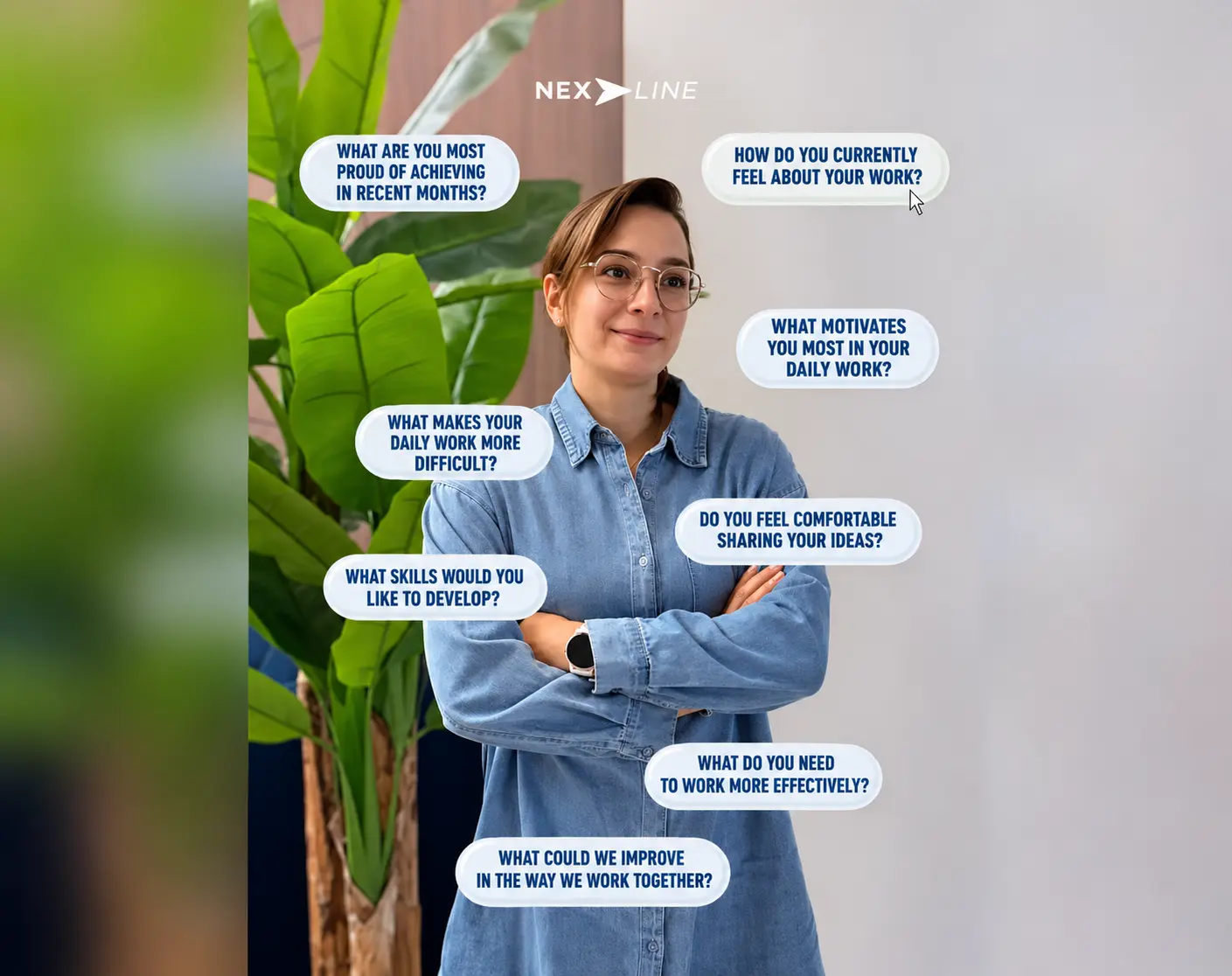
An employee can meet their targets, complete their daily tasks and still face difficulties their manager knows nothing about. So how can managers identify these situations before they become bigger problems? This is where effective team management begins. By encouraging open conversations and giving employees opportunities to express themselves, managers can better understand their expectations, challenges and ideas. At Nexline Group, we believe that people play an essential role in how we work together. With this in mind, Typhaine Salivas, Human Resources Manager at Nexline, shares eight practical questions to ask employees. These questions can help encourage dialogue, build trust and strengthen employee engagement through more attentive, people-focused management. Team Management: Why Listening to Employees Matters Effective team management involves more than assigning tasks, setting objectives and monitoring performance. It also means creating opportunities for employees to share their experiences, express concerns and contribute ideas. This approach is closely related to participative management, a leadership style that encourages employees to contribute to discussions and decisions affecting their work. However, participative management does not mean that every decision must be made collectively. Managers remain responsible for their teams, while drawing on employees’ knowledge and experience. The starting point is simple: listening. After all, employees working directly with customers, managing daily operations or coordinating projects often have valuable insights into what works and what could be improved. In transport and logistics, this practical knowledge is particularly important. Teams must coordinate shipments, communicate with different stakeholders and respond to unexpected situations. Their experience can therefore help identify operational difficulties and opportunities for improvement. Nevertheless, inviting employees to speak is only the first step. Managers must also create an environment where people feel comfortable expressing their opinions, asking questions and suggesting changes. That is why effective team management depends on trust, communication and the willingness to listen. 8 Questions from Typhaine to Better Understand Your Team How can managers encourage meaningful conversations without turning every discussion into a formal performance review? According to Typhaine, asking a few well-chosen questions can help open the dialogue. Here are eight practical questions to introduce into everyday conversations with employees. 1. What Are You Most Proud of Achieving in Recent Months? This question encourages employees to reflect on their work and recognise their achievements. It also helps managers discover contributions that may not always be visible through performance indicators. Acknowledging these accomplishments can help employees feel recognised and valued. 2. How Are You Currently Feeling About Your Work? Beyond targets and responsibilities, understanding how employees feel about their work is essential. This question creates an opportunity to discuss workload, working conditions or difficulties they may be experiencing. The important thing is to listen without judgement and allow people to express themselves openly. 3. What Motivates You Most in Your Daily Work? Not everyone is motivated by the same things. Some employees appreciate autonomy. Others enjoy customer interactions, solving problems or learning new skills. Understanding these differences helps managers provide more relevant support and encourage employee engagement. 4. What Makes Your Daily Work More Difficult? An unsuitable tool, missing information or an inefficient procedure can create unnecessary obstacles. By asking this question, managers can identify difficulties that might otherwise go unnoticed. It also encourages employees to contribute ideas for improving their working environment. 5. Do You Feel Comfortable Sharing Your Ideas? Open communication depends on trust. Employees who hesitate to make suggestions or raise concerns may keep valuable information to themselves. This question helps managers understand whether team members feel comfortable contributing their opinions and expressing different viewpoints. It is also an important consideration for participative management. 6. What Skills Would You Like to Develop? Good team management goes beyond supporting employees in their current responsibilities. It also involves understanding their professional ambitions and development needs. This question can open discussions about training, new responsibilities or opportunities to acquire additional skills. 7. What Do You Need to Work More Effectively? Employees often have a clear understanding of the practical challenges they face. They may need better tools, easier access to information, additional support or improved coordination with other teams. By identifying these needs, managers can explore practical ways to improve daily operations. 8. What Could We Improve in the Way We Work Together? This final question encourages managers to reflect on their own practices. Rather than focusing exclusively on employee performance, it creates an opportunity for two-way feedback. It also introduces an important principle of participative management: working together to identify improvements and strengthen collaboration. Employee Engagement: Turning Feedback into Action Asking the right questions is a good starting point. However, effective team management also depends on what happens after the conversation. When employees share a concern or suggest an improvement, they want to know their feedback has been taken seriously. This is why regular communication and follow-up are essential. Consider an example from the logistics industry. An employee explains that they regularly lose time searching for information needed to monitor shipments. The manager can investigate the problem, consult other team members and explore possible improvements to the process. If a solution is introduced, the next step is to explain the changes and check whether they address the original difficulty. This example illustrates how employee feedback can contribute to better operational practices. It also shows the connection between attentive team management and a participative approach. The first encourages regular communication and support. The second invites employees to contribute to discussions and improvements. To make these conversations useful, managers should follow a few basic principles. First, make time for regular exchanges, even during busy periods. Next, listen carefully without immediately trying to provide an answer to every concern. Finally, follow up on the discussion and explain the decisions made, including when a suggestion cannot be implemented. After all, employee engagement depends not only on being heard but also on how feedback is handled. At Nexline, Building a Workplace Culture Based on Trust In international transport, service quality depends on efficient coordination and strong working relationships. Every day, employees exchange