
Rail freight: is it right for your logistics flow?
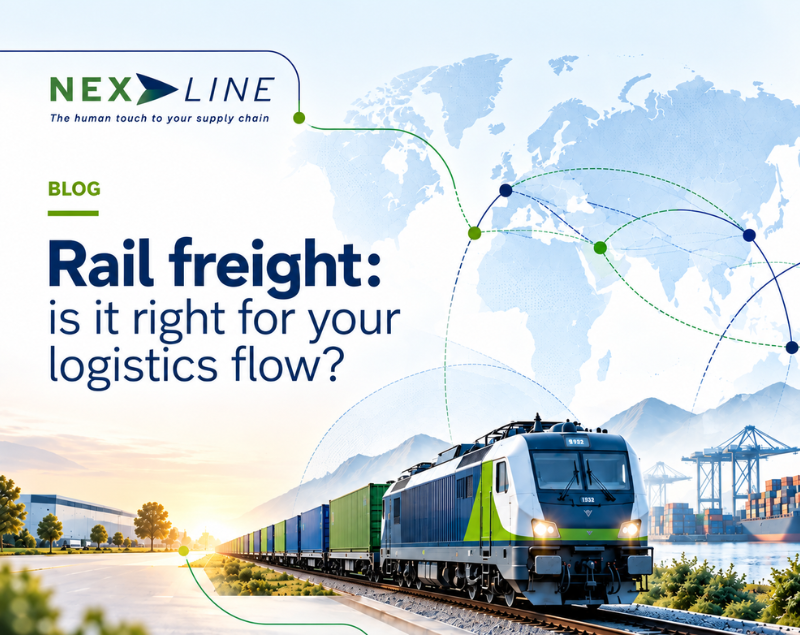
You have goods to transport over a long distance. Sea freight may be too slow. Air freight may be disproportionate to the value or urgency of the shipment. And road transport is not always the only option. Rail freight can be an interesting alternative. But choosing rail is not simply a matter of comparing the price of a train with that of a truck. The better question is: Distance, volume, shipment frequency, terminal locations, pre-carriage, final delivery, door-to-door transit time, total cost… The choice of transport mode should be based on the entire journey. In this guide, Nexline explains when rail freight can be relevant, how it works in practice and which criteria to consider before making a decision. What is rail freight? Rail freight is the transportation of goods by train. But within a supply chain, the train does not necessarily cover the entire journey. For example, goods may follow this route: This is known as multimodal transport, where several modes of transport are combined to complete the same shipment. This is an important distinction: choosing rail freight does not necessarily mean replacing trucks with trains from end to end. Rail can be the long-distance link within a wider logistics chain. Nexline offers solutions including FCL, LCL, rail-road, rail-sea and full train chartering. When is rail freight a good option? There is no magic distance at which a company should automatically switch to rail. However, certain factors can make rail freight particularly relevant. 1. You are transporting goods over a long distance The longer the distance, the more relevant it can be to consider several transport modes rather than relying solely on road transport. Rail offers high loading capacity and is particularly suited to medium- and long-distance transportation. 2. Your shipments are regular Recurring flows can be easier to integrate into a rail freight operation than one-off shipments. Why? Because departures, capacity and transport planning become more predictable. Texto pegado 3. You are transporting large volumes Rail freight makes it possible to consolidate and move large volumes efficiently. This can be particularly relevant for: 4. You need a shorter transit time than sea freight On certain international routes, rail freight can provide an intermediate solution between sea and air freight. It can be relevant when sea freight does not meet the required lead time, while air freight would be disproportionate to the needs of the shipment. The right choice nevertheless depends on the corridor, type of goods, volume and required door-to-door transit time. This is particularly relevant on certain China–Europe rail freight routes, such as the Xi’an–Duisburg connection. Texto pegado Key takeaway Rail freight can be particularly relevant when you need to combine capacity, distance, controlled transit times and multimodal logistics planning. Rail, road, sea or air freight: how do you choose? This is where the decision becomes more complex. There is no single “best” transport mode. The right choice depends on your specific flow. Criteria Rail freight Road freight Sea freight Air freight Long distance Very suitable Depending on the route Very suitable Very suitable Large volumes Suitable Suitable Very suitable More limited Urgent shipments Depending on the flow Suitable Less suitable Very suitable Door-to-door With pre/post-carriage Very suitable With pre/post-carriage With pre/post-carriage Consolidation High Medium Very high Limited Multimodal transport Very common Very common Very common Possible The table deliberately does not identify a “winner”. Transit times, prices and operational constraints vary depending on the corridor and the type of flow. The real question is: Which balance between cost, transit time, volume, flexibility and operational constraints best matches my needs? Is the price of rail freight enough to compare different transport modes? No. This is one of the most common mistakes when comparing different transport solutions. Imagine two quotes: Option A Rail freight: €1,000 Option B Road freight: €1,150 At first glance, rail appears to be cheaper. But you need to consider the cost of the entire journey. For rail freight, this may include: = actual cost of the logistics flow This is precisely why the transport price alone is not enough to measure the total logistics cost. How long does rail freight take? There is no standard transit time for all rail freight shipments. The transit time depends on factors including: To understand the transit times being quoted, it is important to distinguish between the train journey time and the door-to-door transit time. This is the time during which the goods are actually being transported by rail, from the train’s departure to its arrival at the destination terminal. This is the total time required to move the goods from their point of origin to their final destination. It includes, for example, road pre-carriage, terminal operations, the rail journey and final delivery. These are therefore two different things. Example: A train may take 2 days to cover a particular route, while the door-to-door transit time may be longer if the goods first need to reach the rail terminal by truck, wait for departure, or be transported from the arrival terminal to the final customer. How does rail freight work in practice? Let’s take a simple example. A company needs to transport goods from Lyon to northern France. Step 1 — Collection A truck collects the goods from the customer’s site. Step 2 — Rail terminal The goods are transported to the rail terminal. Step 3 — Rail freight The train takes over for the long-distance part of the journey. Step 4 — Arrival terminal The transport unit is unloaded from the train. Step 5 — Final delivery A truck takes the goods to the final recipient. The train is therefore not isolated from the rest of the supply chain. It becomes one part of a multimodal transport journey. This is illustrated by the new Dunkirk–Lyon rail connection introduced by Nexline: containers are collected at the Terminal des Flandres, transported by rail to Lyon, and then delivered to their final destination. FCL, LCL or full train: which solution should you choose? The choice mainly depends on the
Logistics Partner: Nexline Group at the Heart of Jules’ Operations
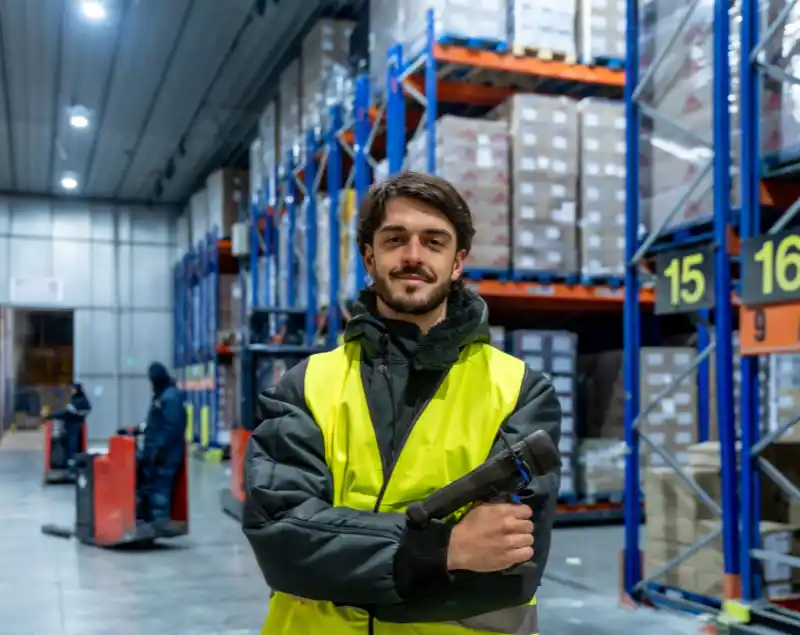
On 22 September, the Nexline Group team was invited by Jules to a morning of discussions at their Wattrelos site. The programme included a warehouse visit, conversations with the logistics teams, a presentation of ongoing projects, and discussions around digitalisation, tracking and the evolution of flows. Beyond the operational topics, the morning was above all an opportunity to take the time to exchange, understand the reality on the ground and gain a clearer view of our partner’s challenges. Because being a logistics partner is not only about organising transport. It also means understanding how a company operates, its constraints and its priorities. Being a logistics partner means understanding the field Remote communication is essential in day-to-day operations. However, some things are better understood when you take the time to see them directly. The visit to the Jules site gave us the opportunity to discover the warehouse organisation, speak with the teams and better understand the reality of their operations. These moments are important for Nexline Group. They allow us to place transport within a broader context and better understand how each flow fits into our client’s overall activity. Digitalisation, tracking and changing flows The morning also gave us the opportunity to discuss several topics that are transforming logistics operations today. Among them: digitalisation, tracking and greater visibility over flows. Companies need to know where their goods are, access reliable information and better anticipate the different stages of their supply chain. For a logistics partner, these challenges are now an integral part of the support provided. It is no longer only about moving goods. It is also about making information flow more effectively. Building more relevant solutions through dialogue Beyond tools and processes, the morning was mainly shaped by discussions. Taking the time to ask questions, share experiences and compare operational realities helps us better understand actual needs. At Nexline Group, we believe this proximity is essential. A relevant solution is rarely built around price or lead time alone. It also depends on understanding how the company operates and building a relationship based on trust over time. That is how we see our role as a logistics partner. Supporting French brands in their development At Nexline Group, we support companies and French brands in the development of their activities. Our transport and logistics expertise is used to support their projects and flows, both in France and internationally. But this support also comes through moments like this one. Meeting the teams, understanding their challenges and observing operations directly on the ground helps us build solutions that are closer to their real needs. Moving goods also means supporting the development of the companies and brands we work with. Thank you to the Jules teams for their welcome, availability and the quality of the discussions. A special thank you to Geraldine Couque for the invitation, as well as to Tayfur Altinkaynak, Anthony Cochet and Richard Ibanez for representing Nexline Group. The Human Touch to Your Supply Chain. DISCOVER OUR TRANSPORT SERVICES
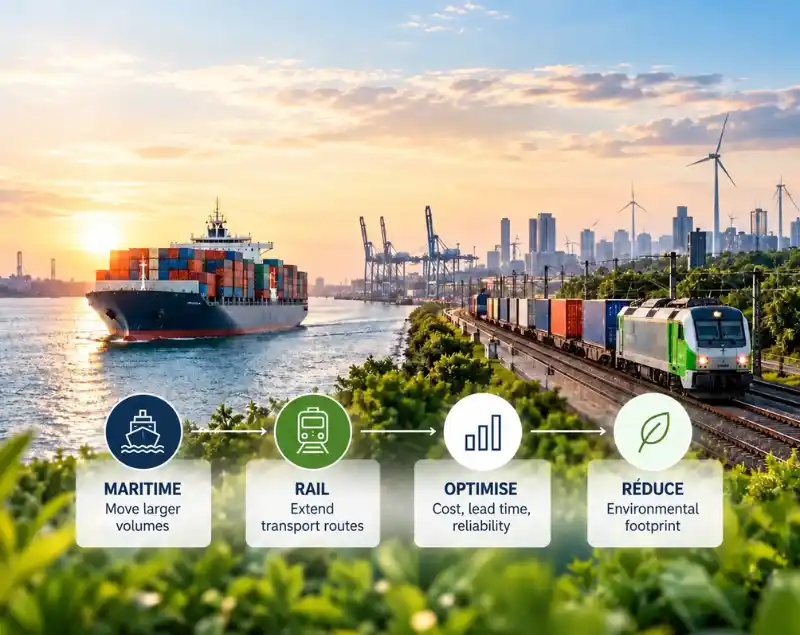
Sustainable Logistics: Nexline Group at the 2026 Customs Symposium There are events you attend, and others that genuinely make you want to exchange ideas, share experiences and think together about the future of the industry. This year, Nexline Group took part in the 2026 Customs Symposium in Dunkirk, organised by Classe Export. The event brought together professionals around key topics such as international trade, customs regulations and the transformation of supply chains. For our teams, it was also an opportunity to share our vision of sustainable logistics, rooted in day-to-day operational realities. Decarbonising the supply chain with an operational approach During the Symposium, Karima Z. Habacha, Managing Director France at Nexline Group, spoke on the topic: “Decarbonising the supply chain: an operational perspective.” Reducing the environmental impact of a supply chain is not simply about choosing one transport mode over another. It means looking at the entire flow. Origin, destination, volumes, lead times, operational constraints and available transport modes all need to be taken into account. Sustainable logistics tailored to each flow In practice, there is no single solution for making transport more sustainable. Depending on the shipment, it may be relevant to combine different transport modes, rethink a route or optimise certain stages of the journey. The challenge is to find the right balance between cost, lead time, reliability and environmental impact. This approach reflects the way we work every day at Nexline Group. Our teams manage international flows with very different constraints. Building the right solution therefore starts with a concrete analysis of each operation. Sustainable logistics cannot remain theoretical. It needs to work in real-life conditions and respond to the actual needs of businesses. Exchanging with the people shaping supply chains The Customs Symposium was also a valuable opportunity to meet and exchange with professionals from across the sector. Tayfur Altinkaynak joined Karima in representing Nexline Group and taking part in the discussions throughout the day. Beyond the conferences, these conversations are what we will remember most. International trade is evolving. Regulations are changing. Expectations around decarbonisation are also increasing. Sharing experiences and perspectives helps us better understand these developments and identify practical ways to respond. Moving supply chains forward through operational experience For Nexline Group, taking part in events like this is also part of the way we continue to develop our solutions. Expertise is built every day through operations. But it is also strengthened by discussions with companies and professionals working in customs, transport and supply chain. It is this combination of field experience and collective thinking that helps practices evolve. The transition towards more sustainable logistics will not happen through a single decision. It will come from a succession of choices, optimisations and new ways of organising flows. Thank you to Classe Export for organising the 2026 Customs Symposium, and to all the speakers and participants for the quality of the discussions. A professional, human and forward-looking day. Nexline GroupThe Human Touch to Your Supply Chain. DISCOVER OUR TRANSPORT SERVICES