
Demurrage vs Detention: What Is the Difference and How Can You Avoid Container Charges?
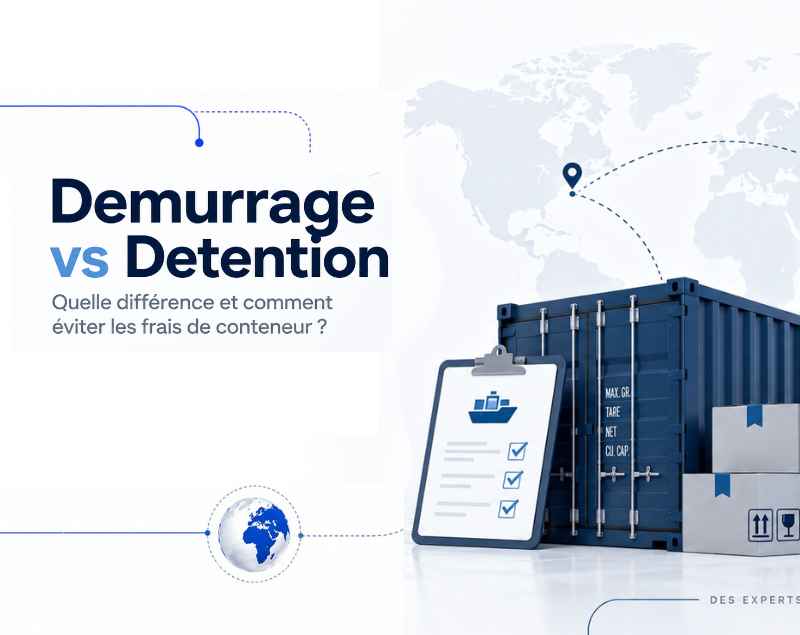
You are importing goods by sea. The vessel arrives at the port. The container is discharged. You might think that the most important part of the transportation process is over. Yet, a few days later, your company may receive an additional invoice. Why? Because a container is not simply a box used to transport your goods. It is also equipment provided by a shipping line that needs to be collected, moved, unloaded and returned to circulation. When a container remains in use beyond the agreed period, additional charges may apply. This is where two terms regularly appear in ocean freight: demurrage and detention. They are often confused. Yet, they do not refer to exactly the same situation. The most common distinction is: Demurrage: the container remains beyond the free time at the terminal. Detention: the container remains beyond the free time outside the terminal, before it is returned. But this definition alone is not enough to understand an invoice. You also need to know what free time means, when the clock starts, when it stops, and why the rules can vary depending on the country, port or contract. What happens when a container arrives at the port? Let’s take a simple example. A French company orders goods from a supplier in Asia. The goods are loaded into a container. The container is then transported to the port of departure, loaded onto a vessel and shipped to France. After several weeks at sea, the vessel arrives at the destination port. But the container’s journey is not over. Why does the shipping line charge these fees? A container needs to be available for reuse. When it remains idle for too long, the shipping line cannot use it for another shipment. Demurrage and detention mechanisms are therefore designed, among other things, to encourage the efficient movement of cargo and the return of equipment within the agreed timeframes. To understand how they work, we first need to look at one simple concept. What is free time? Free time is the period during which the applicable tariff conditions allow the customer to keep or use the container without paying the corresponding demurrage and/or detention charges. Let’s imagine, purely to illustrate the principle, that your contract provides 5 days of free time. Your container arrives at the terminal on a Monday. You then have a defined period, according to the applicable tariff, to complete the required operations. If you stay within this timeframe, the relevant charges do not apply. If you exceed it, charges may start to apply. Once the applicable deadline is exceeded → charges may apply Important: the 5 days used in this example are not a general rule. Actual free time depends on the shipping line, country, port, container type and contractual terms. So, what is the difference between demurrage and detention? Now that the principle of free time is clear, the distinction becomes much easier to understand. In the standard model: What is demurrage? Demurrage generally refers to charges related to keeping a container at the terminal beyond the applicable free time. For an import shipment, the situation can be very straightforward. The container arrives. It is discharged from the vessel. It remains at the terminal. The company then needs to arrange its release. Several operations may be required: If these operations take too long and the container exceeds the applicable deadline, additional charges may arise. A practical example A company imports a container from China. The vessel arrives as scheduled. However, the customs declaration requires an additional document. The goods cannot be released. The truck therefore cannot collect the container. The container remains at the terminal. The customs delay may then result in demurrage or storage charges, depending on the applicable charging mechanism. The vessel itself is therefore not necessarily responsible for the additional cost. The problem may arise after the vessel has arrived. What is detention? Detention generally applies when the container is outside the terminal and is not returned within the agreed timeframe. The situation is different. The container leaves the port. It is delivered to the customer. The goods need to be unloaded. The empty container must then be returned to the location specified by the carrier. If the empty container is returned too late, detention charges may apply. A practical example The container is collected from the terminal on Monday. Delivery takes place on Tuesday. The warehouse was supposed to unload the container that day. However, no unloading slot is available. The unloading is postponed. The loaded container remains at the warehouse for several days. Then, once empty, its return to the designated depot is not arranged immediately. The additional time spent outside the terminal may then generate detention charges. Can the same container generate both demurrage and detention? Yes, depending on the applicable terms. Let’s take a practical example. One container, two different problems Why can demurrage and detention charges increase so quickly? Once free time has expired, charges may be applied on a daily basis and can increase depending on the length of the delay. The amount may depend on: There is therefore no single worldwide price for demurrage or detention. Even a company that regularly imports by sea cannot automatically apply the same rate to every shipment. The applicable tariff must always be checked. Why can a container generate demurrage? There are many possible causes. Customs clearance takes too long A document is missing. An item of information needs to be corrected. The shipment is subject to inspection. The container therefore remains at the terminal. The truck is not available The container is ready for collection, but no road transport is available within the required timeframe. The terminal is congested Collection operations may take longer than expected. The company did not anticipate the vessel’s arrival The vessel ETA has changed. The information has not been communicated. Transport has not been booked. The warehouse is not ready. The container arrives, but the operations surrounding the container are not ready. Why can a container generate
Freight Forwarder in Shanghai: Nexline Group Expands Its Office
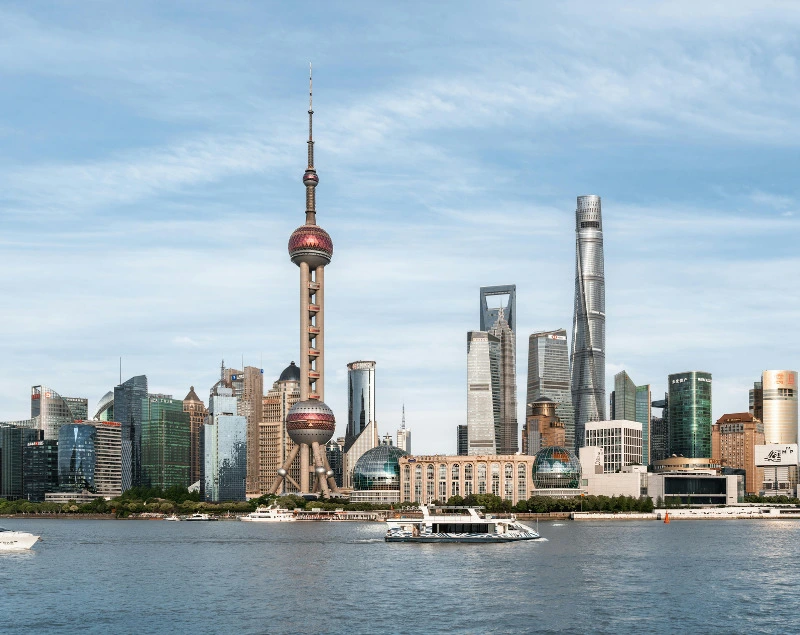
Two years after opening its first office in Shanghai, Nexline Group is taking another step forward in China. As our teams and operations continue to grow, our Shanghai office is moving into a larger space. But we are not going far. The new office is located in the same district, the same tower and at the same address where our Shanghai journey began two years ago. For Nexline Group, this move is both a practical response to our growth and an important milestone in the development of our international network. Growing our presence as a freight forwarder in Shanghai Shanghai was Nexline Group’s first office in China. Two years later, the team has grown, our operations have expanded and we now need more space to support this development. Our original office was located on the 22nd floor of the building. Today, we are moving to the 27th floor, into premises that are 60% larger. It is a change of space, but not of location. Remaining in the same building allows our team to continue working from an environment that has been part of Nexline’s story in China from the beginning. For a freight forwarder in Shanghai, having a local presence is an important part of staying connected to the market, our partners and the day-to-day reality of operations. Staying in the heart of Jing’an Our Shanghai office is located in Jing’an, close to Nanjing Road. From the beginning, this location has represented more than simply a place to work. It provides our team with an accessible base in one of Shanghai’s most dynamic areas and keeps us closely connected to the city. As the business has grown, staying in the same location felt like a natural choice. We are keeping the address where our Shanghai story started while creating more room for the next stage. More space for a growing team The move reflects something very simple: our Shanghai team is growing. Larger offices will provide more space for our colleagues as Nexline Group continues to develop its activities in China. It is also a visible sign of how far the office has come in just two years. What started on the 22nd floor now continues five floors higher, with a significantly larger space and new opportunities ahead. The address remains the same. The ambition continues to grow. A new milestone for Nexline Group in China The expansion of our Shanghai office is part of the wider development of Nexline Group’s presence in China and internationally. For us, growth is not simply about opening new locations. It is also about helping our existing teams develop, giving them the right environment to work and creating the space needed for what comes next. Shanghai was our first office in China, which makes this move particularly meaningful. Two years after opening our first premises, we are proud to see the office enter a new chapter. The next chapter starts on the 27th floor Same district. Same tower. Same address. But a larger office, a growing team and new ambitions. Moving from the 22nd to the 27th floor marks another step in Nexline Group’s journey in Shanghai. We are proud of everything our team has achieved over the past two years and excited to see what comes next. Here’s to the next chapter in Shanghai. Nexline GroupThe human touch behind your supply chain. DISCOVER OUR TRANSPORT SERVICES