
Lille Braderie 2026: a Weekend That Makes the Heart of the City Beat
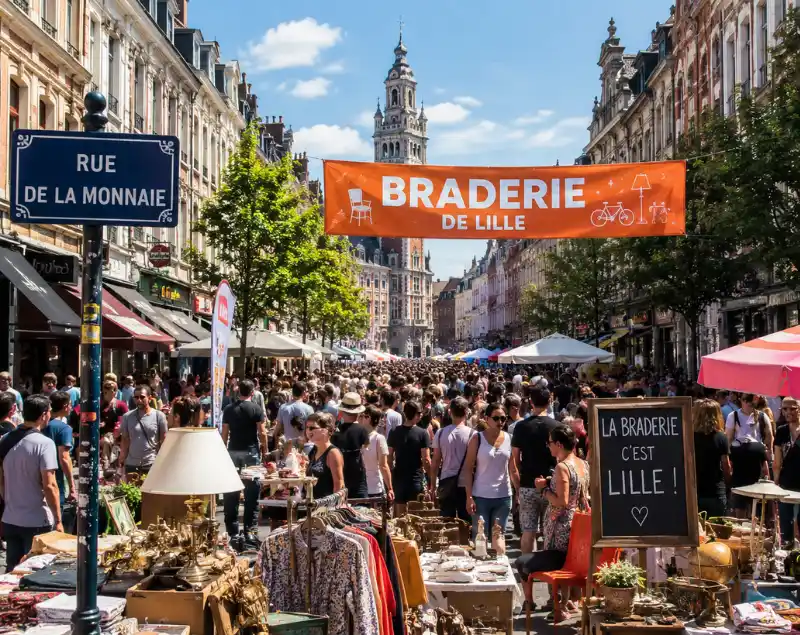
There are some weekends that truly make the heart of Lille beat. On 5 and 6 September 2026, the Lille Braderie will once again bring the entire city to life. For two days, the streets will fill with bargain hunters, antique dealers, curious visitors and people simply looking to enjoy the unique atmosphere of the event. Thousands of stalls, great finds, unexpected objects, encounters and, of course, the traditional moules-frites: the Braderie has become much more than just a market. It is an event that is deeply rooted in Lille’s identity. The Lille Braderie, an event like no other Every year, the city changes pace completely. The streets become a huge place of discovery, where no one really knows what they might find a few metres further on. An old piece of furniture, a forgotten book, a decorative object, vintage clothing or simply an unusual item that catches the eye. That is also part of the charm of the Lille Braderie: you can arrive looking for something specific and leave with something you never expected to find. But beyond the bargains, it is above all the atmosphere that makes the difference. Throughout the weekend, residents, shopkeepers, exhibitors and visitors cross paths in a city that is constantly on the move. An event that resonates with us at Nexline Group At Nexline Group, we particularly appreciate what the Braderie says about Lille: a dynamic, open city built around exchanges. Our day-to-day activity is, of course, very different. Throughout the year, our teams organise and coordinate the movement of goods in France and internationally. But our work also relies heavily on communication and proximity. Behind every shipment, there are clients, partners and teams who need to communicate and move forward together. That human dimension is something we also recognise in the spirit of the Braderie: thousands of people meeting, exchanging and bringing the city to life for an entire weekend. Objects that continue their story The Braderie also has another special feature: it gives a new life to an impressive number of objects. What is no longer useful to one person can become someone else’s best find of the weekend. Without trying to turn the Braderie into a logistics event, this circulation of objects reminds us of a simple idea: making better use of what already exists is often a good thing. In our own work, we also aim to organise flows consistently, optimise the solutions we offer and make the best possible use of available resources. The realities are very different, but there is a shared attention to the way things move. A city in motion for two days For Nexline Group, the Braderie is also a chance to put ships, containers, trucks and schedules aside for a moment and enjoy an event that is part of Lille’s local life. Because a company is also part of the place where it operates, alongside the people who bring that place to life every day. And during this weekend, the whole city is moving. So for this new edition, take the time to enjoy it. Browse the stalls, negotiate, wander through the streets, enjoy a good plate of moules-frites and keep your eyes open. You may leave with the find of the year. Or simply with the memory of a great weekend in Lille. We wish everyone a wonderful Lille Braderie. Nexline Group
Lille Braderie 2026: a Weekend That Makes the Heart of the City Beat
There are some weekends that truly make the heart of Lille beat. On 5 and 6 September 2026, the Lille Braderie will once again bring the entire city to life. For two days, the streets will fill with bargain hunters, antique dealers, curious visitors and people simply looking to enjoy the unique atmosphere of the event. Thousands of stalls, great finds, unexpected objects, encounters and, of course, the traditional moules-frites: the Braderie has become much more than just a market. It is an event that is deeply rooted in Lille’s identity. The Lille Braderie, an event like no other Every year, the city changes pace completely. The streets become a huge place of discovery, where no one really knows what they might find a few metres further on. An old piece of furniture, a forgotten book, a decorative object, vintage clothing or simply an unusual item that catches the eye. That is also part of the charm of the Lille Braderie: you can arrive looking for something specific and leave with something you never expected to find. But beyond the bargains, it is above all the atmosphere that makes the difference. Throughout the weekend, residents, shopkeepers, exhibitors and visitors cross paths in a city that is constantly on the move. An event that resonates with us at Nexline Group At Nexline Group, we particularly appreciate what the Braderie says about Lille: a dynamic, open city built around exchanges. Our day-to-day activity is, of course, very different. Throughout the year, our teams organise and coordinate the movement of goods in France and internationally. But our work also relies heavily on communication and proximity. Behind every shipment, there are clients, partners and teams who need to communicate and move forward together. That human dimension is something we also recognise in the spirit of the Braderie: thousands of people meeting, exchanging and bringing the city to life for an entire weekend. Objects that continue their story The Braderie also has another special feature: it gives a new life to an impressive number of objects. What is no longer useful to one person can become someone else’s best find of the weekend. Without trying to turn the Braderie into a logistics event, this circulation of objects reminds us of a simple idea: making better use of what already exists is often a good thing. In our own work, we also aim to organise flows consistently, optimise the solutions we offer and make the best possible use of available resources. The realities are very different, but there is a shared attention to the way things move. A city in motion for two days For Nexline Group, the Braderie is also a chance to put ships, containers, trucks and schedules aside for a moment and enjoy an event that is part of Lille’s local life. Because a company is also part of the place where it operates, alongside the people who bring that place to life every day. And during this weekend, the whole city is moving. So for this new edition, take the time to enjoy it. Browse the stalls, negotiate, wander through the streets, enjoy a good plate of moules-frites and keep your eyes open. You may leave with the find of the year. Or simply with the memory of a great weekend in Lille. We wish everyone a wonderful Lille Braderie. Nexline Group The human touch to your supply chain
Rail Freight: A New Dunkirk–Lyon Connection with Nexline Group
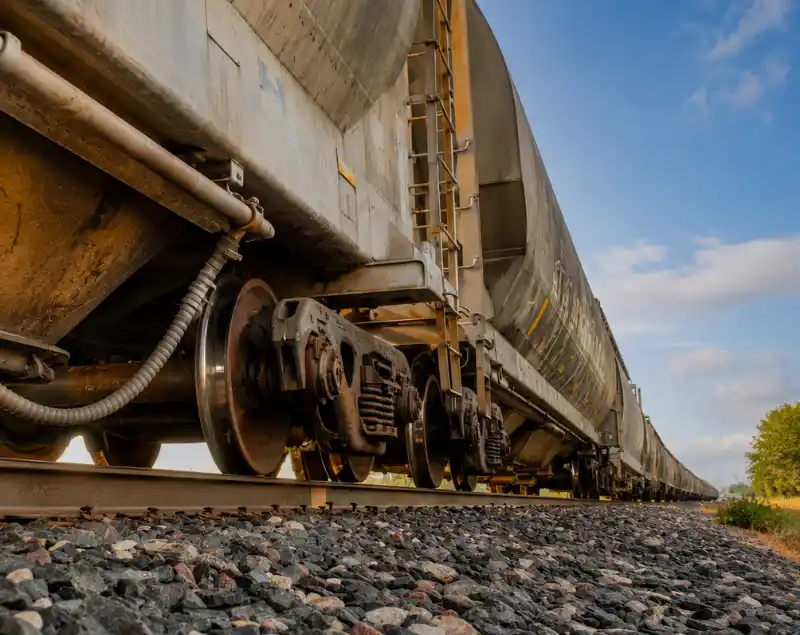
Starting 3 September 2026, Nexline Group is launching a new rail freight solution between Dunkirk and Lyon. Three departures will be available each week, on Tuesdays, Thursdays and Saturdays. This new connection expands our multimodal offer and provides an additional option for flows between northern France and the Lyon region. The objective is simple: give our clients more possibilities, depending on their constraints, volumes and lead times. A new rail freight alternative between Dunkirk and Lyon Rail can be a relevant solution for certain regular or containerised flows. With this new Dunkirk–Lyon connection, Nexline Group is strengthening the range of options available between two important logistics areas in France. The frequency of three departures per week makes it easier to integrate this service into existing transport plans while adding more flexibility. This new route is not intended to replace other transport modes. It complements them. That is the value of a multimodal approach: choosing the most suitable option according to the actual needs of each shipment. How is transport organised between Dunkirk and Lyon? The operational process starts at the Terminal des Flandres in Dunkirk. Containers are collected there before being transported by rail to Lyon. Once they arrive at Lyon Rhône Terminal, the intermodal transport units are collected so that final delivery can be organised. After delivery, the empty units are returned to the terminal in Lyon. In practical terms, the operation follows five main steps: The process may look straightforward on paper, but coordination remains essential. Rail schedules, terminal availability and final delivery all need to line up correctly to ensure continuity throughout the transport chain. Rail freight as part of a multimodal solution In this case, rail freight covers only part of the overall journey. Before the train departs and after it arrives, other transport modes are involved to complete the shipment. That is exactly what defines a multimodal solution. The idea is not to choose between road and rail, but to combine different modes when that makes more sense for the flow. For some companies, this can provide an additional way to organise shipments between Dunkirk and Lyon. A new option for flows between northern France and the Lyon region This connection expands the range of solutions available to companies moving goods between these two regions. Depending on the type of flow, shipment frequency and delivery constraints, rail can be integrated into a broader transport plan. Each shipment, however, remains different. A regular flow is not managed in the same way as an occasional shipment. Terminal constraints, final delivery requirements and the client’s schedule can also influence the solution selected. Our role is therefore to assess the full requirement before recommending the most appropriate transport setup. A new route from 3 September With this new Dunkirk–Lyon connection, Nexline Group continues to expand its multimodal offer. From 3 September 2026, three rail departures will be available every week. A new route is opening between Dunkirk and Lyon, providing an additional option for managing your flows. Do you have goods to move between northern France and the Lyon region? Let’s discuss your requirements and identify the most suitable solution together. Nexline Group DISCOVER OUR TRANSPORT SERVICES
Air Freight: When Urgency Justifies a Higher Cost
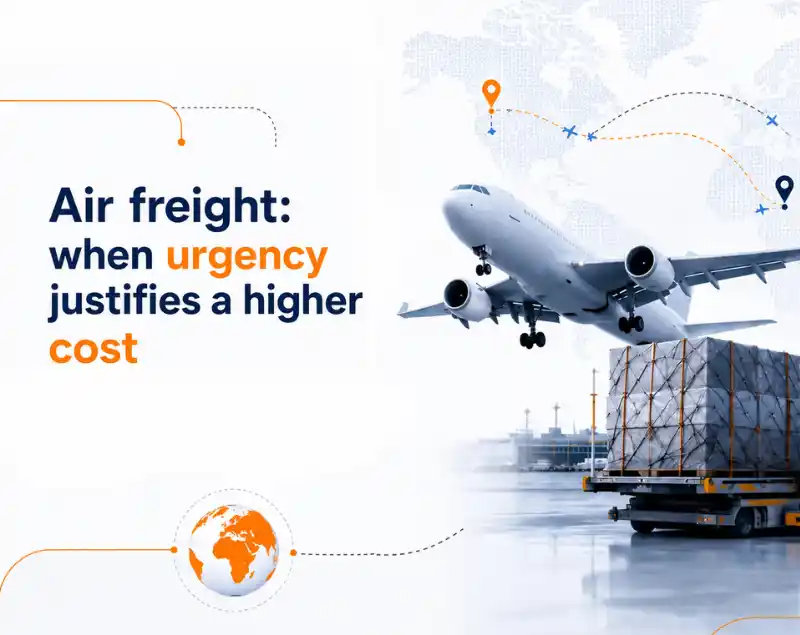
In international transport, air freight is rarely chosen for its price. It is chosen for its speed. When goods need to move fast, when a production shutdown must be avoided, or when a customer commitment needs to be met, transport cost can sometimes become a secondary issue. The question companies often ask is: Is air freight really too expensive? But the better question is: In the end, what costs less: waiting, or bringing the goods by air? As a point of comparison, a World Bank study estimates that air freight generally costs 4 to 5 times more than road transport and 12 to 16 times more than sea freight. This price difference explains why air freight must be used carefully. Yet its role remains strategic. According to IATA, air cargo represents less than 1% of global trade by volume, but more than 33% by value. Airlines also transport more than 62 million tonnes of goods every year. This shows that air freight is mainly used for high-value, time-sensitive or supply-chain-critical goods. Why does air freight cost more? Air freight relies on limited capacity, strict security requirements and short handling times. Unlike sea freight, which can move large volumes over longer transit times, air freight prioritizes speed. Its cost can depend on several factors: actual weight, volumetric weight, origin, destination, flight availability, urgency level, type of goods, handling constraints, documentation requirements and service level. Additional costs may also apply, including fuel surcharges, security fees, handling charges, pre-carriage and final delivery costs. In practice, a light but bulky shipment can be expensive because it takes up a lot of aircraft space. A heavier but more compact shipment may be charged differently. Air freight pricing does not only depend on weight. It also depends on the space used, the expected deadline, available capacity and the level of priority required. What is volumetric weight in air freight? In air freight, the actual weight of the goods is not the only factor considered. The space occupied inside the aircraft also affects the price. This is used to determine the chargeable weight. In general, the airline compares the actual weight with the volumetric weight and applies the higher of the two for billing. Volumetric weight is usually calculated as follows: Length × width × height in cm ÷ 6,000 This means that in air freight, 1 m³ equals around 167 kg of volumetric weight. For example, a package measuring 120 × 100 × 100 cm represents 1.2 m³. Its volumetric weight is therefore 200 kg. If it only weighs 80 kg in reality, the 200 kg figure may be used as the basis for billing. Packaging therefore has a direct impact on air freight cost. An unnecessarily bulky package can increase the chargeable weight, even if the goods themselves are light. When does air freight become relevant? Air freight becomes relevant when the value of time is higher than the savings generated by a slower mode of transport. It is often used for critical spare parts, urgent industrial components, pharmaceutical products, perishable goods, production samples and high-value goods. It may also be relevant for electronic equipment, priority customer orders, urgent replenishment, time-sensitive goods, documents or strategic prototypes. IATA highlights the specific role of air freight for high-value and time-sensitive goods, thanks to speed, reliability, security and specialized handling capabilities. Does urgency always justify air freight? No. Urgency does not automatically mean that goods should be shipped by air. The decision mainly depends on the real cost of delay. A low-value component, for example, may justify air freight if its absence blocks a production line or immobilizes critical equipment. In that situation, a few hours or days of downtime can cost far more than the air freight premium. The same logic applies when a delay creates penalties, stockouts, lost sales or compromises an important customer delivery. On the other hand, if the goods can wait a few more days without major consequences for the business, a more economical transport mode will usually be more relevant. The question is not only how much air freight costs, but how much waiting would cost. How can companies compare air freight cost and delay cost? To make the right decision, companies need to look at the total cost. Question to ask Why it matters What is the value of the goods? High-value goods can absorb a higher transport cost more easily What is the cost of one day of delay? It may be much higher than the price of air freight Is the end customer expecting a specific delivery date? A delay can damage the commercial relationship Does production depend on this part? One missing component can block an entire line Is there a sea or road alternative? It may be enough if the deadline remains acceptable Is the need truly urgent? Some emergencies can be anticipated or consolidated Are the documents ready? An incomplete file can cancel the time gained Is final delivery organized? The aircraft arrival does not guarantee delivery to the recipient This analysis helps avoid two common mistakes. The first is rejecting air freight only because it is more expensive. The second is choosing air freight by reflex, without checking whether the urgency is real. What types of goods often justify air freight? Some goods are better suited to air freight than others. 1. Critical spare parts A spare part may have a low unit value but a very high operational impact. If it blocks a machine, a production line or a technical intervention, the cost of delay can quickly exceed the cost of air freight. In this case, air freight helps reduce downtime. 2. High-value goods High-value goods can often absorb a higher transport cost. This may apply to electronic components, technology products, sensitive equipment or premium goods. Air freight can also provide a level of security and tracking suited to sensitive shipments. 3. Perishable goods Some products lose value quickly when transit times are too long. IATA describes perishable goods as products that are