
International transport for SMEs and mid-sized companies: how to structure your flows without making management more complex
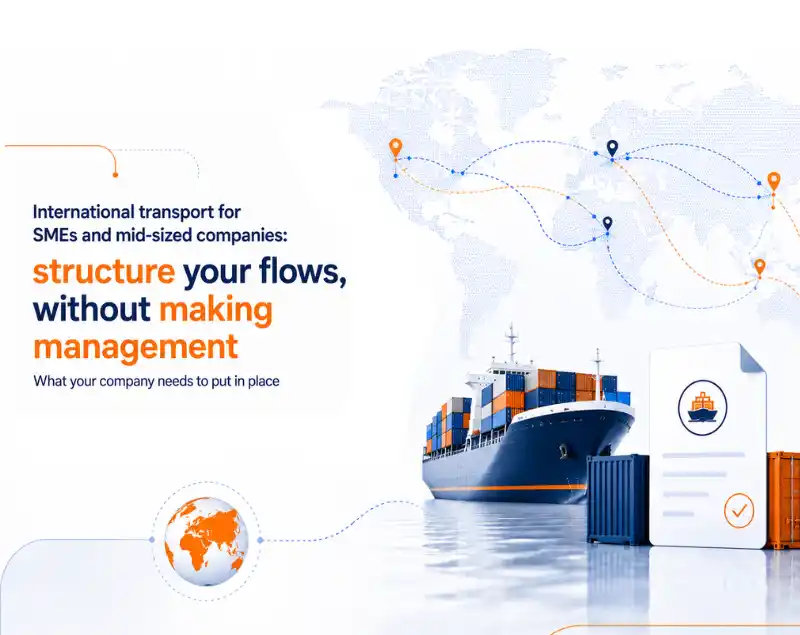
International transport for SMEs and mid-sized companies can quickly become complex. Businesses need to coordinate suppliers, documents, customs procedures, deadlines and different modes of transport. However, a company does not need to introduce more tools or procedures to organize its flows more effectively. Above all, it needs clear rules, reliable information and a single point of contact capable of coordinating operations. SMEs and mid-sized companies: which businesses are concerned? An SME is a small or medium-sized enterprise with fewer than 250 employees. A mid-sized company generally employs between 250 and 4,999 people. This article is mainly intended for SMEs and mid-sized companies that: Why does international transport become complex for these companies? International transport becomes complex when flows develop without a shared organization. At first, each shipment may be managed on a case-by-case basis. A supplier provides information, the purchasing department requests a quote and the administrative team prepares the documents. Over time, however, several difficulties begin to appear: The complexity does not come only from the number of shipments. It mainly comes from the fact that each shipment is organized differently, without a common framework or an overall view of operations. How should SMEs and mid-sized companies structure their international flows? SMEs and mid-sized companies should begin by identifying their main international flows. There is no need to introduce a complex system immediately. A shared spreadsheet may be enough to centralize the essential information: This mapping exercise should help the company answer four essential questions: The company can then focus its efforts on flows that represent the greatest volume, value or level of risk. What information should be provided to a freight forwarder? A complete request makes it possible to obtain a faster and more reliable quotation. The following information is generally required: Missing information can affect the price or make the proposed solution unsuitable. For example, an inaccurate address, incorrect weight or an unreported constraint may result in additional charges. Creating a standard transport request template can therefore reduce unnecessary exchanges, errors and response times. Which mode of transport should an SME or mid-sized company choose? The mode of transport depends on the volume, deadline, budget and type of goods. Sea freight Sea freight is suitable for large volumes and non-urgent goods. Companies can choose between: Sea freight consolidation allows several companies to share the same container. Each shipper only pays for the space used. This solution is particularly suitable for SMEs and mid-sized companies that want to ship smaller volumes, limit inventory or test a new market. Air freight Air freight is suitable for urgent, sensitive or high-value goods. Its cost is higher, but it can prevent a stock shortage, production stoppage or delay for a customer. Road freight Road freight is suitable for transport within Europe. It can be organized as a full truckload, consolidated road freight or express transport. Road freight consolidation is useful for shipments of a few pallets that do not require an entire truck. Multimodal transport Multimodal transport combines several modes of transport, such as sea and road freight. It helps companies find the right balance between cost, transit time and reliability. Is freight consolidation suitable for SMEs and mid-sized companies? Yes. Freight consolidation is suitable for these types of companies whose goods do not fill an entire container or truck. It allows them to: Consolidation can be used for sea, air or road freight. However, it may be less suitable for goods that are highly urgent, fragile, dangerous or subject to specific transport requirements. Why are Incoterms important for SMEs and mid-sized companies? Incoterms define how responsibilities are divided between the seller and the buyer. They specify: A misunderstood Incoterm can result in unexpected charges. For example, a supplier may offer a price that includes the main transport but excludes destination charges, customs clearance or final delivery. The company must therefore check: SMEs and mid-sized companies should not accept an Incoterm simply because it is proposed by the supplier or has been used for several years. It must match the level of control required and the expertise available within the company. Which documents should be checked before departure? Documents must be complete and consistent before the goods leave their point of origin. Depending on the country, product and mode of transport, it may be necessary to check: The description, quantity, weight, value and origin must be consistent across all documents. An error may result in: The best practice is to carry out these checks before departure, rather than once the goods have already arrived at their destination. How does Nexline support SMEs and mid-sized companies? Nexline supports SMEs and mid-sized companies in organizing and monitoring their international flows. Depending on the company’s needs, this support may include: The aim is not to introduce unnecessary procedures. It is to simplify management, improve visibility and secure international operations. Internal teams remain in control of their decisions while benefiting from a single point of contact capable of coordinating the different stages of transport. FAQ: international transport for SMEs and mid-sized companies How should SMEs and mid-sized companies organize international transport? They should identify their main flows, define responsibilities, standardize requests and centralize the monitoring of costs, deadlines and documents. Which mode of transport should SMEs and mid-sized companies choose? The choice depends on the volume, deadline and type of goods. Sea freight is suitable for large volumes, air freight for urgent shipments and road freight for transport within Europe. Is freight consolidation useful for SMEs and mid-sized companies? Yes. Consolidation allows several companies to share a container, truck or air shipment. Each company only pays for the space used, which reduces the cost of smaller shipments. What is the difference between consolidated and full-load transport? With consolidated transport, several shippers share the same transport capacity. With full-load transport, one company reserves the entire container or truck. How can international transport costs be reduced? Companies should anticipate departures, limit urgent shipments, compare total costs, avoid unexpected charges and choose consolidation when the volume does
World Cup semi-final 2026: teamwork at the heart of performance

This year, France’s national day on 14 July coincides with the World Cup semi-final between France and Spain. Two major events are therefore taking place on the same day. For Nexline Group’s French team, it is a special opportunity to celebrate France, teamwork and collective commitment. This evening, millions of supporters will be watching Les Bleus. Will France secure its place in the 2026 World Cup final? A highly anticipated World Cup semi-final A World Cup semi-final is always a special occasion. At this stage of the competition, every action can change the course of the match. Both teams must remain focused, organised and united until the final whistle. Individual talent matters. However, talent alone is not enough to reach the final. Performance depends on careful preparation, a clear strategy and strong coordination between every player. In sport, performance starts with preparation The greatest performances never happen by chance. Before a semi-final, the players and coaching staff study their opponents, prepare for different scenarios and anticipate the challenges they may face on the pitch. Every player understands their role. At the same time, they must remain aware of their teammates’ movements and adapt quickly as the match develops. Trust is also essential. A successful team must be able to rely on every member of the group, during the best moments as well as the most difficult ones. Victory is built as a team Winning a World Cup semi-final does not depend on a single action or a single player. Victory is built throughout the match through preparation, concentration and the ability of the entire team to move towards the same goal. Each player must fulfil their role, trust their teammates and be ready to react at the right moment. A well-created opportunity, a defensive effort or a quick decision can change the outcome of the game. This pursuit of victory also reflects the way we work at Nexline Group. In international logistics, a successful result depends on the involvement of several teams, full control of every stage and the ability to find solutions quickly. On the pitch, as in the supply chain, achieving the final objective requires precision, commitment and genuine teamwork. Teamwork at Nexline Group At Nexline Group, our teams work together every day to support clients with their international transport operations. Every shipment requires accuracy, attention to detail and clear communication. Our employees also collaborate with an international network of partners to develop solutions tailored to each client’s needs. This coordination allows us to manage unexpected situations, monitor shipments and maintain a strong relationship of trust with our clients. This human approach lies at the heart of our philosophy: The human touch to your supply chain A 14 July shaped by teamwork Whatever the outcome of this World Cup semi-final, we know that the French team will give everything to secure its place in the final. On this special day, everyone at Nexline Group wishes our employees, clients and partners in France a very happy national day. Let us celebrate the values that bring us together: preparation, trust, commitment and teamwork. Happy 14 July and allez Les Bleus!
Internship in logistics: the Nexline experience through the eyes of our interns
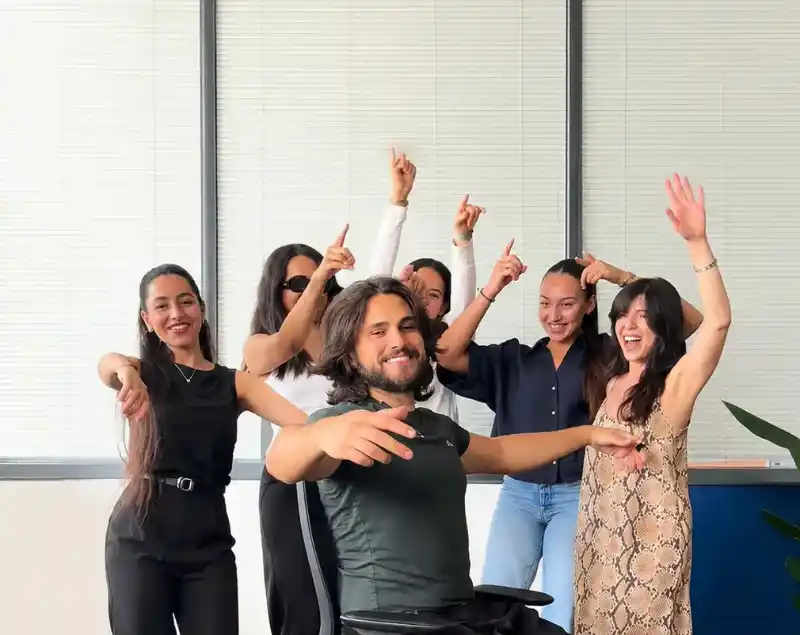
“We joined Nexline to complete our academic year, but we discovered much more than a simple internship.” Completing an internship in logistics is an opportunity to discover a dynamic, international and constantly evolving industry. However, at Nexline Group, an internship is much more than a temporary work placement. We want every intern to enjoy a genuine learning experience. Therefore, we help them develop their skills, understand our different professions and gradually become more confident and independent. More than a logistics internship Welcoming an intern is an important responsibility for our teams. It is not simply about assigning tasks or presenting how the company operates. From their first day, our interns discover the realities of international transport and logistics. As a result, they gain a better understanding of daily operations, the different roles within the sector and the challenges faced by logistics professionals. Our employees also take the time to share their knowledge. They answer questions, explain our working methods and support each intern throughout their experience. Discovering transport and logistics careers An internship at Nexline offers students a practical view of the professional world. In particular, they can observe how an international logistics company operates and discover the wide range of careers available within the industry. Throughout their internship, they develop new professional skills. They also learn how to work as part of a team, organise their tasks and adapt to different situations. Step by step, our interns become more confident. They take greater responsibility, show initiative and begin to contribute their own ideas. Seeing this progress is a real source of pride for the teams supporting them. A professional and human experience Beyond technical skills, we place great importance on the human side of the experience. Every intern joins Nexline with a different background, level of knowledge and set of goals. For this reason, we aim to create an environment where everyone feels comfortable asking questions, learning from mistakes and progressing at their own pace. Seeing our interns develop, take initiative and complete their internship with a clearer vision of their professional future is a genuine source of satisfaction for Nexline Group. Supporting the talents of tomorrow At Nexline, sharing knowledge is an essential part of our company culture. Supporting today’s talents means giving them the tools they need to build their future. It also allows us to contribute to the development of the next generation of transport and logistics professionals. We would like to thank our interns for their involvement, curiosity and motivation throughout their time with us. Discover the experiences of Dilnoza Pulatova, Amal Benghenissa, Lou De Jonghe, David Antonio Aranguren Lizarzaburu and Marwa Fertakh, and take a closer look at their internship at Nexline Group. The human touch to your supply chain