
What is an international freight forwarder? Complete definition and role.
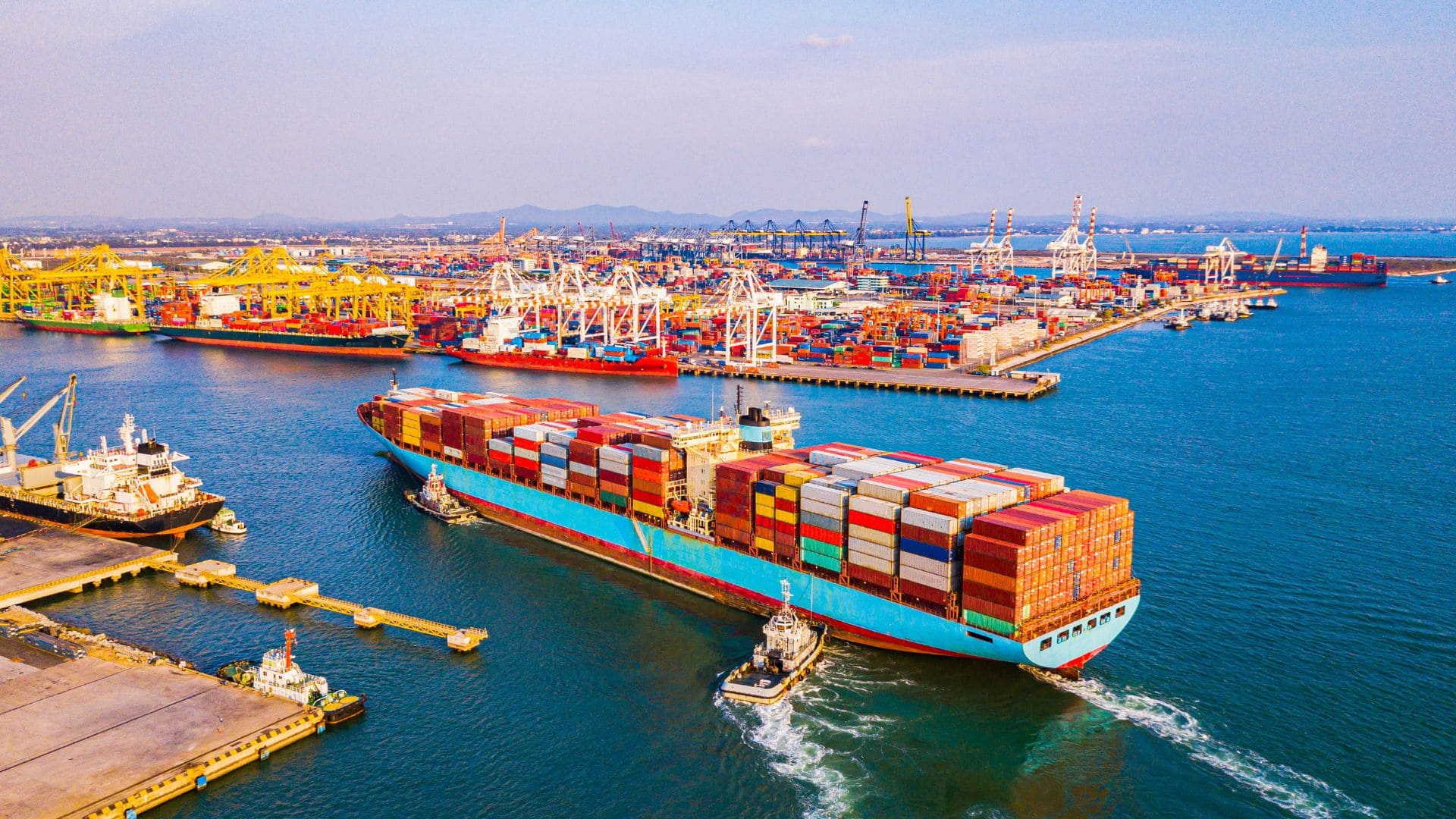
Introduction What is an international freight forwarder? Global trade is a complex mechanism in which every shipment involves a multitude of players: shipping lines, air carriers, road transporters, customs services, warehouses, and insurers. At the center of this network stands a key professional who connects all these links: the international freight forwarder. Often invisible to the end consumer, the freight forwarder is nevertheless at the very heart of international logistics. Understanding their role, services, and importance is essential for any company involved in import-export or the management of goods transportation. Definition: What is an international freight forwarder? An international freight forwarder is a professional or a specialized company that organizes and manages the shipment of goods on a global scale.They act as an intermediary between the shipper and transport service providers (maritime, air, road, or rail). Unlike a carrier, who owns its own trucks, planes, or vessels, the freight forwarder designs a comprehensive logistics solution, which includes: They are the architects of the international supply chain: assembling solutions, coordinating all players, and ensuring that goods move seamlessly from origin to destination. CHECK OUT OUR TRANSPORT SERVICES The Role of the Freight Forwarder in Global Trade 1. Logistics Intermediary and Coordinator The freight forwarder acts as a single point of contact between the shipper and multiple transport providers. This simplifies communication and spares the client company from managing several contracts and interlocutors. 2. Organization of International Transport With solid expertise, the freight forwarder selects the most suitable mode of transport (air, sea, road, or rail) based on: 3. Regulatory and Customs Expertise Each country enforces strict rules on foreign trade. The freight forwarder ensures that shipments comply with these regulations, helping clients avoid costly fines or delays. 4. Administrative Freight Management The freight forwarder handles all international shipping documentation, such as: 5. Global Logistics Risk Management International trade faces multiple uncertainties — port strikes, vessel delays, health crises, or natural disasters. The freight forwarder anticipates these risks and provides alternative solutions, such as switching to air freight in case of maritime disruptions. 6. Digital Tracking and Visibility Thanks to modern digital platforms, freight forwarders offer real-time shipment visibility. Shippers can track their cargo at every stage, ensuring transparency and building trust. Main Services Offered by an International Freight Forwarder The role of a freight forwarder goes far beyond simply booking space on a ship or plane. Their services cover a wide range of complementary logistics solutions, including: When and How to Choose a Reliable International Freight Forwarder When to Work with a Freight Forwarder How to Choose the Right One Key selection criteria include: A good freight forwarder combines human expertise, a strong network, and modern technology to ensure smooth, reliable, and optimized logistics worldwide. CHECK OUT OUR TRANSPORT SERVICES Practical Cases and Real Examples of International Transport 1. Textile Export – Asia → Europe A French fashion brand produces its collections in Bangladesh. Each season, the freight forwarder: Result: optimized seasonal flows and controlled costs. 2. Medical Device Transport A manufacturer ships sensitive equipment to Latin America. The freight forwarder: Result: products arrive on time and meet all regulatory standards. 3. Just-in-Time Automotive Parts A European car manufacturer depends on parts imported from China. The freight forwarder: Result: uninterrupted production and minimized downtime. 4. E-commerce and Retail A European e-commerce company sells in North America. The freight forwarder implements a multimodal solution (air + road) to ensure fast delivery to end customers. 5. Agri-food Sector An exporter of fresh produce ships fruit to the Middle East. The freight forwarder manages the cold chain and secures the required phytosanitary certificates. Frequently Asked Questions About International Freight Forwarders Is a freight forwarder mandatory? No. However, in practice, their role becomes essential as soon as shipments cross borders. They greatly reduce the risk of errors and delays. What’s the difference between a freight forwarder and a carrier? A carrier owns its own means of transport (trucks, planes, vessels). A freight forwarder, on the other hand, selects and coordinates carriers to provide a complete logistics solution. What’s the difference between a freight forwarder and a transport commissioner? A transport commissioner assumes legal responsibility for the transport. A freight forwarder acts as an organizer, though some companies perform both roles. Do Freight Forwarders Offer Insurance Yes. They provide freight insurance covering loss, damage, theft, or delays. What Types of Goods Can a Freight Forwarder Handle? From general cargo to sensitive products — including agri-food, pharmaceuticals, hazardous materials, textiles, and automotive parts. Can You Track a Shipment with a Freight Forwarder? Yes. Most freight forwarders offer digital tracking systems accessible online. How Much Does a Freight Forwarder Cost? The cost depends on the chosen transport mode, volume, weight, and additional services (customs, insurance, warehousing). Prices vary widely depending on the destination and season. How to Become a Freight Forwarder? The profession is accessible through studies in logistics or international trade, combined with field experience. Key skills include organization, negotiation, and knowledge of international regulations. Conclusion: The International Freight Forwarder, the Conductor of Global Logistics In a world where supply chains must be fast, reliable, and resilient, the international freight forwarder plays a crucial role. More than just an intermediary, they are the conductor of international logistics: planning, coordinating, securing, and optimizing global flows. Understanding their role, responsibilities, and services helps businesses better anticipate their logistics needs and approach international trade with confidence.
Nexline Group expands to Vietnam: a new strategic hub in Asia
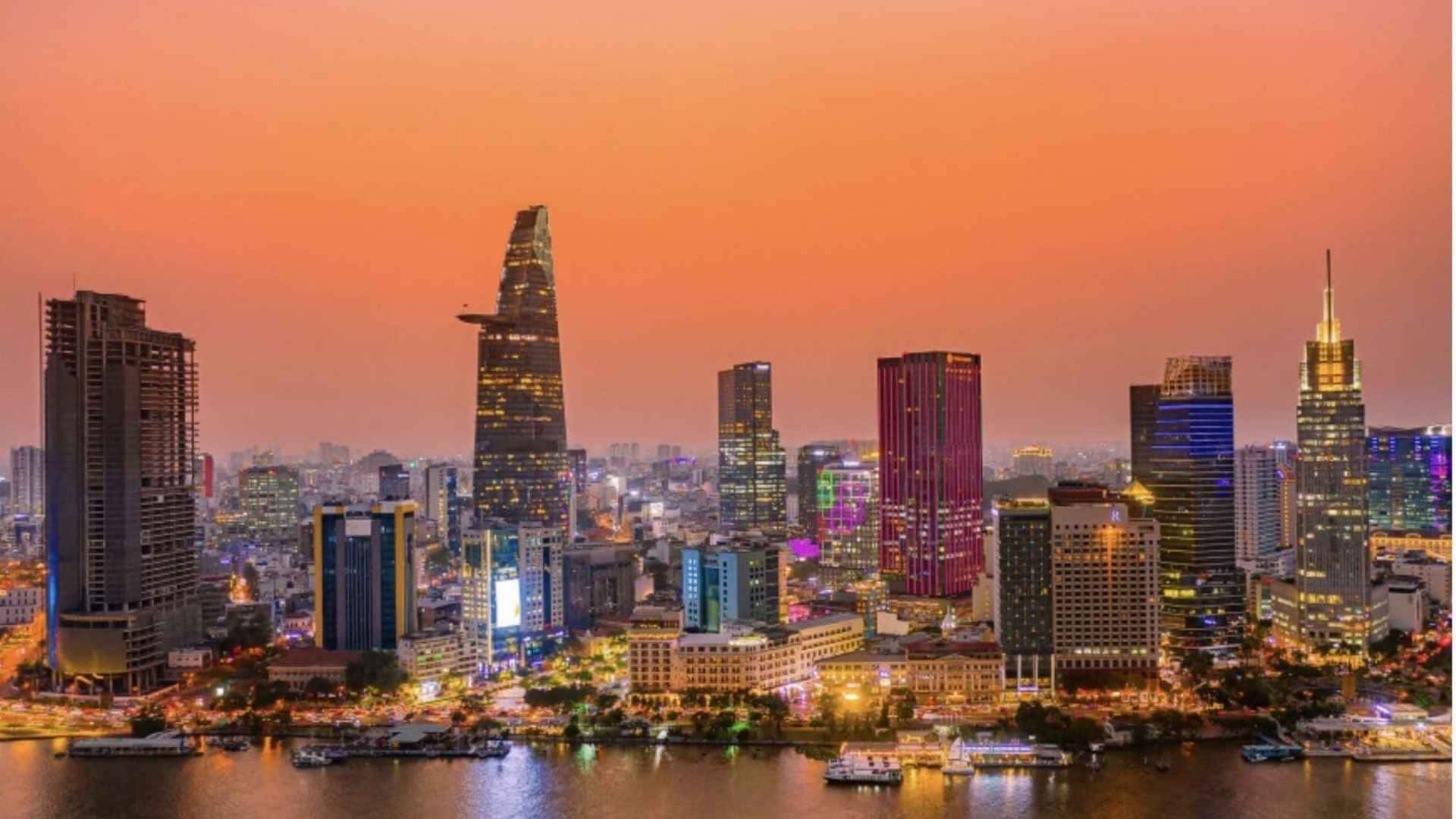
After China, Hong Kong, France, Bangladesh and Tunisia, Nexline Group continues its expansion and sets up in Vietnam 🇻🇳, a country that has become essential to global trade.With this new location in Ho Chi Minh City, the group strengthens its international logistics network at the heart of a rapidly growing market. Vietnam, a new logistics pivot in Asia In just a few years, Vietnam has established itself as a major player in the global supply chain.The once-quiet banks of the Saigon River have given way to a modern skyline, the symbol of a rapidly transforming country. Textile, electronics, retail… Vietnam is attracting increasing investment, becoming a credible alternative to China for sourcing and production. Its geographic position between China and Southeast Asia, combined with its first-class port infrastructure, makes it a strategic logistics hub for companies looking to diversify their supply chains. A presence built on ten years of collaboration This expansion is not a leap into the unknown.For more than a decade, Nexline has already been working with Vietnamese partners and freight forwarders.The opening of the Ho Chi Minh City office formalises a trusted relationship built directly in the field. Thanks to this proximity, Nexline strengthens its ability to manage international flows efficiently while ensuring personalised local support. A strategic choice in a transforming Asia Since the pandemic and the reorganisation of global trade flows, Vietnam has emerged as a major logistics player.Companies around the world now see it as an alternative production base, capable of combining industrial competitiveness with logistical reliability. This new location is fully aligned with Nexline’s global vision:building an agile, interconnected and human logistics network.Each new office is not just an address, it is an extension of the same logistics culture, grounded in client proximity and operational precision. Field-driven logistics, connected to a global network With this new presence, Nexline strengthens synergies between its offices in Asia and Europe.Vietnam becomes a key link between Asian production zones and European distribution markets. This structure enables the group to offer: Thanks to its local presence, Nexline can monitor its clients’ flows in real time, anticipate port constraints and adjust routes according to market fluctuations. CHECK OUT OUR TRANSPORT SERVICES Managing the unpredictable with method International logistics has become a complex ecosystem:rising rates, strikes, port congestion, weather, regulations… anything can disrupt a flow.At Nexline, we see this unpredictability as a challenge, not an obstacle. This mindset is at the heart of Nexline’s DNA: anticipate, adapt, and deliver – without excessive promises, but with rigour and consistency.This is what enables us to provide smooth, reliable and durable logistics, even in a global environment under pressure. A forward-looking perspective Nexline’s arrival in Vietnam is not an end point, but a promise for the future.It proves that an independent company can continue to grow while staying true to its core principles: expertise, proximity and a human-centered approach. “The world is changing, trade routes are shifting, but our mission remains the same: to connect companies with intelligence and reliability.” With this new office in Ho Chi Minh City, Nexline strengthens its position as a global player in international logistics, ready to meet the challenges of an increasingly interconnected world. Welcome to the Nexline Vietnam team – an adventure that is only just beginning.
Nexline expands to Tunisia: a new milestone on the map of international supply chains.
After China, France, and Bangladesh, Nexline Group continues its expansion and is now setting up in Tunisia with the opening of a new office in Tunis, led by Anis Somai.A strategic foothold in the heart of the Mediterranean , a region where innovation, trade, and international logistics converge. The Mediterranean: Nexline’s New Balance Point Since its creation, Nexline has been building a global network based on proximity and operational excellence.With its new logistics presence in Tunisia, Nexline strengthens its connections between Europe, Africa, and Asia, offering clients a smoother, more integrated supply chain. This new office is part of a clear vision: to connect regional logistics hubs, secure flows, and bring operations closer to clients and industrial partners.Tunisia, with its strategic geographic position and growing expertise in the transport and logistics sector, is a natural choice for Nexline. Offices That Embody Nexline’s Vision For this launch, Nexline aimed high.New, spacious offices in Tunis, designed to support the company’s future growth: will host a team of experts bringing together over 100 years of combined experience in logistics, customer support, and operations management. This office is more than just a new dot on the map: it’s a promise.A promise of agile, transparent, and human freight forwarding, capable of operating on a global scale while maintaining a strong sense of proximity. A Strong Team, a Shared Culture Behind this new opening lies a strong conviction: the quality of any logistics service depends first and foremost on the people who make it happen.The Tunisian team perfectly embodies this philosophy : combining rigor, expertise, teamwork, and a strong customer focus. Under the leadership of Anis Somai, Nexline Tunisia relies on an experienced and passionate team, ready to take on the challenges of modern logistics , from growing trade flows to digital transformation and environmental responsibility. CHECK OUT OUR TRANSPORT SERVICES A Group on the Move In just a few years, Nexline has strengthened its presence across three continents: This expansion is no coincidence, it reflects the group’s ambition to build an integrated international logistics network based on responsiveness, reliability, and deep knowledge of local markets.With every new location, Nexline brings the same commitment: designing tailor-made logistics solutions adapted to real-world challenges. A New Adventure Begins The opening of the Tunis office marks the start of a new chapter: a human and entrepreneurial adventure driven by a passion for logistics and a taste for challenge.From the Mediterranean to Asia, Nexline Group moves forward with the same philosophy: a people-centered approach to freight forwarding, combining global expertise with local proximity.
Asia-Europe maritime freight: between uncertainty and the search for stability
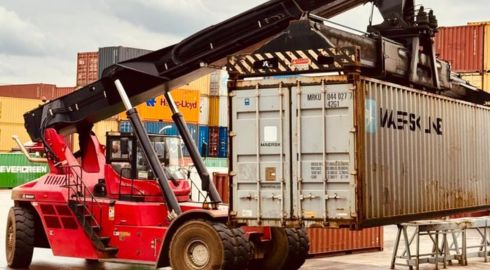
Maritime transport is undergoing a period of unprecedented change. For several years now, a combination of geopolitical, economic and environmental factors has disrupted the balance of global trade. Shipping routes, once stable and predictable, are now subject to constant tensions that are redefining international freight forwarding practices. Between the war in the Red Sea, restrictions on strategic passages such as the Suez and Panama Canals, and the rise of new environmental regulations, the global supply chain is being forced to reinvent itself. For importing and exporting companies, the challenge is clear: maintain continuity of flows while limiting costs and risks. Structural tensions in global maritime transport Historically, the Asia-Europe route has accounted for more than 40% of global maritime trade. But in recent years, available capacity has been stretched to the limit. Shipping companies have had to juggle fluctuating demand, container shortages and repositioning imbalances. This situation creates a triangle of uncertainty: freight costs subject to unpredictable increases or decreases, often insufficient container availability at certain ports, and transit times that vary from week to week depending on port congestion. The result is a loss of visibility for importers, who must manage their supplies in an increasingly unstable environment. The ‘just-in-time’ approach is gradually giving way to a ‘just in case’ approach. CHECK OUT OUR SEA TRANSPORT SERVICES The domino effect of logistical complexity Maritime disruptions are not limited to ocean transport. They have a knock-on effect on the entire chain: road transport, warehousing, customs clearance and last-mile delivery. When ships arrive late, terminals become saturated, containers pile up, and unloading times increase. Conversely, when volumes drop, operators have to reduce rotations, which further undermines the regularity of flows. In this context, logistics planning becomes a balancing act. European importers are now looking for partners capable of coordinating several links in the supply chain, from sea freight to multimodal transport, including inventory management and flow tracking. This integrated approach is now the key to more fluid and resilient logistics. The central role of maritime groupage In an uncertain climate, consolidated shipping (or LCL – Less than Container Load) is once again becoming a strategic option for many companies. It allows shipments from several importers to be pooled in a single container, thereby reducing unit costs and optimising available capacity. But consolidated shipping is not just about cost. It is also a tool for flexibility and securing flows: it offers more regular departures, better adaptation to actual volumes and a more balanced sharing of logistical risks. In a saturated or unstable market, it is a pragmatic response to the constraints of the moment. It is with this in mind that NEXBOX was designed, a container consolidation service between Asia and Europe developed by Nexline. This solution relies on consolidation hubs located in major Asian ports, direct and stable routes to Europe, and unloading carried out in warehouses under Nexline’s control. The aim is to offer a regular and transparent framework for importers who are often faced with market unpredictability. DISCOVER NEXBOX – ASIA-EUROPE MARITIME GROUPAGE The need for visibility and reliability The current volatility of the maritime market has given rise to a new requirement: complete traceability. Digital real-time tracking tools, once reserved for large multinationals, are now becoming a standard expected by all companies. Knowing where your container is, when it will be available, and being able to anticipate potential delays has become a key performance factor. Players such as Nexline are putting technology at the service of this visibility by integrating shipment tracking into global supply chain management systems. These tools facilitate decision-making, reduce margins of error, and improve communication between the various players in the transport sector. But technology alone is not enough. The real challenge lies in human coordination: having teams capable of analysing, adapting, and correcting operations in real time. It is this combination of skills and responsiveness that allows us to stay on course, even in the most turbulent times. The future of maritime transport: towards sustainable stability The current transformation of maritime freight is not limited to the economic situation. It reflects a fundamental shift towards more responsible and predictable logistics. Decarbonisation initiatives, the rise of rail transport on Eurasian corridors, and the boom in multimodal transport show that the industry is actively seeking to reinvent its balance. The most successful importers are no longer just looking for carriers, but for partners capable of designing a comprehensive logistics strategy: planning, consolidation, monitoring and continuous adaptation. Services such as NEXBOX are part of this evolution, offering controlled groupage solutions that are aligned with the imperatives of sustainability and efficiency. In conclusion Asia-Europe maritime freight is at a turning point. Between geopolitical tensions and ecological transition, companies must redefine their priorities: speed alone is no longer enough; stability is becoming essential. Consolidation solutions, such as those offered by Nexline, embody this desire to regain control over global flows, while incorporating flexibility and transparency. In this new equilibrium, resilience is not a reaction: it is a method. And stability, more than just a goal, is now becoming a strategy. Find out more: Nexline – About us Contact our teams Discover why so many companiesalready entrust their logistics to Nexline