
Cross docking, fulfillment, warehousing: what’s the difference?
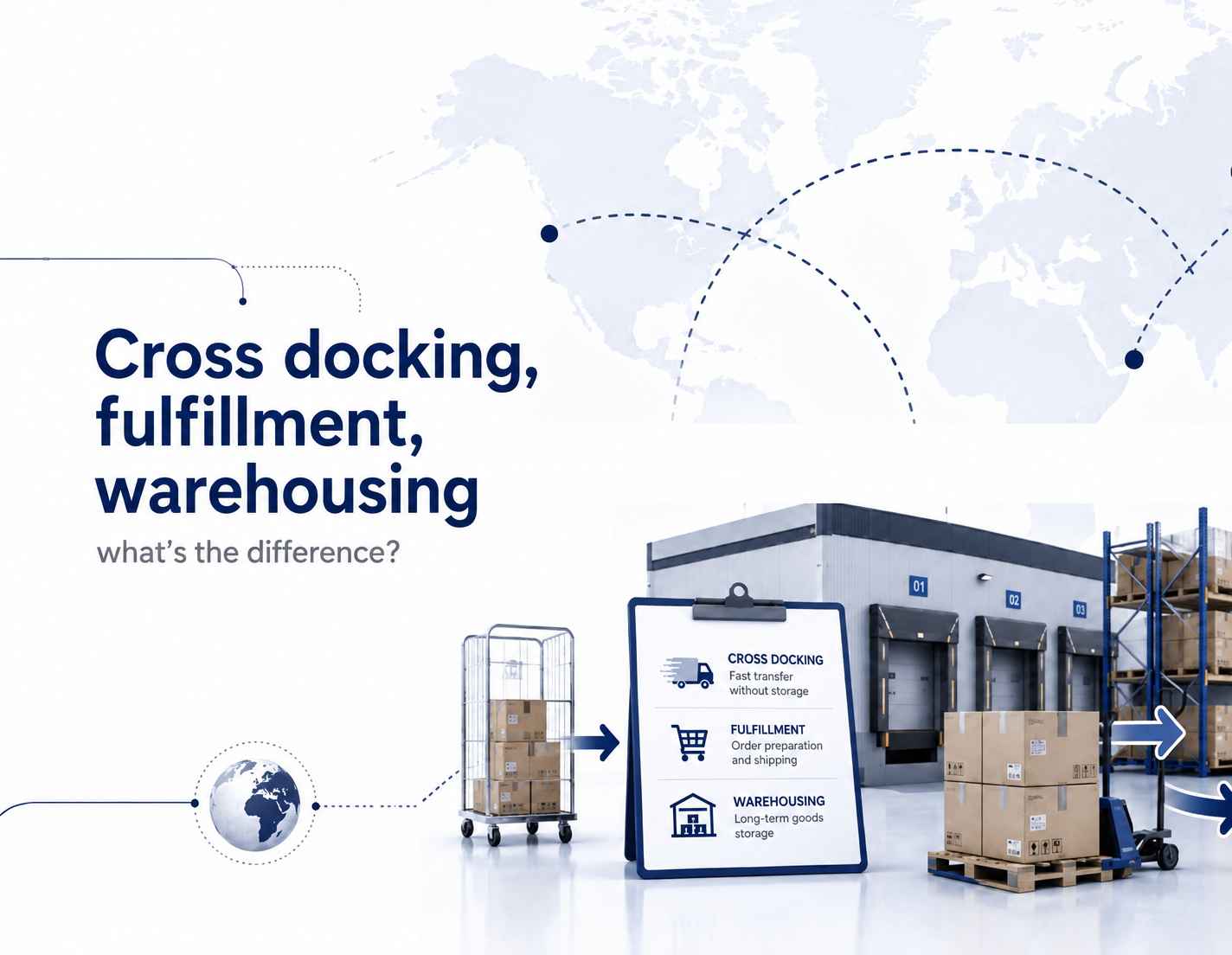
Cross docking, fulfillment, warehousing… These three terms often come up when a company wants to better organise its logistics. However, they do not mean the same thing. What is cross docking? Cross docking is a logistics method that moves goods from an inbound flow to an outbound flow, without prolonged storage. In practice, products arrive on a logistics platform. Teams receive them, check them, sort them, and then quickly reship them to their final destination. The objective is simple: reduce the time goods remain immobilised. In a cross docking operation, the company does not use the warehouse as a traditional storage space. Instead, it uses it as a transit point for sorting and redistribution. Cross docking can be useful when goods need to move quickly, when the company plans volumes properly or when orders are already known before the products arrive. How does cross docking work? The process relies on precise coordination between inbound and outbound flows. In general, it follows several steps: The key point is timing. If the goods arrive but the outbound transport is not ready, the flow gets blocked. In contrast, if the outbound transport is ready but the goods are not yet available, the truck waits. Therefore, cross docking works very well when the supply chain is properly synchronised. What is fulfillment? Fulfillment refers to all the operations needed to process a customer order. Indeed, it is not only about storing a product. Fulfillment can include: Companies often use fulfillment in e-commerce, distribution, marketplaces or activities that handle many individual orders. Here, the objective is not only to move goods. Above all, the goal is to turn available stock into an order ready to be delivered to the final customer. What is warehousing? Warehousing means storing goods in a warehouse for a given period of time. This can include pallets, boxes, finished products, raw materials, spare parts or safety stock. Therefore, warehousing answers a different need from cross docking. Here, the goods do not move through the platform immediately. Instead, they remain available for future use: production, replenishment, customer delivery, regional distribution or seasonal demand. The objective is to secure product availability. However, warehousing also has a cost: space, handling, insurance, stock immobilisation, inventory, possible order preparation and administrative management. Cross docking, fulfillment, warehousing: what’s the difference? In practice, these three solutions answer different needs in the supply chain. Solution Main function Storage duration Objective Cross docking Receive, sort and reship quickly Very short Speed up flows and reduce storage Fulfillment Prepare and ship orders Variable Process customer orders end to end Warehousing Store goods Medium or long Keep stock available Therefore, the main difference lies in how the platform is used. With cross docking, the goods move through. With fulfillment, teams prepare the order. In the case of warehousing, the goods wait for the right moment to move again. Why are cross docking and fulfillment often confused? Cross docking and fulfillment often cause confusion because both can take place on a logistics platform. In both cases, goods arrive, teams handle them, and then they leave for a customer, a store, a warehouse or another site. However, the logic is not the same. With cross docking, the priority is the flow. The goods do not stay on site for long. Teams receive them, sort them, consolidate them if necessary, and then reship them quickly. The objective is to avoid storage and speed up the movement of goods. With fulfillment, the priority is the order. The goods may remain in stock, and then teams prepare them when a customer places an order. This means managing picking, packaging, labelling, shipping, tracking and sometimes returns. The difference is therefore simple: Question to ask Cross docking Fulfillment Do the goods leave quickly after arrival? Yes Not necessarily Is there storage? Very little or none Yes, often Is the main objective to streamline flows? Yes Not only Is the main objective to prepare orders? No Yes Does the model strongly depend on customer orders? Sometimes Yes In other words, cross docking follows a fast transit logic. Fulfillment, on the other hand, follows an order processing logic. A company may need both. For example, part of the goods may leave immediately through cross docking to several sites, while another part remains in stock for fulfillment preparation according to customer orders. That is why the choice should not depend on the name of the solution, but on the real functioning of the supply chain: rotation speed, stock level, order type, expected lead time and preparation needs. When should you choose cross docking? Cross docking is relevant when a company works with predictable flows, short deadlines and planned outbound movements. It can be suitable in several cases: This solution is also useful when a company wants to avoid multiplying handling operations. The less time goods remain stored, the less space they occupy. However, this approach requires strong coordination between transport, receiving, sorting and shipping. When should you choose fulfillment? Fulfillment is more suitable when the company needs to manage many individual or personalised orders. For example, this is often the case for: In this case, value does not come only from storage. It also comes from the ability to prepare orders correctly, meet deadlines, manage errors, track shipments and maintain a good customer experience. Therefore, fulfillment is an operational order processing solution. When should you choose warehousing? Warehousing is relevant when the company needs to keep goods available over a longer period. This may be necessary to: Warehousing offers flexibility. However, it must be managed properly. A stock level that is too high immobilises capital. In addition, poorly monitored stock can create errors, shortages or unnecessary costs. What are the advantages of cross docking? Cross docking can bring several benefits to the supply chain. It can help to: However, cross docking is not a magic solution. It works only when the company prepares its flows properly. Without coordination, it can create the opposite effect: waiting time, delays, poor allocation of goods or