
Logistics Operations in China: Jenny Wong’s Key Role
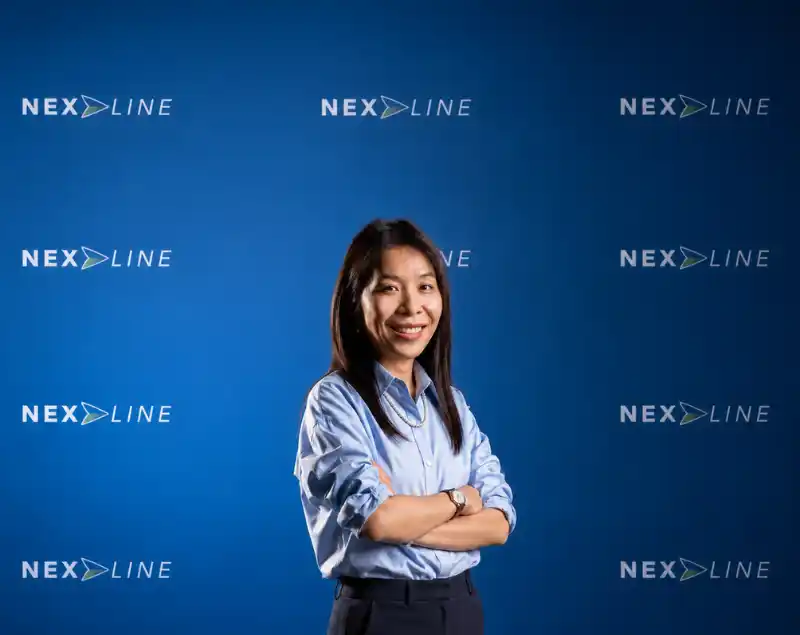
In international logistics, every decision matters. Clients need quick answers. Teams need clarity. And when a problem appears, the goal is not to look for someone to blame. The goal is to find a solution. This is the operational vision carried by Jenny Wong, Head of Operations – China. With 20 years of experience in the logistics industry, Jenny understands the demands of the field. She knows that flows move fast, unexpected situations are part of daily operations, and the quality of an organisation is often measured by its ability to react. Today, Jenny plays a key role in the development of SAYL International Logistics operations in China and across the region. What is the link between SAYL International Logistics and Nexline Group? SAYL International Logistics is part of the Nexline Group ecosystem. This presence in China allows the group to be closer to flows, suppliers and local teams. Thanks to SAYL, Nexline Group has a direct operational presence in China. This is an important asset for supporting clients in a strategic area of international trade. This link also improves coordination between operations in China and the needs of international clients. Communication is more direct. Decisions can be made faster. Solutions are better adapted to the realities of the field. As Head of Operations China, Jenny connects local teams, clients and the global vision carried by Nexline Group. Who is Jenny Wong? Jenny Wong is Head of Operations – China at SAYL International Logistics. She was one of the first key people to join the company. She chose to take part in this project because she believed in the challenge, the teams and the platform being built. Her career is strongly connected to logistics in South China. Before joining SAYL International Logistics, Jenny spent 18 years at Bansard. She also worked for 15 years alongside Loïc Benattar. This experience gives her a strong understanding of operations, clients, teams and logistics challenges in Asia. Why is her experience important in international logistics? In international logistics, operational experience is essential. Organisations must manage complex flows, tight deadlines, demanding clients and fast-changing markets. Jenny Wong has built her career at the heart of these realities. Over the years, she has handled several responsibilities: This broad experience gives her a complete view of logistics operations. She understands client needs, team constraints and performance challenges. What is Jenny Wong’s operational vision? Jenny places great importance on transparent communication. For her, conversations must be direct. Decisions must be fast. And time should not be wasted looking for who is responsible for a problem. In her approach, the priority is simple: understand the situation, clarify the actions and move towards a solution. This vision is especially important in logistics. A delay, pressure on a route, an urgent request or a documentary issue can quickly impact the entire supply chain. In these moments, clients expect answers. Teams need to know what to do. And decisions must be made without wasting time. Why does logistics in China require strong adaptability? China plays a central role in international trade. Flows between China, Europe and other regions of the world are constantly evolving. Companies must adapt to fast-moving markets, activity peaks and sometimes uncertain contexts. In this industry, routine rarely exists. The market can change under the effect of several factors: For Jenny, this is also what makes the industry stimulating. Logistics requires energy, responsiveness and a real ability to find solutions when situations become complex. What is the role of a Head of Operations in China? The role of a Head of Operations in China is not limited to daily management. It also involves structuring teams, ensuring operational quality, supporting clients and helping the company grow in a strategic region. This position requires a very practical understanding of the field. It is necessary to understand operational priorities, coordinate teams, anticipate difficulties and maintain a reliable level of service. In this context, Jenny Wong brings valuable experience. Her background allows her to combine strategic vision with operational execution. This is an important asset for supporting the growth of SAYL International Logistics in China and across the region. How does Jenny Wong support the growth of SAYL International Logistics? Jenny supports the growth of SAYL International Logistics through her experience, energy and sense of responsibility. Her role is to strengthen operations in China, while progressively extending her responsibilities across the region. This mission is important for the company’s development. Solid growth relies on reliable teams, clear processes and a strong ability to adapt. With her logistics background, Jenny helps build this operational foundation. She also brings a solution-driven culture, which is essential in an industry where unexpected situations are frequent. DISCOVER OUR TRANSPORT SERVICES
Who is responsible in an international shipment?
Several parties are involved in an international shipment. There is usually a seller, a buyer, a carrier, a freight forwarder, a customs representative and, in some cases, an insurer or a warehouse. But when a document is missing, when a declaration is incorrect or when goods are held by customs, one question quickly arises: Who is responsible? The answer depends on several factors: the commercial contract, the chosen Incoterm, the role of each party, the documents provided and the type of customs representation used. For a company, this is a key issue. An international shipment is not secured only by choosing the right transport solution. It is also secured by clearly defining responsibilities. Why does this matter? Customs is not just an administrative formality. It is a step that can directly affect the timing, cost and compliance of an international shipment. Before goods can enter or leave a territory, they must be declared according to the applicable rules. In the European Union, a customs declaration is an official document that provides details of the goods being imported or exported. In France, customs authorities also specify that customs formalities can be carried out by a customs representative, either under direct or indirect representation. The problem is that many companies do not always know who is responsible for what. As a result, documents arrive too late, the customs code is not properly validated, the Incoterm is misunderstood or the role of the freight forwarder is overestimated. In these situations, the shipment can slow down. The key parties in an international shipment To understand responsibilities, you first need to identify the roles. In most operations, five parties are at the centre of the process. 1. The exporter The exporter is the company that sells or ships the goods from the country of departure. They normally know the product, its origin, composition, value and commercial documents. In an international shipment, the exporter generally has to provide the information required for the goods to leave the country. This may include: Depending on the chosen Incoterm, the exporter may also be responsible for export customs clearance. 2. The importer The importer is the company that brings the goods into the country of destination. Its role is often underestimated. However, the importer is generally responsible for ensuring that the import operation is compliant in its own country. It must check that the goods can legally enter the country, that the documents are consistent and that duties and taxes are correctly handled. The importer must specifically check: If this information is incorrect or incomplete, the declaration may be corrected, delayed or subject to customs control. 3. The carrier The carrier is responsible for the physical movement of the goods. This may be a shipping line, an airline, a road haulier, a rail operator or a multimodal transport provider. Its role is to transport the goods according to the agreed conditions. The carrier may also provide certain transport-related data: However, the carrier is not automatically responsible for the commercial or customs content of the goods. It does not always know the exact composition of the product, its customs classification or the specific regulatory obligations that may apply. 4. The freight forwarder The freight forwarder organises the international shipment. It coordinates the different parts of the chain: transport, documents, partners, formalities, tracking and, in some cases, insurance or storage. Its role is operational. It can help the company choose a route, compare transport modes, anticipate lead times and prepare documents. But the freight forwarder does not replace the company in all its responsibilities. It works with the information provided by the client, the supplier and the other parties involved. If the initial data is incorrect or incomplete, the freight forwarder can alert the company, but it cannot invent the correct product information. This is an essential point. 5. The customs representative The customs representative carries out customs formalities. In France, a customs representative can act in two ways: This distinction is important, because it can affect the level of responsibility of both the representative and the company being represented. How do Incoterms influence customs responsibilities? Incoterms define how costs, risks and obligations are divided between the seller and the buyer in an international shipment. They specify who organises the transport, who handles certain formalities, who bears the risks and who pays the costs related to the operation. Choosing the right Incoterm is therefore essential to avoid misunderstandings. Responsibilities are not the same under EXW, FOB, CIF, DAP or DDP. The Incoterm must be confirmed before shipment, based on the goods, the countries involved, the transport mode, the experience of the parties and the customs constraints. What are the most common Incoterms in an international shipment? Each Incoterm distributes responsibilities differently between the seller and the buyer. Here are the most common cases to know. EXW: the buyer takes on almost the entire organisation Under EXW, the seller simply makes the goods available at its premises. The buyer must then organise collection, inland transport in the country of departure, export formalities, international transport, import customs clearance, duties and taxes, and final delivery. For a French buyer, EXW may look attractive because the purchase price is often lower. But it is also one of the most demanding Incoterms. Its main advantage is control. The buyer can choose its providers, negotiate transport and manage the operation from end to end. But the limits are significant. The buyer must handle formalities in the country of departure, coordinate collection from the supplier, manage export documents and take on more operational risk. In practice, EXW can be risky if the buyer does not have a reliable partner locally. Example: a French company buys goods under EXW Shenzhen. The supplier prepares the products at its factory. But the French buyer must organise everything else: collection, export documents, international freight, import into France and final delivery. FOB: the seller manages the goods until loading on board the vessel Under FOB, the seller is responsible for the goods
Electronic Invoicing 2026: why companies need to prepare now
Electronic invoicing is entering a decisive phase in France. From 1 September 2026, all companies must be able to receive electronic invoices. On the same date, large companies and mid-sized companies will also have to issue invoices electronically. SMEs, very small businesses and micro-businesses will be concerned by the issuing obligation from 1 September 2027. This reform does not only concern accounting departments. It also impacts tools, internal processes, partners and the administrative organisation of companies. Behind this obligation, the objective is clear: to streamline exchanges, strengthen traceability and simplify financial processes. But for the transition to be efficient, companies need to anticipate it now. What is electronic invoicing? Electronic invoicing does not simply mean sending a PDF invoice by email. An electronic invoice must follow a standardised electronic format. It must also include mandatory information in structured fields and be transmitted through an approved platform. In other words, the invoice becomes a structured document, sent within a secure and controlled framework. This change makes it easier to track exchanges between companies. It also facilitates the transmission of certain data to the tax authorities. Who is concerned by electronic invoicing in 2026? The reform concerns companies established in France and subject to VAT. It applies to purchases and sales of goods or services between companies established in France. The implementation schedule is progressive: Even companies that issue only a small number of invoices must prepare. At minimum, they will need to be able to receive electronic invoices. Why is electronic invoicing becoming mandatory? Electronic invoicing aims to modernise exchanges between companies. It helps reduce manual processing, limit errors and improve the traceability of transactions. For companies, this reform can also become an opportunity. It can help them review processes that are sometimes too heavy or too dependent on email exchanges. The main objectives are to: Electronic invoicing is therefore not only a regulatory obligation. It is also a change in the way administrative and financial flows are managed. What should companies prepare before 2026? The transition to electronic invoicing requires real preparation. Companies must first identify their current tools: invoicing software, accounting software, ERP, approval processes, archiving methods and exchanges with partners. Then, they need to check whether their tools will be compatible with the reform. It is also important to review internal workflows. Electronic invoicing can change the way an invoice is received, checked, approved and paid. Before 2026, companies should ask themselves several questions: These questions should be addressed before the obligation comes into force. What is the role of approved platforms? Electronic invoices will have to be transmitted through an approved platform. These platforms will play a central role. They will make it possible to send, receive and transmit the required data within the framework of the reform. The choice of platform should not be made at the last minute. A company must ensure that the chosen solution is adapted to its organisation, invoice volume and existing tools. Compatibility between internal software and the selected platform will be essential to avoid blockages. Why should companies anticipate now? The date of 1 September 2026 may seem far away. But compliance takes time. It is not only about activating a new tool. Companies also need to adapt processes, train teams, update data and test exchanges. A company that waits too long may end up suffering the reform instead of integrating it gradually. The risks can be concrete: Anticipating the reform makes the transition safer and smoother. Will electronic invoicing simplify financial processes? Yes, but only if it is properly prepared. Electronic invoicing can simplify administrative management. It can also improve invoice tracking and reduce certain manual tasks. However, these benefits will not be automatic. A company must first structure its data, clarify its processes and choose suitable tools. The reform can therefore become a driver of efficiency. But it requires proper organisation in advance. How is Nexline Group preparing for this transition? At Nexline Group, this transition is being anticipated to ensure smooth and secure compliance for teams, customers and partners. The objective is to prepare tools, processes and administrative exchanges before the reform comes into force. This preparation helps limit the risk of blockages, improve invoice traceability and ensure better continuity in exchanges with partners. Electronic invoicing is not only an obligation to comply with. It is also an evolution that must be integrated into the company’s overall organisation. Key takeaways Electronic invoicing is becoming an essential step for French companies. From 1 September 2026, all companies must be able to receive electronic invoices. Large companies and mid-sized companies will also have to issue them from that date. SMEs, very small businesses and micro-businesses will follow in 2027. This reform aims to streamline exchanges, strengthen traceability and simplify financial processes. But to fully benefit from it, companies need to anticipate. Preparing tools, data, teams and partners will be essential to successfully manage this transition. DISCOVER OUR TRANSPORT SERVICES
EU–Mercosur Agreement: why companies need to rethink their logistics in 2026
Since 1 May 2026, the interim trade agreement between the European Union and Mercosur has been provisionally applied. After more than 25 years of negotiations, this topic is no longer only political. It is now operational for companies that import, export or work with South America. The agreement concerns trade between the European Union and several Mercosur countries, including Brazil, Argentina, Uruguay and Paraguay. Its objective is clear: to facilitate trade through a gradual reduction of customs duties and a more predictable framework for companies. However, this change does not mean that formalities disappear. To benefit from tariff advantages, goods must meet specific conditions. Rules of origin, REX status, customs supporting documents and documentary compliance remain essential. This is why the EU–Mercosur Agreement directly changes the way international logistics must be approached. In 2026, logistics performance no longer depends only on transport. It also depends on a company’s ability to anticipate customs requirements, secure its documents and integrate rules of origin from the start. Why does the EU–Mercosur Agreement change the rules? The EU–Mercosur Agreement aims to facilitate trade between the European Union and Mercosur countries. It notably provides for a gradual reduction of customs duties on many products. This change can make certain flows more competitive. But the impact is not limited to transport prices or purchasing costs. In reality, the agreement changes the entire way logistics performance is assessed. A company must now analyse several elements before importing or exporting: In other words, competitiveness no longer depends only on transport. It also depends on customs expertise. Brazil, a key player in EU–Mercosur flows Within Mercosur, Brazil plays a major role. It concentrates a large share of trade with the European Union. Its role is therefore central to the operational impact of the EU–Mercosur Agreement. For European companies, this can create new opportunities. Some goods may become more accessible. Some suppliers may become more competitive. Some trade routes may also become more attractive. However, these opportunities must be studied carefully. A tariff advantage is not always enough to secure an international shipment. Companies must also check origin conditions, customs formalities and the documents to be provided. Customs duties: a real advantage, but under conditions The reduction of customs duties is one of the most visible aspects of the EU–Mercosur Agreement. On paper, it can help companies reduce costs. But in practice, this advantage depends on several conditions. To benefit from preferential tariff treatment, goods must comply with the rules of origin provided for in the agreement. This means that a company cannot simply import or export a product from a Mercosur country and automatically apply a reduced duty. It must prove that the goods genuinely originate from the relevant territory, according to the criteria set out. This is where customs becomes essential. An error in origin, an incomplete declaration or a missing document can call the tariff advantage into question. In some cases, this can lead to additional duties, delays or blocked goods. Rules of origin and REX status: two points to anticipate Rules of origin are at the heart of the EU–Mercosur Agreement. They determine whether goods can benefit from reduced or eliminated customs duties. For European exporters, REX status can also play an important role. It allows a registered company to self-certify the preferential origin of its products under certain trade agreements. But this status should not be treated as a simple formality. The company must be able to justify the declared origin. It must keep the necessary evidence. It must also ensure that its products meet the applicable criteria. Without this preparation, the tariff advantage can become a risk. A direct impact on the supply chain The EU–Mercosur Agreement can change companies’ logistics decisions. Previously, some flows could be less attractive because of customs duties or administrative complexity. With the agreement, these flows may become more competitive. This can influence several decisions: The supply chain must therefore be considered earlier. Companies can no longer wait until shipment to ask the right questions. They must integrate customs rules from the purchasing, sales or contractual negotiation phase. Logistics performance also depends on customs In an international shipment, transport remains important. But it is not enough. Goods can be transported quickly and still be blocked at customs. A transport cost can be competitive, but lose its value if customs duties are poorly anticipated. A supplier may offer a good price, but create a risk if origin documents are not reliable. This is why logistics performance must be analysed as a whole. It depends on transport, but also on compliance, documentation, rules of origin, declarations and the right choice of partners. In this context, the role of the freight forwarder and customs representative becomes even more strategic. Why should companies anticipate now? The EU–Mercosur Agreement does not only concern large companies. It can also affect SMEs that import, export or work with international suppliers. Companies that anticipate can gain a structural advantage. They can identify the products concerned, check rules of origin, review their commercial contracts and adapt their logistics organisation. Conversely, companies that wait may suffer from the changes. They may discover too late that a product does not meet origin conditions. They may lose a tariff advantage. They may also face delays or unexpected costs. How to prepare your logistics for the EU–Mercosur Agreement To secure their flows, companies should start by analysing their current operations. The first step is to identify the goods concerned. Then, they must check customs codes, applicable duties and rules of origin. It is also important to review the documents used in international trade: commercial invoices, certificates, proof of origin, transport documents and customs declarations. Finally, companies must ensure that their teams and partners understand the new requirements. Good preparation helps avoid mistakes. It also makes it possible to turn the EU–Mercosur Agreement into a real competitive advantage. Nexline Group Nexline supports companies in securing their international flows between Europe and South America by integrating transport, customs and the required documentation. With