
New customs rule: EORI SIREN becomes mandatory from January 1, 2026

As of January 1, 2026, a major change will come into effect in trade with the European Union: the EORI SIREN number will become mandatory for all companies importing or exporting goods to or from the EU. This reform marks the end of the EORI number based on the SIRET, in favor of a single identifier linked to the company’s SIREN. It is a regulatory change that directly affects many players in international trade and logistics. What is the EORI number and why is it changing? The EORI number (Economic Operators Registration and Identification) is a mandatory customs identifier for any company carrying out import or export operations within the European Union. It enables customs authorities to identify economic operators reliably and in a harmonized way. Until now, some companies had several EORI numbers, linked to different establishments via the SIRET. This situation could create administrative complexity, data inconsistencies, and risks during customs declarations. The reform aims to simplify and harmonize these practices across Europe. CHECK OUT OUR TRANSPORT SERVICES What changes with the EORI SIREN One unique EORI number per company From 2026 onwards, each company will have only one EORI number, directly associated with its SIREN (9 digits). This puts an end to the multiplication of identifiers by site or establishment and makes the administrative management of customs operations easier. A new standardized format The number format is also changing: This change strengthens the consistency of the data used by European customs administrations and improves the readability of records. A process to anticipate via SOPRANO Affected companies can verify or update their EORI number via the SOPRANO platform provided by the authorities. It is strongly recommended to check the compliance of your EORI as early as possible to avoid any future disruption to your flows. What are the objectives of this reform? This regulatory change pursues several clear objectives: In the long term, this simplification contributes to clearer operations and more secure management of import-export flows. What Nexline recommends At Nexline, we see this change as part of a broader trend toward standardization and enhanced security of customs procedures across Europe. Companies that anticipate these changes gain operational fluidity and significantly reduce their risks. CHECK OUT OUR TRANSPORT SERVICES The mandatory switch to the EORI SIREN on January 1, 2026 is a key regulatory step for all companies involved in international trade. Beyond compliance, this reform is an opportunity to simplify processes and strengthen the reliability of customs operations. Anticipating today allows you to approach this transition with confidence and avoid any future blockages. In an increasingly demanding logistics environment, mastering customs obligations remains a decisive performance factor.
What is an international freight forwarder? Complete definition and role.
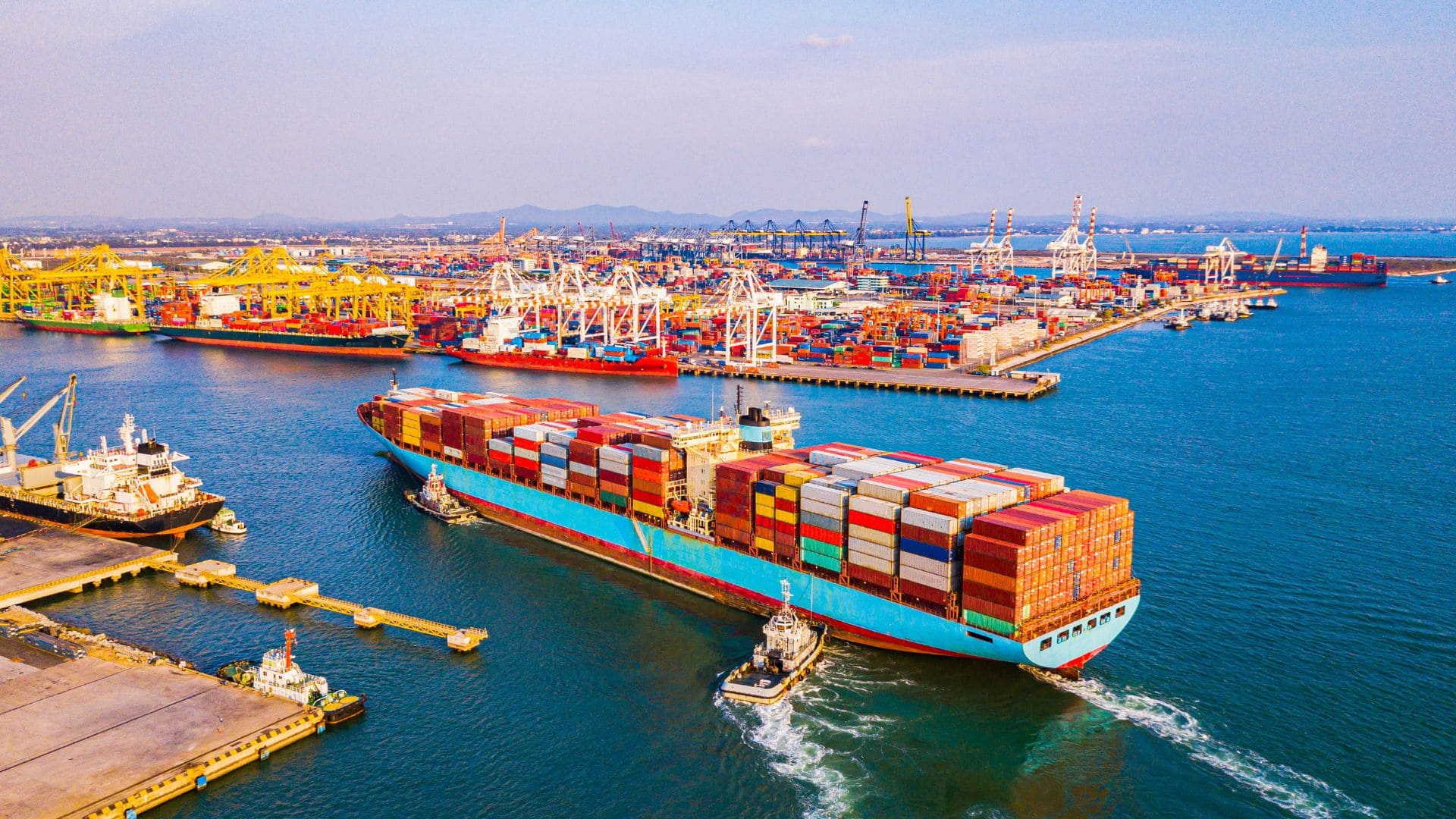
Introduction What is an international freight forwarder? Global trade is a complex mechanism in which every shipment involves a multitude of players: shipping lines, air carriers, road transporters, customs services, warehouses, and insurers. At the center of this network stands a key professional who connects all these links: the international freight forwarder. Often invisible to the end consumer, the freight forwarder is nevertheless at the very heart of international logistics. Understanding their role, services, and importance is essential for any company involved in import-export or the management of goods transportation. Definition: What is an international freight forwarder? An international freight forwarder is a professional or a specialized company that organizes and manages the shipment of goods on a global scale.They act as an intermediary between the shipper and transport service providers (maritime, air, road, or rail). Unlike a carrier, who owns its own trucks, planes, or vessels, the freight forwarder designs a comprehensive logistics solution, which includes: They are the architects of the international supply chain: assembling solutions, coordinating all players, and ensuring that goods move seamlessly from origin to destination. CHECK OUT OUR TRANSPORT SERVICES The Role of the Freight Forwarder in Global Trade 1. Logistics Intermediary and Coordinator The freight forwarder acts as a single point of contact between the shipper and multiple transport providers. This simplifies communication and spares the client company from managing several contracts and interlocutors. 2. Organization of International Transport With solid expertise, the freight forwarder selects the most suitable mode of transport (air, sea, road, or rail) based on: 3. Regulatory and Customs Expertise Each country enforces strict rules on foreign trade. The freight forwarder ensures that shipments comply with these regulations, helping clients avoid costly fines or delays. 4. Administrative Freight Management The freight forwarder handles all international shipping documentation, such as: 5. Global Logistics Risk Management International trade faces multiple uncertainties — port strikes, vessel delays, health crises, or natural disasters. The freight forwarder anticipates these risks and provides alternative solutions, such as switching to air freight in case of maritime disruptions. 6. Digital Tracking and Visibility Thanks to modern digital platforms, freight forwarders offer real-time shipment visibility. Shippers can track their cargo at every stage, ensuring transparency and building trust. Main Services Offered by an International Freight Forwarder The role of a freight forwarder goes far beyond simply booking space on a ship or plane. Their services cover a wide range of complementary logistics solutions, including: When and How to Choose a Reliable International Freight Forwarder When to Work with a Freight Forwarder How to Choose the Right One Key selection criteria include: A good freight forwarder combines human expertise, a strong network, and modern technology to ensure smooth, reliable, and optimized logistics worldwide. CHECK OUT OUR TRANSPORT SERVICES Practical Cases and Real Examples of International Transport 1. Textile Export – Asia → Europe A French fashion brand produces its collections in Bangladesh. Each season, the freight forwarder: Result: optimized seasonal flows and controlled costs. 2. Medical Device Transport A manufacturer ships sensitive equipment to Latin America. The freight forwarder: Result: products arrive on time and meet all regulatory standards. 3. Just-in-Time Automotive Parts A European car manufacturer depends on parts imported from China. The freight forwarder: Result: uninterrupted production and minimized downtime. 4. E-commerce and Retail A European e-commerce company sells in North America. The freight forwarder implements a multimodal solution (air + road) to ensure fast delivery to end customers. 5. Agri-food Sector An exporter of fresh produce ships fruit to the Middle East. The freight forwarder manages the cold chain and secures the required phytosanitary certificates. Frequently Asked Questions About International Freight Forwarders Is a freight forwarder mandatory? No. However, in practice, their role becomes essential as soon as shipments cross borders. They greatly reduce the risk of errors and delays. What’s the difference between a freight forwarder and a carrier? A carrier owns its own means of transport (trucks, planes, vessels). A freight forwarder, on the other hand, selects and coordinates carriers to provide a complete logistics solution. What’s the difference between a freight forwarder and a transport commissioner? A transport commissioner assumes legal responsibility for the transport. A freight forwarder acts as an organizer, though some companies perform both roles. Do Freight Forwarders Offer Insurance Yes. They provide freight insurance covering loss, damage, theft, or delays. What Types of Goods Can a Freight Forwarder Handle? From general cargo to sensitive products — including agri-food, pharmaceuticals, hazardous materials, textiles, and automotive parts. Can You Track a Shipment with a Freight Forwarder? Yes. Most freight forwarders offer digital tracking systems accessible online. How Much Does a Freight Forwarder Cost? The cost depends on the chosen transport mode, volume, weight, and additional services (customs, insurance, warehousing). Prices vary widely depending on the destination and season. How to Become a Freight Forwarder? The profession is accessible through studies in logistics or international trade, combined with field experience. Key skills include organization, negotiation, and knowledge of international regulations. Conclusion: The International Freight Forwarder, the Conductor of Global Logistics In a world where supply chains must be fast, reliable, and resilient, the international freight forwarder plays a crucial role. More than just an intermediary, they are the conductor of international logistics: planning, coordinating, securing, and optimizing global flows. Understanding their role, responsibilities, and services helps businesses better anticipate their logistics needs and approach international trade with confidence.
Importing from China in 2025: understanding the new logistics challenges
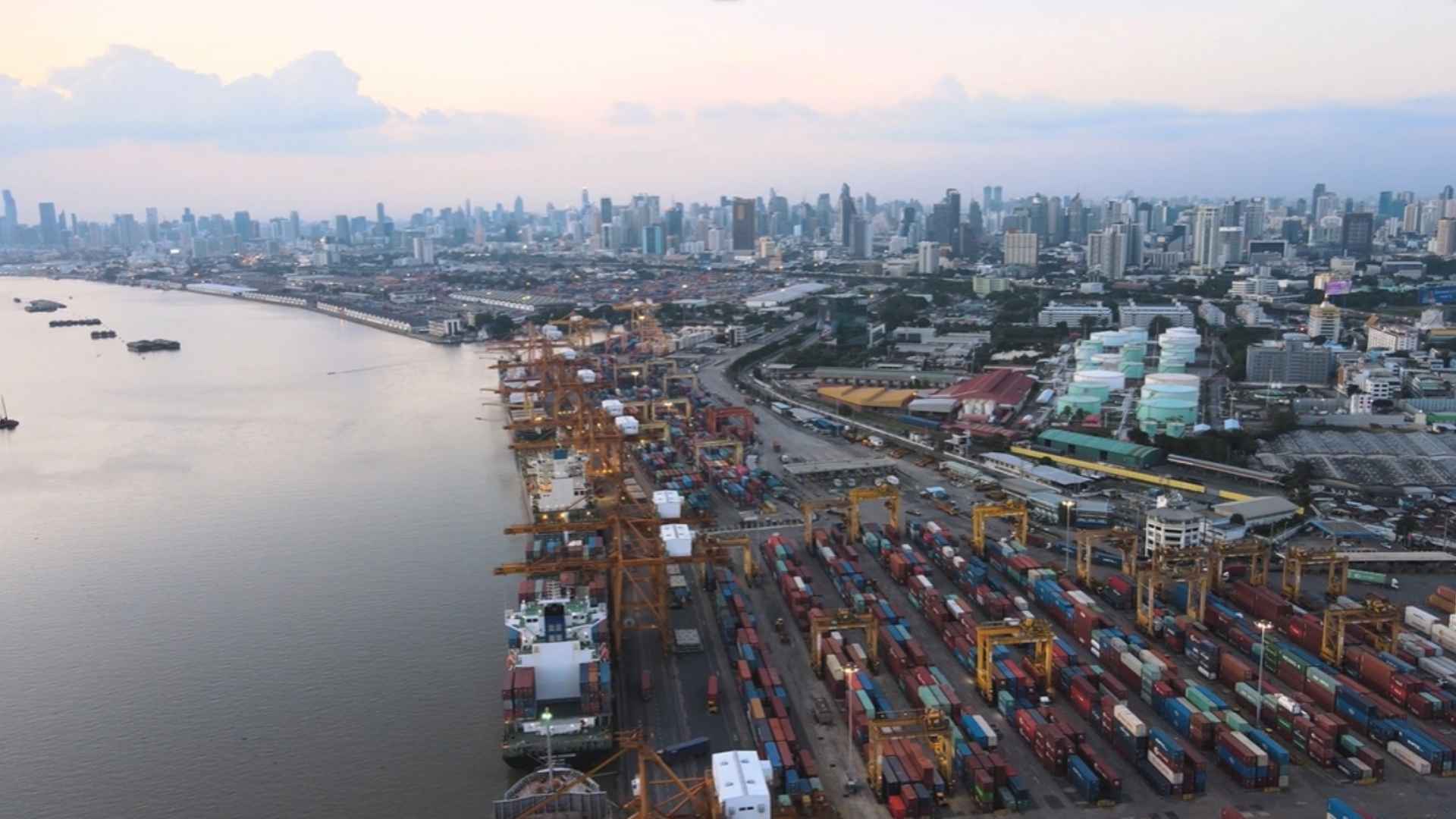
Faced with maritime tensions and the unpredictability of international flows, French importers must rethink their strategy for importing from China. This is a structural transformation of supply chains, driven by one goal: securing flows without sacrificing competitiveness. In this article, we analyze the major current logistics disruptions, their concrete consequences for French companies and the levers to activate to continue importing reliably from China in 2025. A new logistics reality: longer lead times, rising costs and limited resources Since late 2023, the partial closure of the Red Sea maritime corridor has disrupted traditional routes between Asia and Europe. Many shipping lines have chosen to reroute their vessels via the Cape of Good Hope, significantly extending transit times and driving up freight costs. Quelles conséquences pour les importateurs français ? In short: flows are becoming unpredictable, costs volatile and pressure on logistics teams is increasing. CHECK OUT OUR TRANSPORT SERVICES Why China remains an essential partner In a world undergoing major logistics restructuring, China continues to play a central role in global supply chains, and France is no exception. In 2024, China accounted for more than 10% of French imports across all sectors, according to Customs data. This figure reflects not only trade volume but also deep economic interdependence. China alone concentrates a significant share of flows related to: Beyond finished products, industrial components such as motors, spare parts, printed circuits, fasteners and packaging also move massively from China to France. For many European manufacturers, these components are essential to maintaining production continuity and ensuring revenue stability. Still a highly competitive advantage Despite gradually rising wages and internal costs, China remains highly competitive in manufacturing thanks to: Relocating or diversifying sourcing is possible – but seldom immediate or economically neutral. Ignoring China: a strategic illusion In this context, some companies are adopting a “China +1” strategy, combining China with a second country to reduce risk. However, a full exit from China remains unrealistic for most French businesses, for industrial, contractual and customs reasons alike. Conversely, remaining dependent on China without adapting one’s logistics model means facing major risks: delays, extra costs and disruptions. This reality calls for a balanced and pragmatic approach: ➡️ Continue sourcing from China, but with stronger, more transparent and better-adapted logistics tools to handle today’s instability. This is precisely where Nexline comes in: helping companies maintain their strategic suppliers while securing the how of their logistics flows, through solutions such as NEXBOX Shanghai, designed to bring clarity and reliability back to an uncertain environment. CHECK OUT OUR TRANSPORT SERVICES Business expectations in 2025 In a logistics environment marked by instability and unpredictability, the companies that perform best are those that have refocused their efforts on three key priorities: maintaining flow fluidity, controlling costs and safeguarding operational performance. 1. Strengthen visibility across all logistics flows Without visibility, there is no anticipation or control.Today, companies must be able to know, in real time: The goal: move from reaction to prevention.A predictable delay can be managed. An unexpected one cannot. 2. Rely on reliable and controllable flows As the geopolitical environment grows more uncertain, the priority is shifting from “cost per kilo” to the stability of flows.Companies should prioritize services that: The challenge is no longer to go fast, but to stay on schedule. 3. Increase agility across the entire supply chain Whether in production or distribution, companies must be able to: Logistics should no longer be a constraint but a lever for rapid adaptation.This requires partners capable of adjusting in real time to on-the-ground realities. CHECK OUT OUR TRANSPORT SERVICES The Nexline Solution: NEXBOX Shanghai, a dedicated service for demanding importers It is in this context that Nexline designed NEXBOX, a weekly sea freight consolidation service from Shanghai to Dunkirk, created for French importers facing current market volatility. What NEXBOX offers: 🎯 Objective: regain control of your supply chain, even in an uncertain environment. DISCOVER NEXBOX – ASIA-EUROPE SEA FREIGHT The Nexline Solution: NEXBOX Shanghai, a dedicated line for demanding importers It is in this context that Nexline created NEXBOX, a weekly sea freight consolidation service from Shanghai to Dunkirk, designed for French importers facing today’s market volatility. What NEXBOX offers: 🎯 Objective: regain control of your supply chain, even in an uncertain environment. Why this approach appeals to the most demanding importers In recent years, a clear trend has emerged: companies are reorganizing their logistics around solutions that are more transparent, predictable and controllable.This shift goes beyond a mere reaction to the Red Sea crisis. It reflects a deeper transformation in how international flows are managed. In practice, the most successful companies in 2025: This shift toward clear, predictable, and flexible solutions not only helps reduce unforeseen issues but also restores fluidity across the entire supply chain – from factory to distribution point. Shanghai: a strategic hub that requires precise management Shanghai remains one of the main points of origin for flows to Europe. That status isn’t likely to change anytime soon: efficient port infrastructure, a dense supplier network and strong international connectivity. However, in a strained logistics environment, location alone no longer guarantees smooth operations. What matters now is the ability to: Fine-tuned operational management at origin has become just as strategic as the routing itself, it’s this level of execution that now makes the difference. Importing from China: still possible, but more demanding Global logistics isn’t disappearing, it’s evolving.Importing from China remains not only possible but often essential. What’s changing are the conditions for success. Today, the companies that manage to maintain stable flows despite geopolitical disruptions share one common trait:They have taken the time to rethink their logistics model around three key criteria: In other words: it’s no longer just about shipping a container. It’s about understanding, anticipating, coordinating and securing- by integrating commercial, industrial and operational dimensions from the very start.
Road transport and supply chain: the key link in smooth logistics
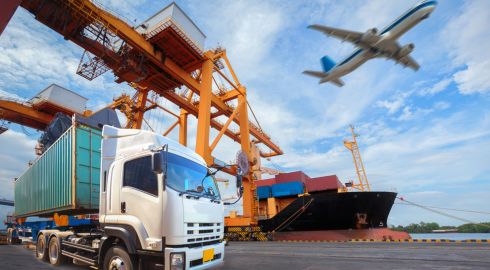
Invisible when everything is running smoothly. Indispensable when something goes wrong. Road transport remains the discreet but essential pillar of any modern supply chain. It connects, balances and brings flows to fruition. Without it, even the best-thought-out logistics plans would remain mere blueprints. In the world of international freight forwarding, we often talk about air, sea or multimodal transport. But it is road transport that gives the whole system its coherence and rhythm. Road transport is what turns logistics from a plan into reality. The invisible link that holds the chain together Between ports, warehouses and factories, road transport acts as a hinge. It connects very different modes of transport, absorbs the unexpected and ensures the continuity of the flow. A truck that arrives too early and the area becomes congested. Too late, and production stops. Not loaded enough, and we’re transporting air. These margins of error, often minimal, nevertheless determine the overall performance of a logistics chain. In a sector where every minute counts, road transport is not simply an extension of international transport: it is its operational translation. It is the link between promise and delivery. CHECK OUT OUR TRANSPORT SERVICES A balancing role in the modern supply chain Road transport is also one of the few links capable of adapting on a daily basis. It absorbs fluctuations, compensates for delays and readjusts volumes. Its flexibility allows it to react to situations that cannot always be anticipated in planning. This flexibility explains why the most successful logistics providers now integrate road transport from the outset when designing the overall flow, rather than as a final stage. Anticipating road transport means anticipating the reality on the ground: loading constraints, time windows, storage capacities, and the distribution of volumes between FTL (Full Truck Load) and LTL (Less than Truck Load). In other words, it means designing logistics that are fluid, not theoretical. The road as a discreet space for innovation We rarely associate roads with innovation. However, it is in the field of road transport that many logistical advances are made. The pooling of flows, the optimisation of routes, and the combined use of refrigerated and long-distance lorries for mixed circuits are among the most concrete levers of efficiency in the sector. At Nexline, these optimisations are not an add-on: they are an integral part of our flow strategy. Integrating road transport from the design phase onwards ensures consistency between all links in the chain sea, air, rail and land for a truly multimodal vision. Precision as a work culture In logistics, precision cannot be decreed: it must be organised. A smooth flow relies on thousands of micro-decisions, checks and human coordination. Road transport is one of the few areas where this precision takes shape on a daily basis. The challenge is not only to move goods, but to keep a promise of delivery time. This is the most concrete part of the chain where end customer satisfaction is often determined by a matter of hours. In a world where the supply chain is becoming digitalised, the road remains the tangible place where everything materialises. An integrated approach for consistent flows It would be a mistake to consider modern logistics without including road transport. The performance of a supply chain depends on coordination between all modes of transport, and road transport is its backbone. The most successful projects are those where land transport is integrated from the planning stage, with a comprehensive overview and detailed understanding of the terrain. Nexline deploys this integrated approach across its various services: road freight, warehousing, customs clearance and multimodal transport. The aim is not to add layers, but to simplify, align and execute without disruption. CHECK OUT OUR TRANSPORT SERVICES In conclusion Road transport is often perceived as just another link in the chain. In reality, it is the link that connects all the others. In an economy where logistical reliability is becoming a competitive advantage, the road is not the end of the journey: it is what makes it possible. Find out more: road transport. Discover our multimodal solutions. Discover why so many companiesalready entrust their logistics to Nexline.
Nexline strengthens its presence in Asia: opening of two offices in Bangladesh
It’s official: Nexline is continuing its international expansion and has announced the opening of two new offices in Bangladesh, in Dhaka and Chittagong. A team of ten experts is already operational on site to support flows between Asia and Europe, in a challenging global logistics environment. A strategic foothold at the heart of global textile production Bangladesh is now one of Asia’s most dynamic industrial hubs. As the world’s second-largest textile exporter, the country plays a key role in international supply chains. By strengthening its presence in Dhaka and Chittagong, Nexline is consolidating its support capabilities for European importers and exporters, particularly in the textile, retail and mass distribution sectors. This local presence enables better control oflogistics flows, improved responsiveness to import/export operations and smooth coordination between all players in the chain, from Asian suppliers to final delivery in Europe. CHECK OUT OUR MARITIME SERVICES Facilitating trade between East and West Geopolitical tensions, congestion on sea routes and new environmental regulations are profoundly changing the balance of international transport. In this context, the reliability of logistics partners is becoming a key performance factor. Thanks to its new locations, Nexline is strengthening its ability to offer tailor-made freight solutions between Asia and Europe, whether by sea, air or multimodal transport. These offices are connected in real time with teams based in France, ensuring continuous monitoring of operations and better control of deadlines. A local presence for global solutions Nexline’s teams in Bangladesh work closely with local stakeholders: carriers, freight forwarders, port and customs authorities. This operational proximity makes it possible to reduce transit times, anticipate potential disruptions in the flow of goods and provide concrete solutions to European customers. The services offered on site cover the entire logistics chain: Each solution is tailored to the customer’s actual needs, with a single point of contact to monitor the flow from the first to the last kilometre. CHECK OUT OUR TRANSPORT SERVICES A key step in Nexline’s international development strategy After France and China, Bangladesh is becoming a new pillar of the Nexline network. This expansion is part of a sustained growth dynamic, driven by the desire to offer customers a more integrated, fluid and responsive supply chain. From Asia to Europe, Nexline positions itself as a logistics link, capable of designing and managing tailor-made supply chains in a complex international environment. Because companies don’t just need a service provider, they need a partner who understands their challenges, anticipates their constraints and guarantees the reliability of their operations. To find out more about our locations and services: 👉 Find out more about Nexline – About us 👉 Read the full article on EuroTribune Discover why so many companiesalready entrust their logistics to Nexline.