
Importing from China in 2025: understanding the new logistics challenges
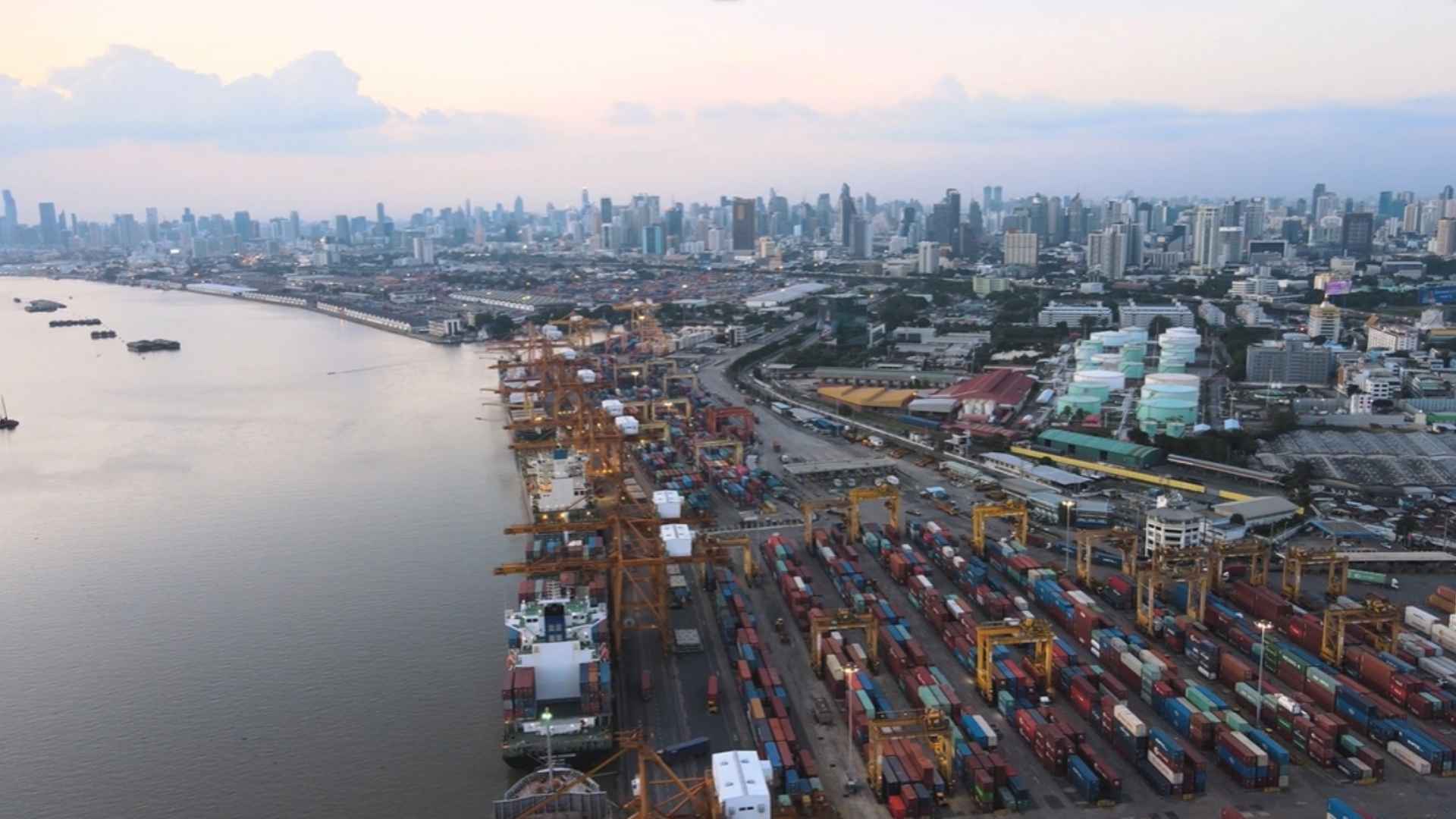
Faced with maritime tensions and the unpredictability of international flows, French importers must rethink their strategy for importing from China. This is a structural transformation of supply chains, driven by one goal: securing flows without sacrificing competitiveness. In this article, we analyze the major current logistics disruptions, their concrete consequences for French companies and the levers to activate to continue importing reliably from China in 2025. A new logistics reality: longer lead times, rising costs and limited resources Since late 2023, the partial closure of the Red Sea maritime corridor has disrupted traditional routes between Asia and Europe. Many shipping lines have chosen to reroute their vessels via the Cape of Good Hope, significantly extending transit times and driving up freight costs. Quelles conséquences pour les importateurs français ? In short: flows are becoming unpredictable, costs volatile and pressure on logistics teams is increasing. CHECK OUT OUR TRANSPORT SERVICES Why China remains an essential partner In a world undergoing major logistics restructuring, China continues to play a central role in global supply chains, and France is no exception. In 2024, China accounted for more than 10% of French imports across all sectors, according to Customs data. This figure reflects not only trade volume but also deep economic interdependence. China alone concentrates a significant share of flows related to: Beyond finished products, industrial components such as motors, spare parts, printed circuits, fasteners and packaging also move massively from China to France. For many European manufacturers, these components are essential to maintaining production continuity and ensuring revenue stability. Still a highly competitive advantage Despite gradually rising wages and internal costs, China remains highly competitive in manufacturing thanks to: Relocating or diversifying sourcing is possible – but seldom immediate or economically neutral. Ignoring China: a strategic illusion In this context, some companies are adopting a “China +1” strategy, combining China with a second country to reduce risk. However, a full exit from China remains unrealistic for most French businesses, for industrial, contractual and customs reasons alike. Conversely, remaining dependent on China without adapting one’s logistics model means facing major risks: delays, extra costs and disruptions. This reality calls for a balanced and pragmatic approach: ➡️ Continue sourcing from China, but with stronger, more transparent and better-adapted logistics tools to handle today’s instability. This is precisely where Nexline comes in: helping companies maintain their strategic suppliers while securing the how of their logistics flows, through solutions such as NEXBOX Shanghai, designed to bring clarity and reliability back to an uncertain environment. CHECK OUT OUR TRANSPORT SERVICES Business expectations in 2025 In a logistics environment marked by instability and unpredictability, the companies that perform best are those that have refocused their efforts on three key priorities: maintaining flow fluidity, controlling costs and safeguarding operational performance. 1. Strengthen visibility across all logistics flows Without visibility, there is no anticipation or control.Today, companies must be able to know, in real time: The goal: move from reaction to prevention.A predictable delay can be managed. An unexpected one cannot. 2. Rely on reliable and controllable flows As the geopolitical environment grows more uncertain, the priority is shifting from “cost per kilo” to the stability of flows.Companies should prioritize services that: The challenge is no longer to go fast, but to stay on schedule. 3. Increase agility across the entire supply chain Whether in production or distribution, companies must be able to: Logistics should no longer be a constraint but a lever for rapid adaptation.This requires partners capable of adjusting in real time to on-the-ground realities. CHECK OUT OUR TRANSPORT SERVICES The Nexline Solution: NEXBOX Shanghai, a dedicated service for demanding importers It is in this context that Nexline designed NEXBOX, a weekly sea freight consolidation service from Shanghai to Dunkirk, created for French importers facing current market volatility. What NEXBOX offers: 🎯 Objective: regain control of your supply chain, even in an uncertain environment. DISCOVER NEXBOX – ASIA-EUROPE SEA FREIGHT The Nexline Solution: NEXBOX Shanghai, a dedicated line for demanding importers It is in this context that Nexline created NEXBOX, a weekly sea freight consolidation service from Shanghai to Dunkirk, designed for French importers facing today’s market volatility. What NEXBOX offers: 🎯 Objective: regain control of your supply chain, even in an uncertain environment. Why this approach appeals to the most demanding importers In recent years, a clear trend has emerged: companies are reorganizing their logistics around solutions that are more transparent, predictable and controllable.This shift goes beyond a mere reaction to the Red Sea crisis. It reflects a deeper transformation in how international flows are managed. In practice, the most successful companies in 2025: This shift toward clear, predictable, and flexible solutions not only helps reduce unforeseen issues but also restores fluidity across the entire supply chain – from factory to distribution point. Shanghai: a strategic hub that requires precise management Shanghai remains one of the main points of origin for flows to Europe. That status isn’t likely to change anytime soon: efficient port infrastructure, a dense supplier network and strong international connectivity. However, in a strained logistics environment, location alone no longer guarantees smooth operations. What matters now is the ability to: Fine-tuned operational management at origin has become just as strategic as the routing itself, it’s this level of execution that now makes the difference. Importing from China: still possible, but more demanding Global logistics isn’t disappearing, it’s evolving.Importing from China remains not only possible but often essential. What’s changing are the conditions for success. Today, the companies that manage to maintain stable flows despite geopolitical disruptions share one common trait:They have taken the time to rethink their logistics model around three key criteria: In other words: it’s no longer just about shipping a container. It’s about understanding, anticipating, coordinating and securing- by integrating commercial, industrial and operational dimensions from the very start.