
Asia-Europe maritime freight: between uncertainty and the search for stability
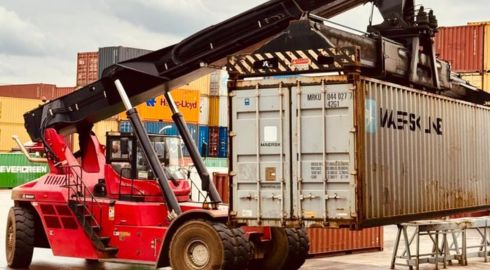
Maritime transport is undergoing a period of unprecedented change. For several years now, a combination of geopolitical, economic and environmental factors has disrupted the balance of global trade. Shipping routes, once stable and predictable, are now subject to constant tensions that are redefining international freight forwarding practices. Between the war in the Red Sea, restrictions on strategic passages such as the Suez and Panama Canals, and the rise of new environmental regulations, the global supply chain is being forced to reinvent itself. For importing and exporting companies, the challenge is clear: maintain continuity of flows while limiting costs and risks. Structural tensions in global maritime transport Historically, the Asia-Europe route has accounted for more than 40% of global maritime trade. But in recent years, available capacity has been stretched to the limit. Shipping companies have had to juggle fluctuating demand, container shortages and repositioning imbalances. This situation creates a triangle of uncertainty: freight costs subject to unpredictable increases or decreases, often insufficient container availability at certain ports, and transit times that vary from week to week depending on port congestion. The result is a loss of visibility for importers, who must manage their supplies in an increasingly unstable environment. The ‘just-in-time’ approach is gradually giving way to a ‘just in case’ approach. CHECK OUT OUR SEA TRANSPORT SERVICES The domino effect of logistical complexity Maritime disruptions are not limited to ocean transport. They have a knock-on effect on the entire chain: road transport, warehousing, customs clearance and last-mile delivery. When ships arrive late, terminals become saturated, containers pile up, and unloading times increase. Conversely, when volumes drop, operators have to reduce rotations, which further undermines the regularity of flows. In this context, logistics planning becomes a balancing act. European importers are now looking for partners capable of coordinating several links in the supply chain, from sea freight to multimodal transport, including inventory management and flow tracking. This integrated approach is now the key to more fluid and resilient logistics. The central role of maritime groupage In an uncertain climate, consolidated shipping (or LCL – Less than Container Load) is once again becoming a strategic option for many companies. It allows shipments from several importers to be pooled in a single container, thereby reducing unit costs and optimising available capacity. But consolidated shipping is not just about cost. It is also a tool for flexibility and securing flows: it offers more regular departures, better adaptation to actual volumes and a more balanced sharing of logistical risks. In a saturated or unstable market, it is a pragmatic response to the constraints of the moment. It is with this in mind that NEXBOX was designed, a container consolidation service between Asia and Europe developed by Nexline. This solution relies on consolidation hubs located in major Asian ports, direct and stable routes to Europe, and unloading carried out in warehouses under Nexline’s control. The aim is to offer a regular and transparent framework for importers who are often faced with market unpredictability. DISCOVER NEXBOX – ASIA-EUROPE MARITIME GROUPAGE The need for visibility and reliability The current volatility of the maritime market has given rise to a new requirement: complete traceability. Digital real-time tracking tools, once reserved for large multinationals, are now becoming a standard expected by all companies. Knowing where your container is, when it will be available, and being able to anticipate potential delays has become a key performance factor. Players such as Nexline are putting technology at the service of this visibility by integrating shipment tracking into global supply chain management systems. These tools facilitate decision-making, reduce margins of error, and improve communication between the various players in the transport sector. But technology alone is not enough. The real challenge lies in human coordination: having teams capable of analysing, adapting, and correcting operations in real time. It is this combination of skills and responsiveness that allows us to stay on course, even in the most turbulent times. The future of maritime transport: towards sustainable stability The current transformation of maritime freight is not limited to the economic situation. It reflects a fundamental shift towards more responsible and predictable logistics. Decarbonisation initiatives, the rise of rail transport on Eurasian corridors, and the boom in multimodal transport show that the industry is actively seeking to reinvent its balance. The most successful importers are no longer just looking for carriers, but for partners capable of designing a comprehensive logistics strategy: planning, consolidation, monitoring and continuous adaptation. Services such as NEXBOX are part of this evolution, offering controlled groupage solutions that are aligned with the imperatives of sustainability and efficiency. In conclusion Asia-Europe maritime freight is at a turning point. Between geopolitical tensions and ecological transition, companies must redefine their priorities: speed alone is no longer enough; stability is becoming essential. Consolidation solutions, such as those offered by Nexline, embody this desire to regain control over global flows, while incorporating flexibility and transparency. In this new equilibrium, resilience is not a reaction: it is a method. And stability, more than just a goal, is now becoming a strategy. Find out more: Nexline – About us Contact our teams Discover why so many companiesalready entrust their logistics to Nexline